(ENG) Beyond the Neon: Five Stories That Uncover the True Soul of Dotonbori
The five stories of Dotonbori—of a merchant’s sacrifice, a shogun’s design, a god’s survival, a clown’s spirit, and a chef’s dedication—flow together into a single, powerful narrative of cultural resilience...

Listen attentively to the historical stories told in detail
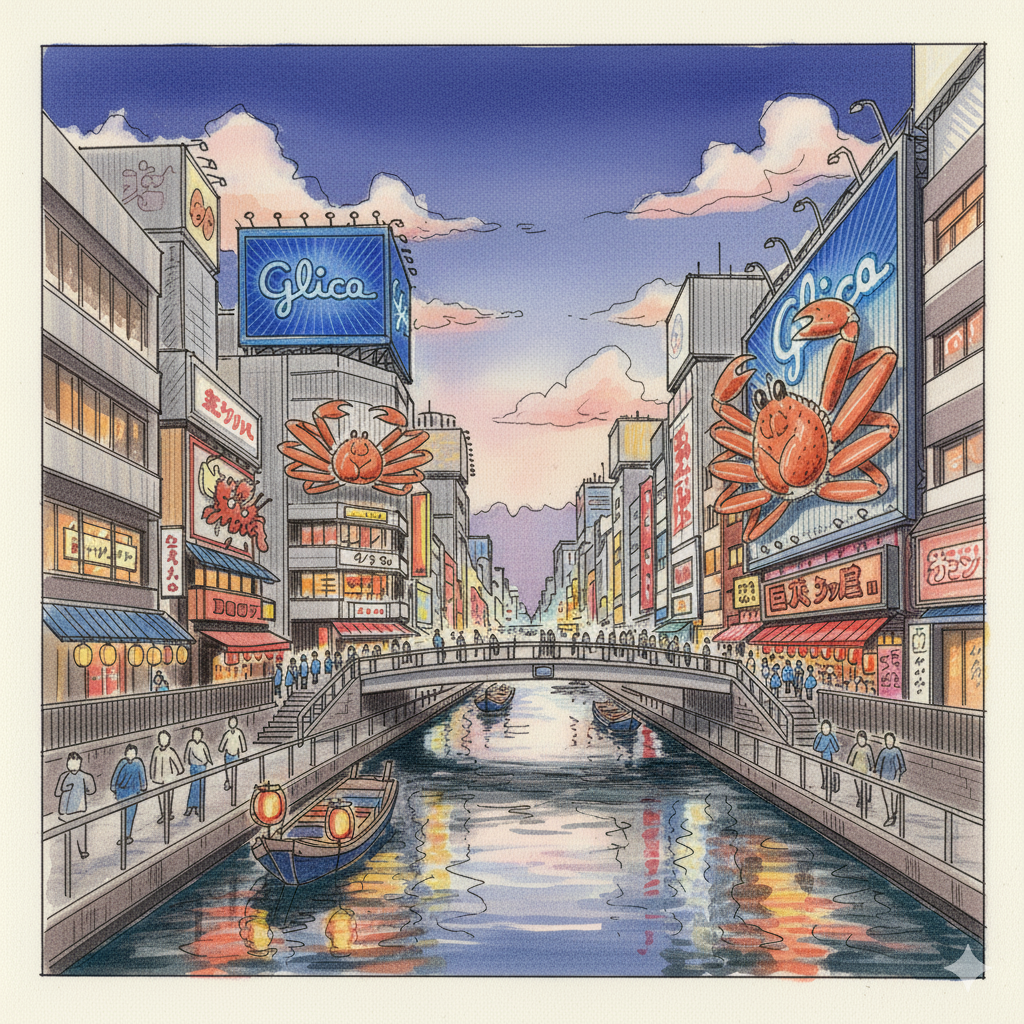
The first encounter with Dotonbori is a symphony of sensory overload. A river of light mirrors the electric sky, giant mechanical crabs wave their claws in a silent welcome, and the iconic Glico Running Man sprints into an eternal, digital future. It is a dazzling, chaotic, and utterly modern spectacle designed for pleasure. But what if this glittering surface, this vibrant painting of contemporary life, conceals a much deeper story? What if the river flowing through its heart carries with it centuries of sacrifice, art, and resilience? This journey ventures beyond the neon to uncover five hidden stories that reveal the true character of Osaka’s most famous district.
The Canal Forged in Sacrifice
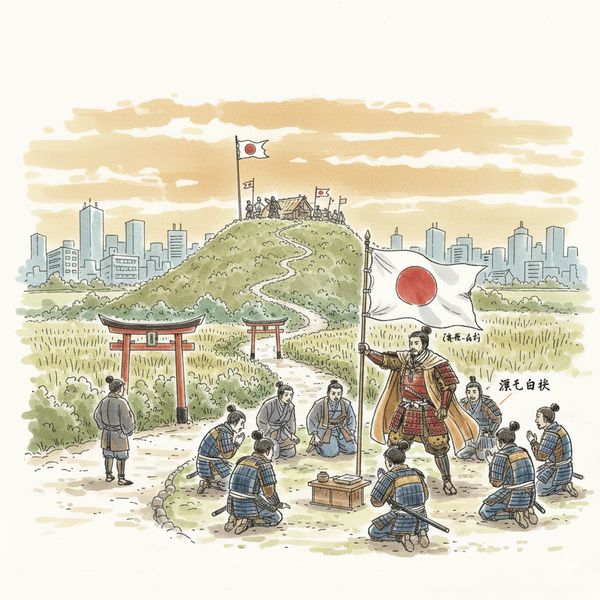
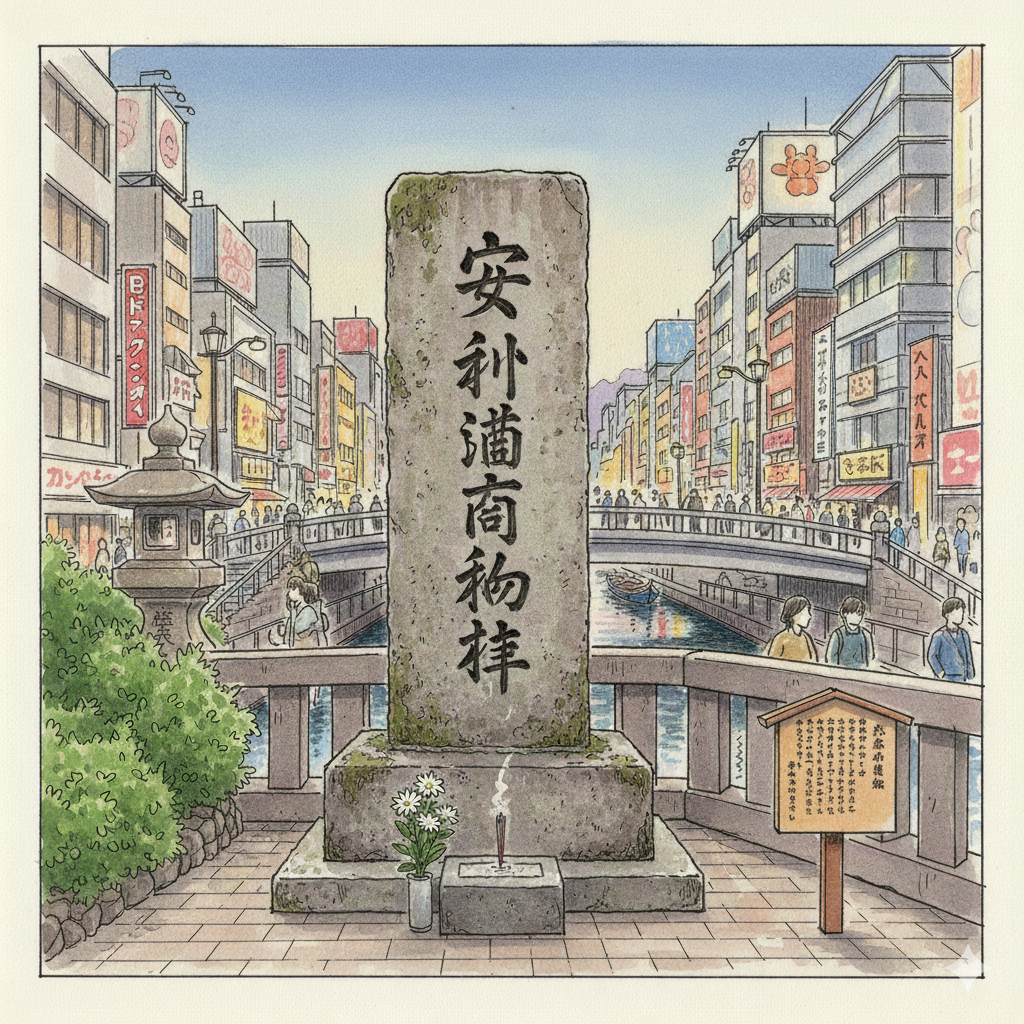
The very name "Dotonbori" is a memorial etched in water and stone. The district’s origin lies not with a government edict, but with the vision of a single merchant, Yasui Doton. At the dawn of the Edo period, he invested his personal fortune to carve a canal through the heart of Osaka, a massive project designed to link the Higashi-Yokobori and Kizu rivers and fuel the city's commercial future. Yet, fate intervened with the cruel irony of a battlefield; the man who sought to build Osaka's future was claimed by the violence of its present, dying in battle before his work was complete.
It was his family who, inheriting his will, saw the canal to its completion. In recognition of his immense personal sacrifice, the waterway was named "Dotonbori"—"Doton's Canal." This act transformed a commercial venture into a story of profound and romantic dedication, forever embedding a sense of drama into the district’s foundation.
The hidden gem marking this origin is The Monument to Yasui Doton翁 (Yasui Doton-ō Hiko) at Nihonbashi Kitazume Higashi. Often overlooked by passersby, this quiet marker is the spiritual "origin point" of Dotonbori's entire commercial spirit. To pause here is to pay respect to its founder and take the first step toward a deeper understanding of this remarkable place.
Dotonbori's foundation shifted from functional utilitarianism to a form of tragic, romantic dedication, setting the stage for centuries of theatricality and performance.
The Empire of Theaters and Teahouses
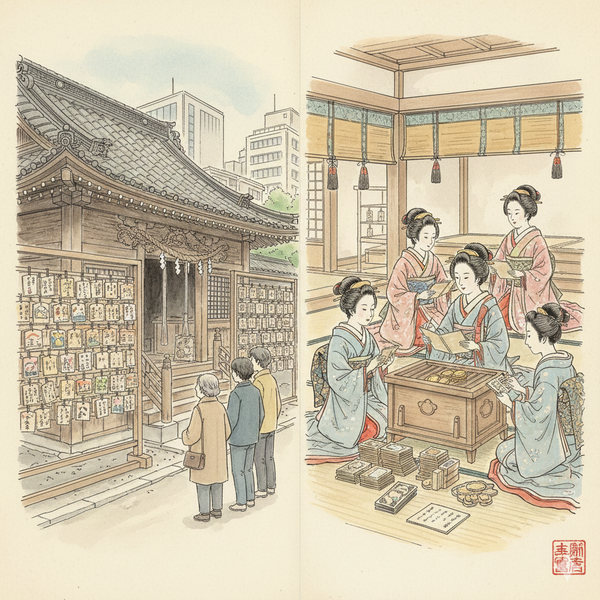
That stage was deliberately and masterfully set by the ruling shogunate, who saw in Doton's canal the perfect arena for a new kind of cultural empire. In 1626, it relocated all of Osaka's major performance venues—for Kabuki, Noh, and Bunraku puppet theater—to the canal's south side. This was not merely an act of cultural patronage but a calculated political design; by concentrating the entertainment industry, the government created an effective strategy for tax collection and maintaining social order.
A symbiotic ecosystem immediately flourished. The grand theaters, like the legendary Nakaza and Kadoza, were supported by 47 government-approved teahouses providing food and drink to theatergoers. This inextricable link between performance and dining gave birth to Osaka's famous spirit of Kuidaore ("eat till you drop"). The culture of feasting was not separate from entertainment; it was part of the same grand show.
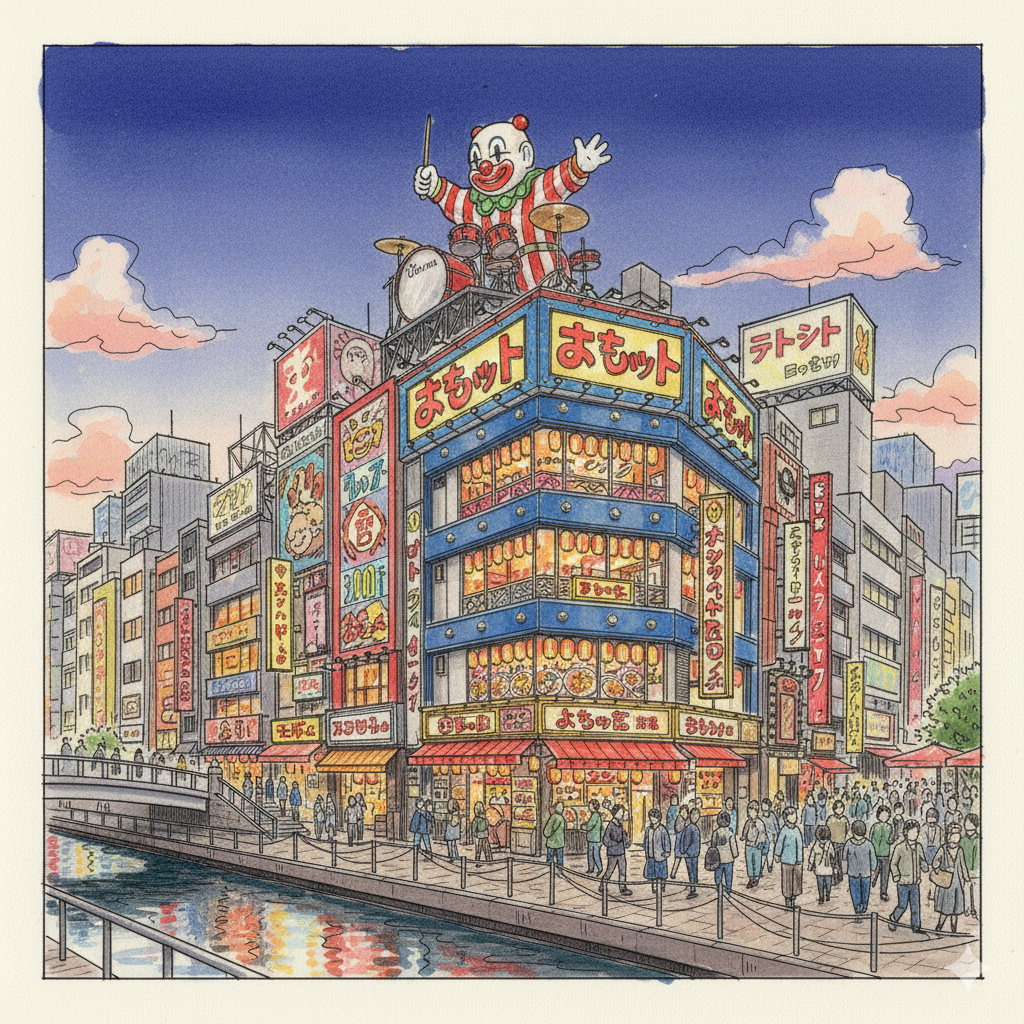
While the original theaters are now gone, their legacy lives on in a modern "hidden gem": The Nakaza Cuidaore Building. This bustling entertainment complex stands where the historic Nakaza theater once thrived. By inheriting its name, the building serves as a living monument to Dotonbori's unbroken axis of entertainment, connecting the classical drama of the past with the pop culture of today.
This historical fact proves that Dotonbori's core culture—"Kuidaore" (eat till you drop)—has been inseparable from "drama" and entertainment since the Edo period.
The God Who Wears a Coat of Wishes
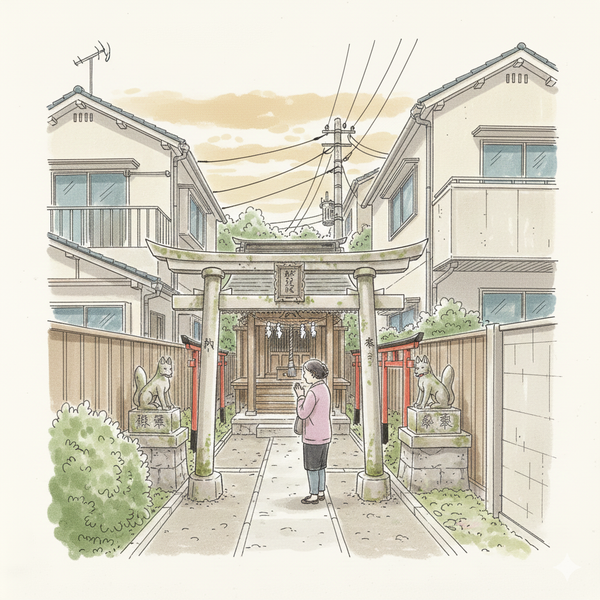
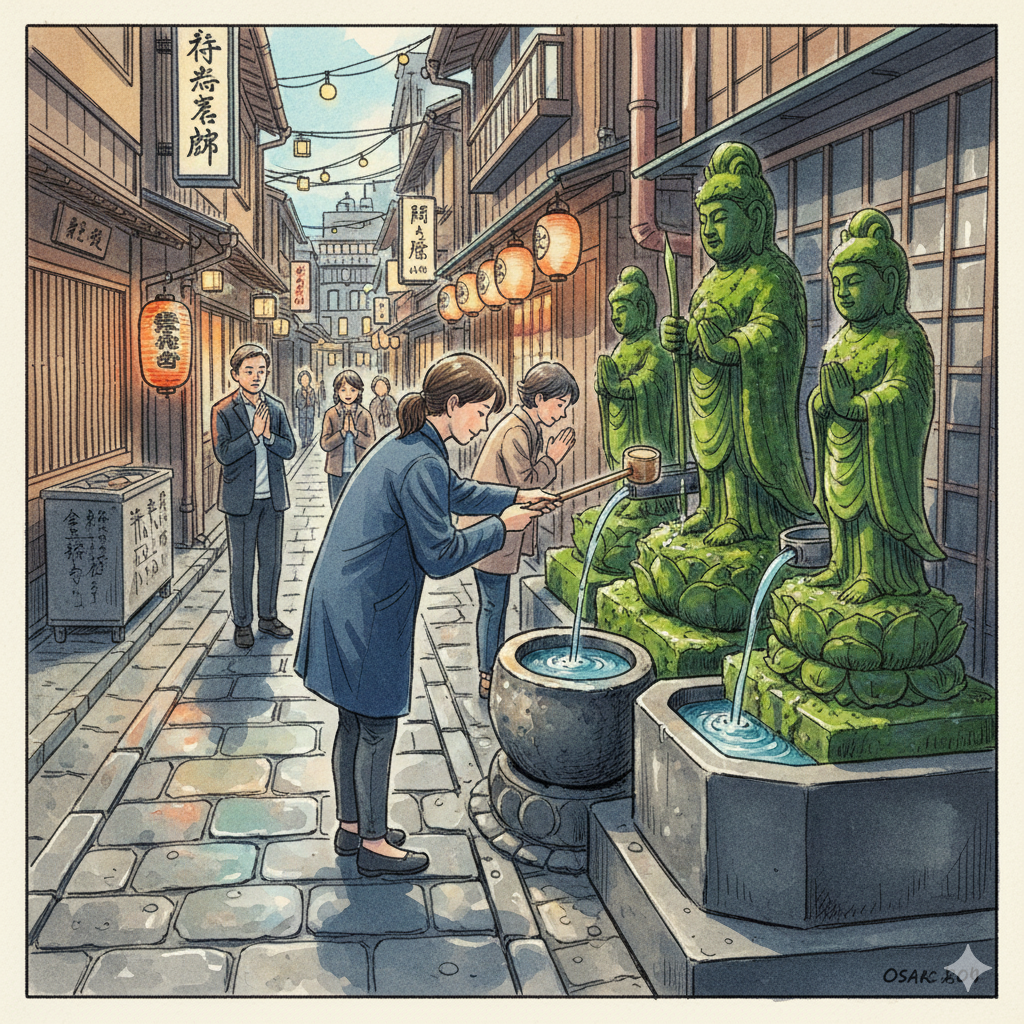
Steps away from the neon glare, a different world exists. Hozenji Temple offers a pocket of profound tranquility, its stone-paved alleys lit by traditional lanterns. At its heart stands the "Mizukake Fudo Son," a statue of the fierce deity Fudo Myoo, who is almost unrecognizable beneath a thick, living coat of vibrant green moss.
This moss is not a product of nature alone; it is the physical manifestation of countless prayers. Visitors pour water over the statue to ask for good fortune, from business success to healing. Over the decades, this ritual has cultivated a lush green covering, turning the deity into a symbol of accumulated hope. The statue's story is one of incredible resilience. It miraculously survived the WWII bombings that leveled the entire district, standing alone amidst the ruins. For the survivors, it became a spiritual anchor around which the community slowly and bravely rebuilt.
The true hidden gem here is not just the temple, but the experience itself: The stone-paved alleys of Hozenji Yokocho and the intimate ritual of watering the Fudo Myoo statue. To participate in this profound, interactive cultural moment, follow the traditional steps:
- First, purify your hands at the nearby well.
- Ladle water and pour it three times over the main statue of Fudo Myoo.
- Pour water once over each of the two smaller attendant statues to his left and right.
- Finally, pour water one last time over Fudo Myoo to complete your prayer.
The moss is not merely an accumulation of water, but an "accumulation of wishes," representing the tangible hopes of the people for healing, prosperity, and connection.
The Grinning Guardian of the Osaka Spirit
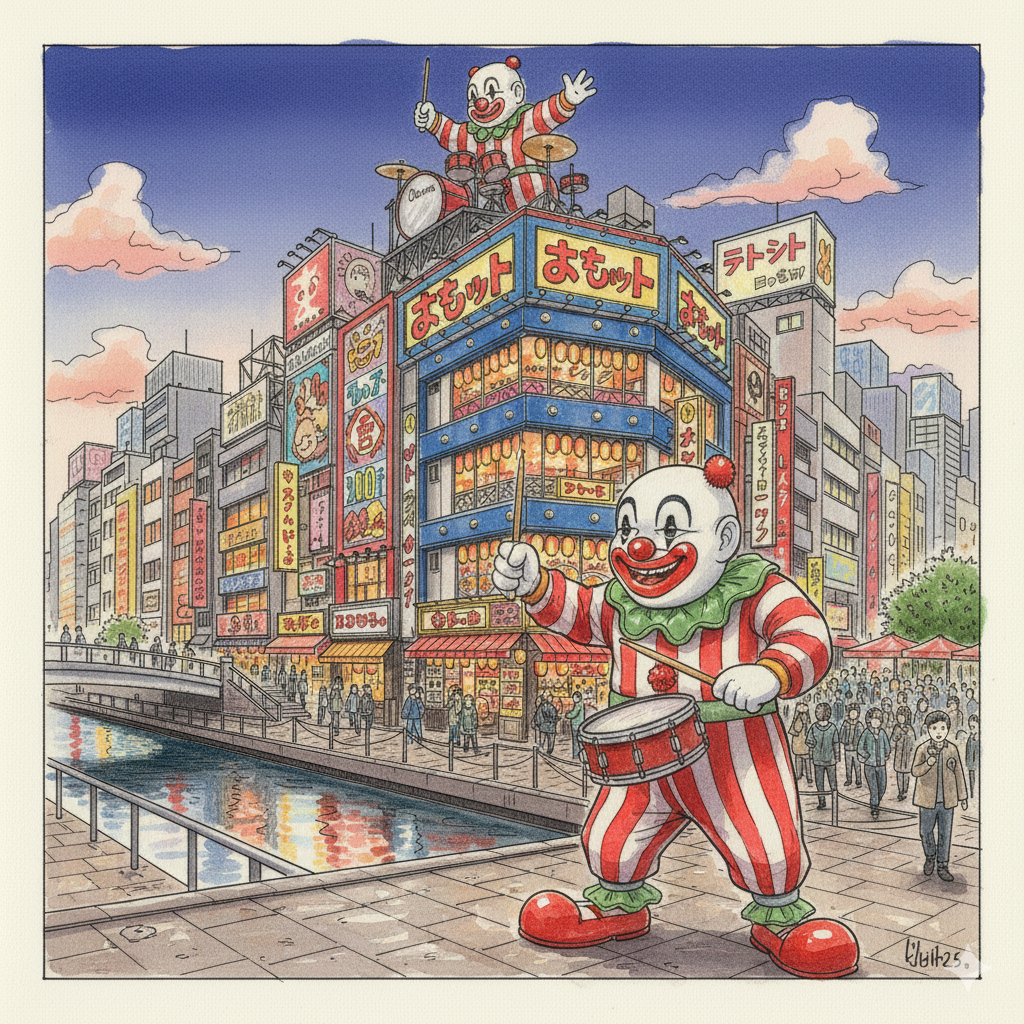
No figure better embodies the Kuidaore philosophy than Kuidaore Taro, the relentlessly drumming, bespectacled clown mascot. More than a mere commercial icon, Taro is the personification of the Osakan spirit—joyful, humorous, and unapologetically dedicated to the pleasures of life.
His profound connection to the city's identity was proven in 2008 when the restaurant he had represented for decades announced its closure. The news sparked a massive public outcry and an outpouring of affection for the "retiring" mascot. The citizens of Osaka saw him not as a sign, but as one of their own. His endurance and cheerful grin reflect their own optimistic and self-deprecating nature.
Taro's hidden gem is his current post: Kuidaore Taro's current home in front of the Nakaza Cuidaore Building. This placement is deeply significant. Standing on the very ground once occupied by the great Nakaza theater, Taro has become the modern, comedic successor to Dotonbori’s grand theatrical traditions. He is the guardian of an entertainment spirit that has flowed uninterrupted from classic Kabuki to contemporary comedy.
To understand Taro's smile and resilience is to touch the deep cultural identity of the Osaka people: self-deprecating, humorous, and courageously devoted to the enjoyment of life.
The Two Faces of Dotonbori's Feast
While Dotonbori is globally famous for street food like takoyaki, this is only half of its culinary story. As a high-class theater district, it historically catered to discerning patrons who expected refined dining to accompany their artistic pursuits. This created a parallel tradition of high-end cuisine that has endured for centuries.
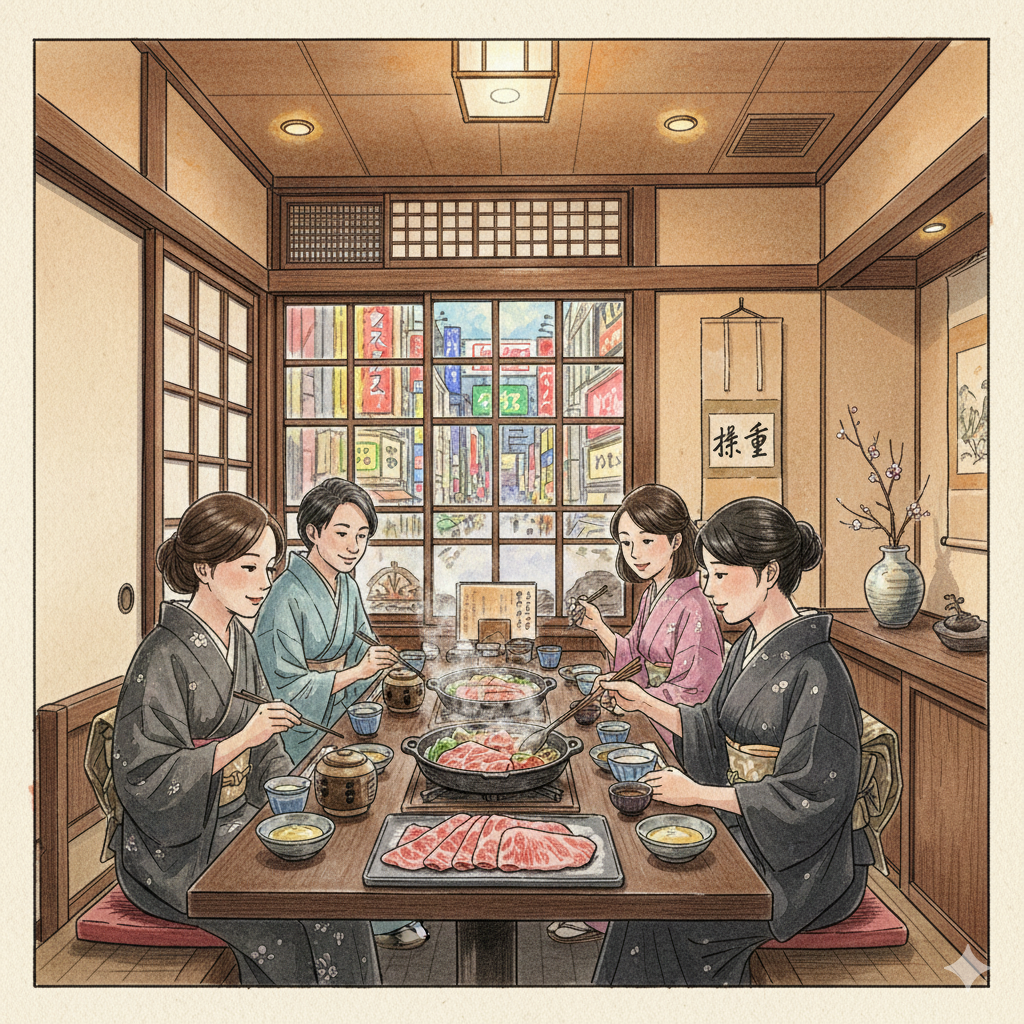
To grasp the full depth of Dotonbori's food culture, one must look beyond the bustling stalls to find the "time capsules" that preserve this more elegant past. The ultimate hidden gem for this experience is Harijyu, the century-old, high-end sukiyaki restaurant. Located in the heart of the district, Harijyu represents the unbroken tradition of exquisite Kansai-style hospitality, or Omotenashi. As proof of its prestige, it was selected for the "Tabelog Sukiyaki・Shabu Shabu 'Hyakumeiten / Top 100 Restaurants' 2024." A visit here offers the perfect counterpoint to the joyful chaos of street food, allowing a traveler to understand the complete, layered story of why Osaka is known as "Japan's Kitchen."
The persistence of such exquisite dining demonstrates Dotonbori's ability to maintain a "temporal layering" and a rigor for detail amidst a commercial district, linking back to the refined service of the Edo-era theater teahouses.
The River of Resilience
The five stories of Dotonbori—of a merchant’s sacrifice, a shogun’s design, a god’s survival, a clown’s spirit, and a chef’s dedication—flow together into a single, powerful narrative of cultural resilience. Dotonbori is not merely a place of fleeting pleasure; it is a living archive of the Osakan spirit. Its waters carry the memory of those who built it, entertained in it, prayed in it, and rebuilt it. It is a testament to a city that has faced down tragedy with humor, hard work, and an unwavering passion for life.
The next time you stand before its neon glow, what stories will you look for beneath the surface?
Works Cited
- 【日本雜學】日本除了銀座,其實還有金座、銅座……--日本頻道--人民網
- Osaka Dotonbori, a town of food and entertainment popular from the Edo Period - Japan Travel Planner - ANA
- What is Dotonbori? | Official web site The Shopping District of ...,
- 中座くいだおれビル 公式サイト - 大阪道頓堀アミューズメント
- Hozenji Temple | Travel Japan - Japan National Tourism Organization (Official Site)
- Hozenji Temple, Mizukake Fudo Son - Must-See, Access, Hours & Price | GOOD LUCK TRIP
- 法善寺橫丁與水掛不動尊介紹 | GOOD LUCK TRIP
- 【Japanese Temples and Shrines】 Make a Wish to the Moss-Covered Buddha: The Story of People Woven by Hozenji in the Heart of Minami, Osaka - FUN! JAPAN
- A Brief History of Hozenji, Minami's 24-Hour "Power Spot" - Osaka.com
- 大阪名物くいだおれ 本日閉店 今までありがとう - 戸田市に住むと楽しいな!
- 【2025最新】大阪道頓堀、難波的推薦章魚燒8選|全店實際品嚐報告 - FUN! JAPAN
- 播重道頓堀本店- 鍋物, 壽喜燒涮涮鍋, 和牛料理| 大阪| 中文預約 - My Concierge Japan
- Hari Ju Dotonbori Honten - 難波/壽喜燒/可預約| Tabelog - 食べログ