(ENG) Before Edo Was Born: Five Secrets of Ebara, Tokyo's Forgotten Origin Point
The story of Ebara is a microcosm of Tokyo itself. This single patch of land was first valued for the oil from its soil, then for the strategic height of its plateau, then for the spiritual authority of its lords, then for the distant prayers of a shogun's court, and finally...

Listen attentively to the historical stories told in detail
The Tokyo You Don't Know You're Walking On
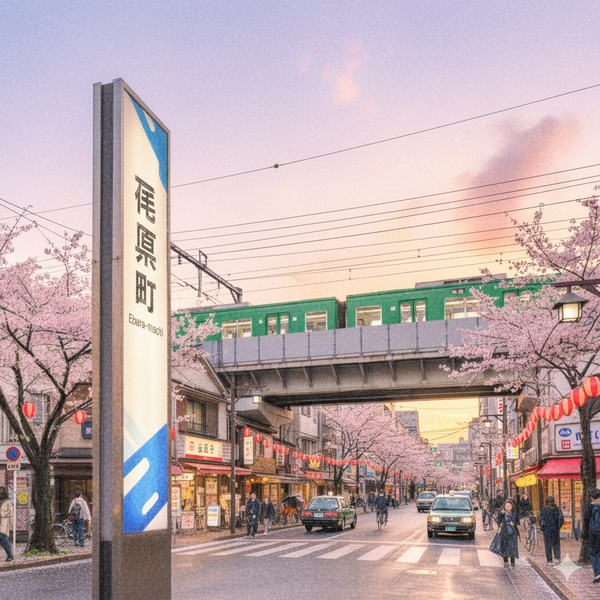
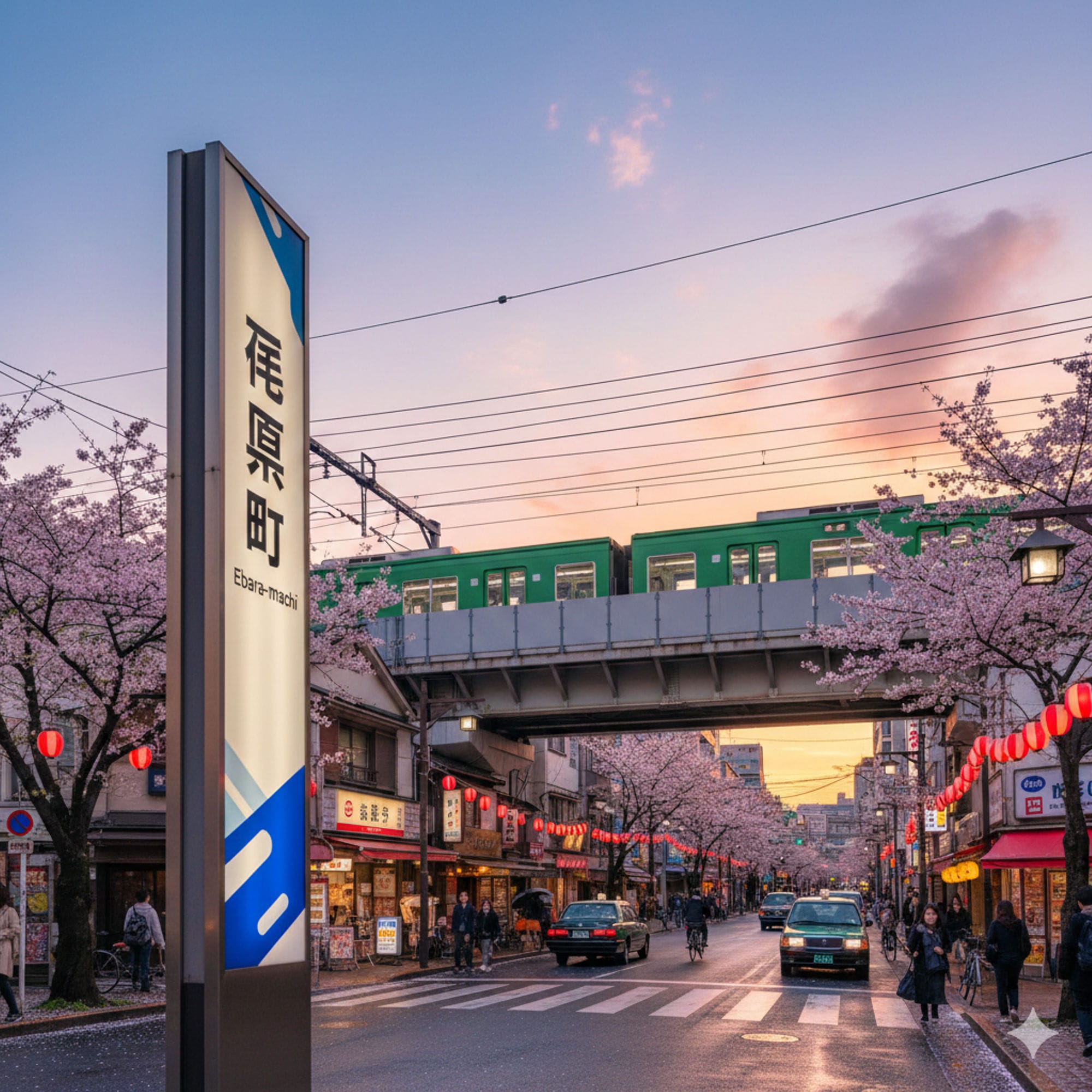
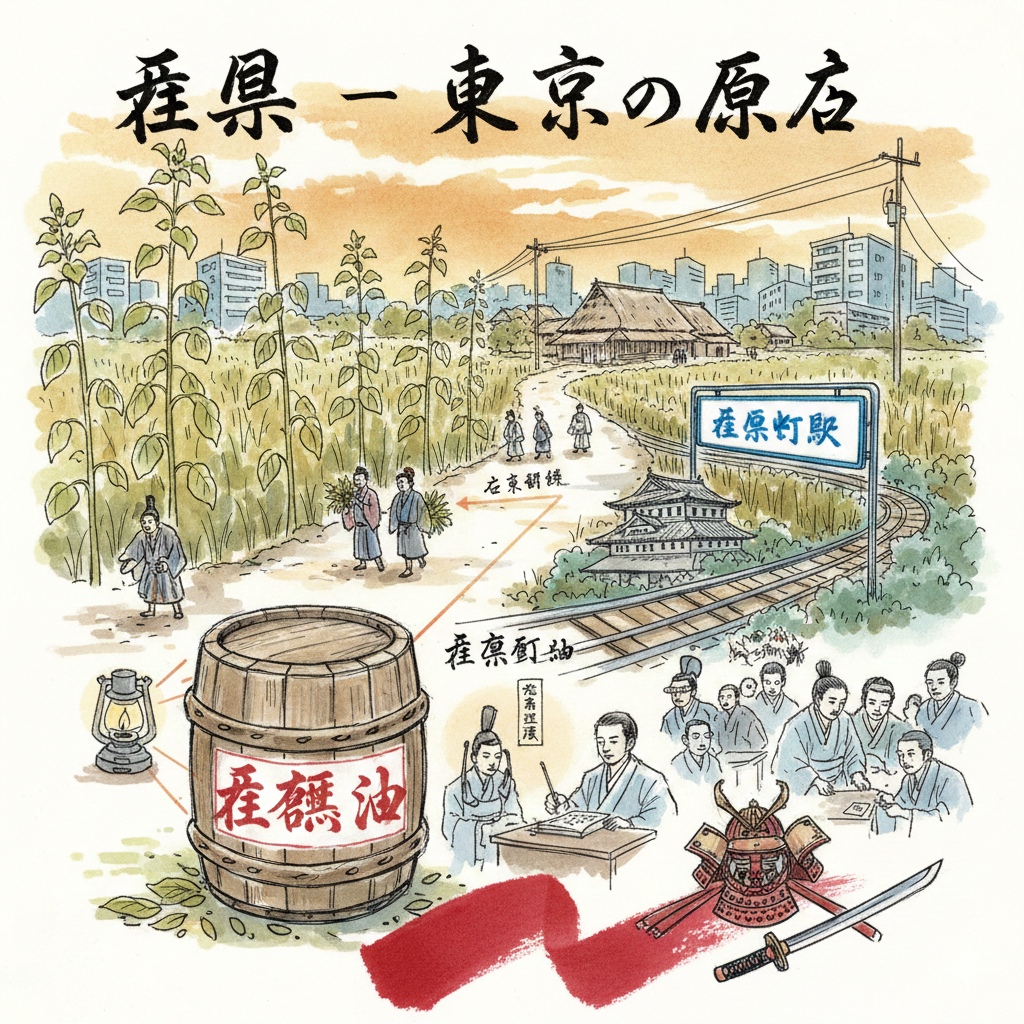
Stroll through a neighborhood like Ebara in Tokyo's Shinagawa Ward, and you'll find a scene of pleasant, modern tranquility. Quiet residential streets wind past local shops, children walk home from school, and the rhythmic clang of a railway crossing marks the passing of another train. It feels like a place defined by the gentle routines of daily life. But this ordinary surface conceals an extraordinary depth. Beneath your feet lies a history stretching back more than a millennium—a story of power, faith, and identity that predates Tokyo itself.
This neighborhood is a case study in how a city’s most profound histories can hide in plain sight. Once the vast political and economic heart of the region, Ebara suffered a historical demotion, shifting from an ancient core to an administrative edge during the Edo period. It now hides its legacy as Tokyo's ancient heartland on the city's modern fringe. This article is a journey to uncover that legacy through five surprising stories. From the crop that gave Tokyo its first name to the secret patronage of the shogun's court, these tales will fundamentally change how you see the quiet streets of the world’s largest metropolis.
Tokyo's Ancient Name Wasn't Edo—It Was "Perilla Field"
Place names are the fossil records of a landscape's history, and long before the fortress city of Edo rose to prominence, the identity of this entire region was rooted in the soil. The name "Tokyo" is modern, and "Edo" is medieval, but the area’s most ancient name speaks of agriculture, administration, and a quiet economic power that shaped the Kanto Plain.
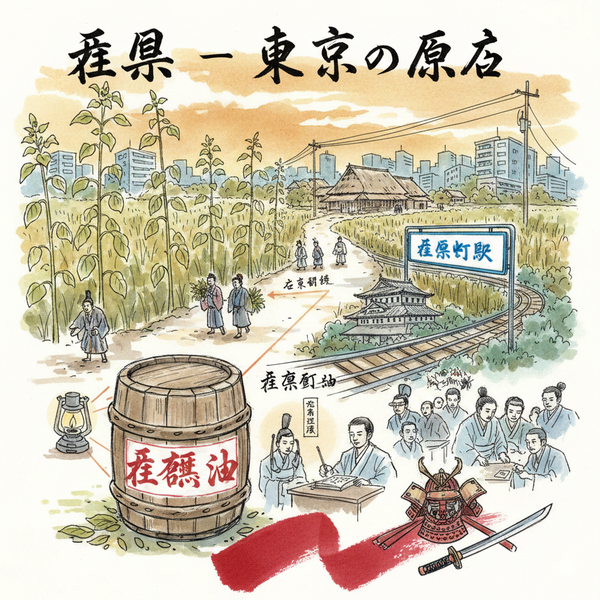
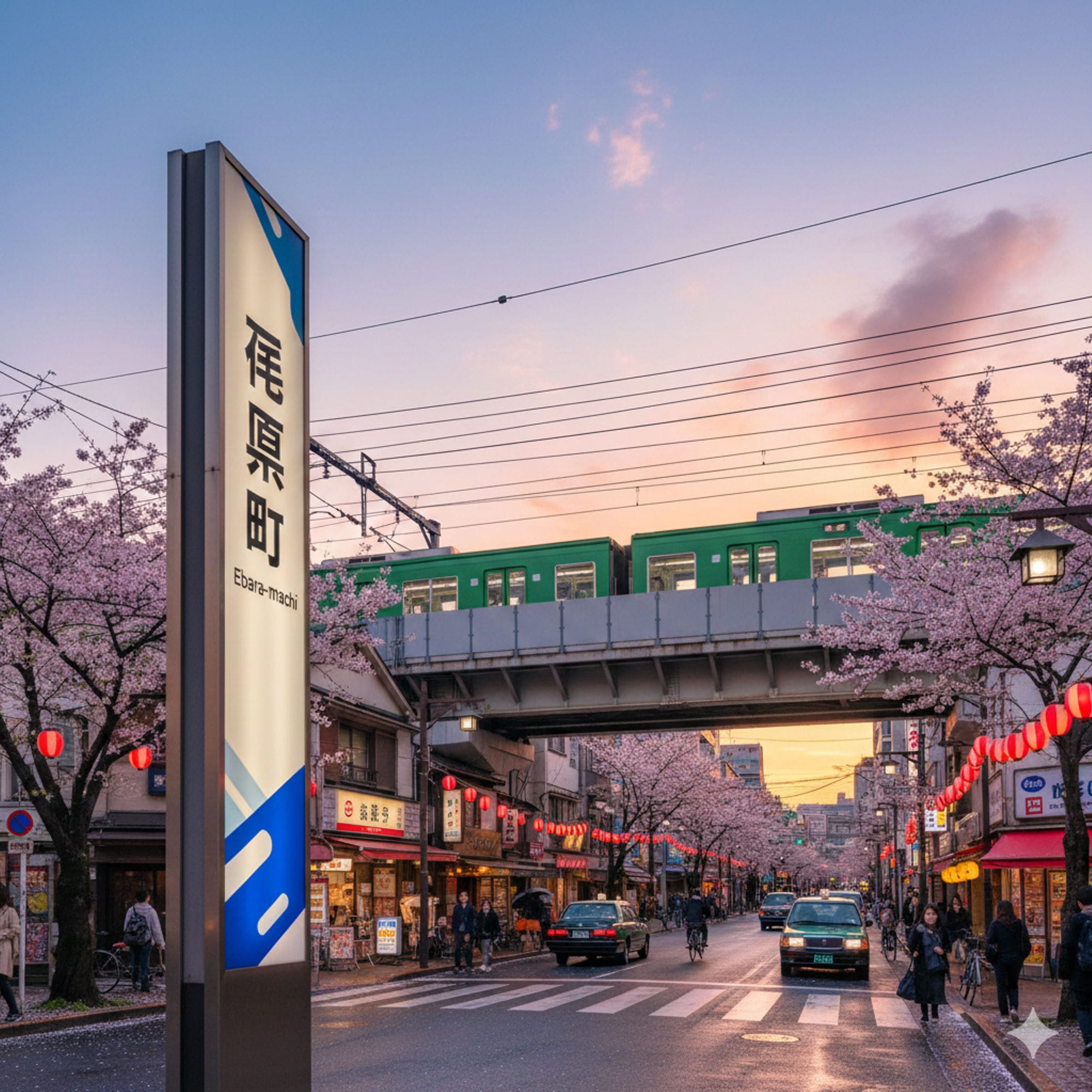
The name "Ebara" dates to the 7th century and literally means "Perilla Plain." It derives from the vast fields of 荏胡麻 (egoma, or Perilla Seed) that once flourished here. This humble crop was a cornerstone of the ancient Japanese economy, prized for the valuable oil it produced for lamps and cooking. Historical records even note that 渡來人 (toraijin)—immigrants from the Asian mainland—presented egoma oil to the imperial court from this very region, suggesting Ebara was an early hub of innovation where new technologies took root.
More than just a productive field, Ebara was the administrative center—the 郡衙 (Gun'a), or county government office—of the vast Ebara County, which encompassed nearly all of modern-day Shinagawa, Meguro, and Ota wards. Yet, a tantalizing mystery remains: the exact location of this ancient seat of power has never been confirmed. Historical consensus places it near modern Ebara-machi Station, strategically located on what is believed to be the "oldest route before the ancient Tokaido," a proto-highway that was the region's main artery. The very land that served as an administrative center would soon become a strategic military lookout.
A Single White Banner Redefined a Neighborhood for a Millennium
As the ancient administrative order gave way to the turbulent military rivalries of the Heian era, the high ground of Ebara took on a new strategic importance. A single, decisive moment in 1030 AD would not only establish a new spiritual center but would permanently etch a story of warrior ambition onto the map itself.
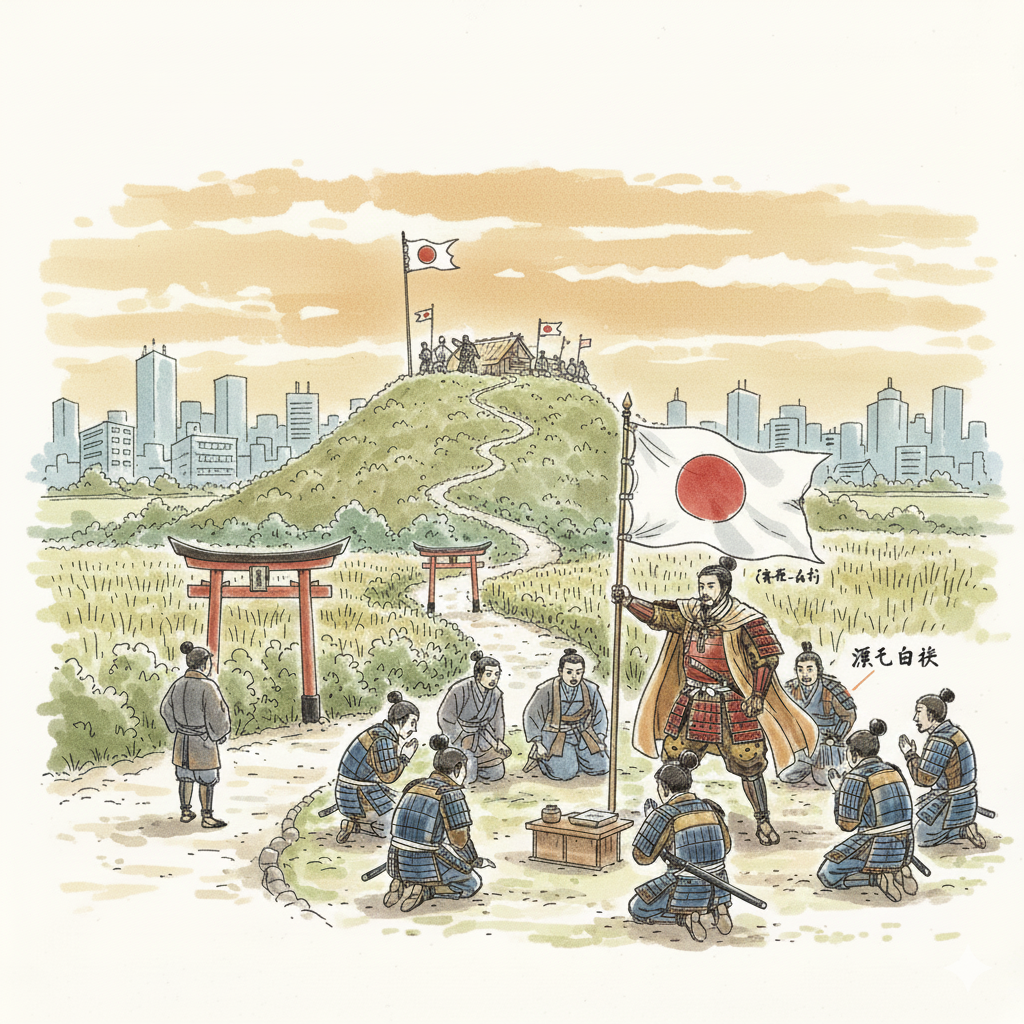
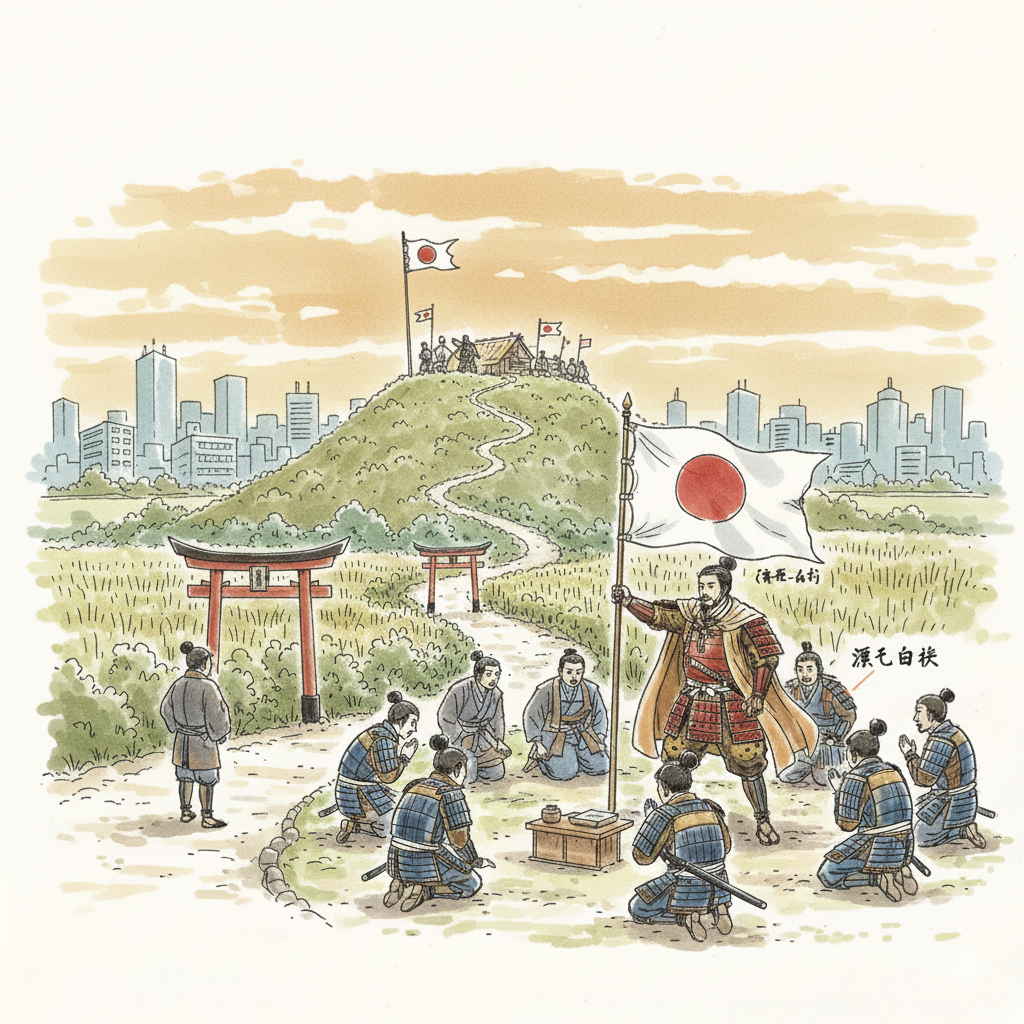
That year, the samurai commander Minamoto no Yorinobu was dispatched by the court to quell the Taira no Tadatsune Rebellion, a major provincial uprising that threatened imperial authority in the Kanto region. Marching his army through the area, he established a camp on a strategic plateau overlooking the old heartland. Sensing a powerful spiritual energy in the land, Yorinobu founded a shrine to Hachiman, the god of war and patron deity of his Genji clan. To seal his prayers for victory, he raised the clan's iconic 白幡 (shirahata, or white banner) high above the plateau for all to see.
This military act had a lasting legacy. The place where the banner was raised came to be known as "Hatanodai" (旗之台), or "Banner Plateau," a name it still holds today. The shrine Yorinobu founded, now the Hataoka Hachiman Shrine, stands as the physical monument to this event. Stand on the shrine grounds today, especially among its famous cherry blossoms that blend warrior solemnity with timeless Japanese beauty, and you are occupying the same hilltop where the Genji clan's ambition to dominate Kanto first took root.
A Shrine and a Temple Next Door Tell a 700-Year Story of Rival Faiths Cooperating
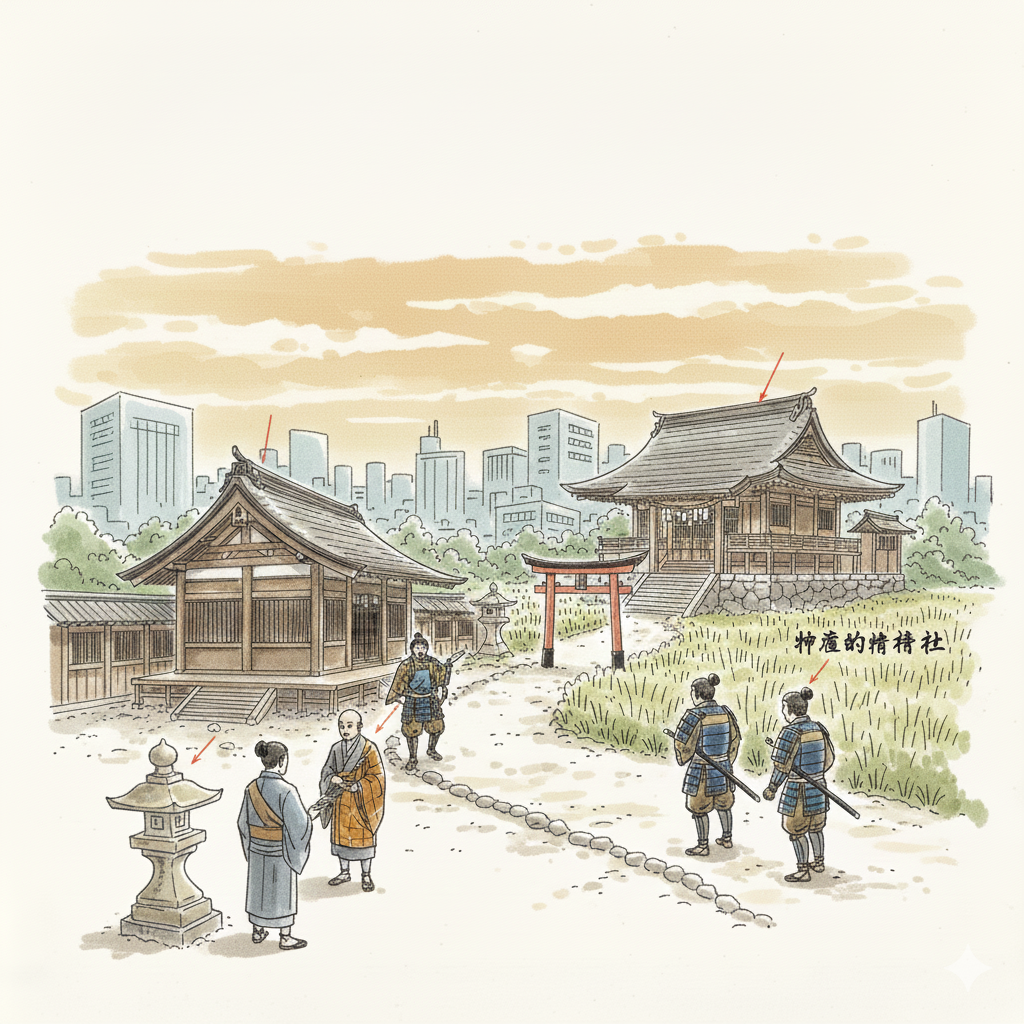
The interplay between religion and power grew even more complex in medieval Japan, as samurai lords sought to legitimize their rule by patronizing both traditional deities and new Buddhist sects. In Ebara, this fusion of faith and authority left behind a unique and living architectural signature.
During the Kamakura period, the local lord Ebara Yoshimune—a descendant of the great Minamoto clan—held sway over the area. For him, Hataoka Hachiman was not just a local shrine but an ancestral site founded by his clan's patriarch. While maintaining his family’s devotion to the war god Hachiman, he also became a pious follower of the charismatic and rapidly growing Nichiren school of Buddhism. This dual faith became physically manifest when his son, who took the monastic name Rōkei Shōnin, founded Horen-ji Temple on the land immediately adjacent to the family's ancestral shrine.
For the next 700 years, the two institutions were inextricably linked. Under a system known as Shinbutsu Shūgō (神佛習合, the syncretism of gods and buddhas), the Buddhist temple managed the affairs of the Shinto shrine. This was common across Japan until the Meiji Restoration forcibly separated the two religions. Yet, in Ebara, a powerful echo of this shared history remains. Though now independent, the shrine and temple still stand shoulder-to-shoulder, their immediate proximity a rare, living monument to centuries of cooperation—a quiet testament to a time when two faiths governed one community as one.
The Shogun's Most Secretive Women Secretly Funded a Local Shrine
By the Edo Period, Ebara was officially outside the city limits of Edo proper. Yet its spiritual influence, rooted in its martial history as a center for practitioners of archery (弓術者), was so potent that it commanded the attention and wealth of the most powerful and secluded figures in the country: the women of the shogun's court.
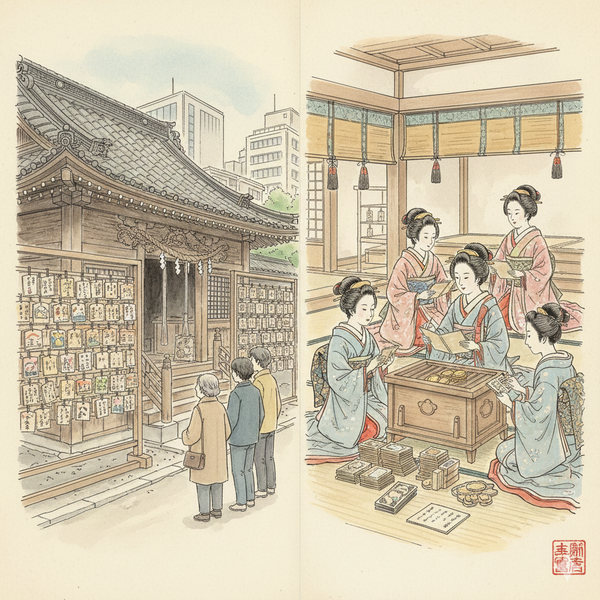
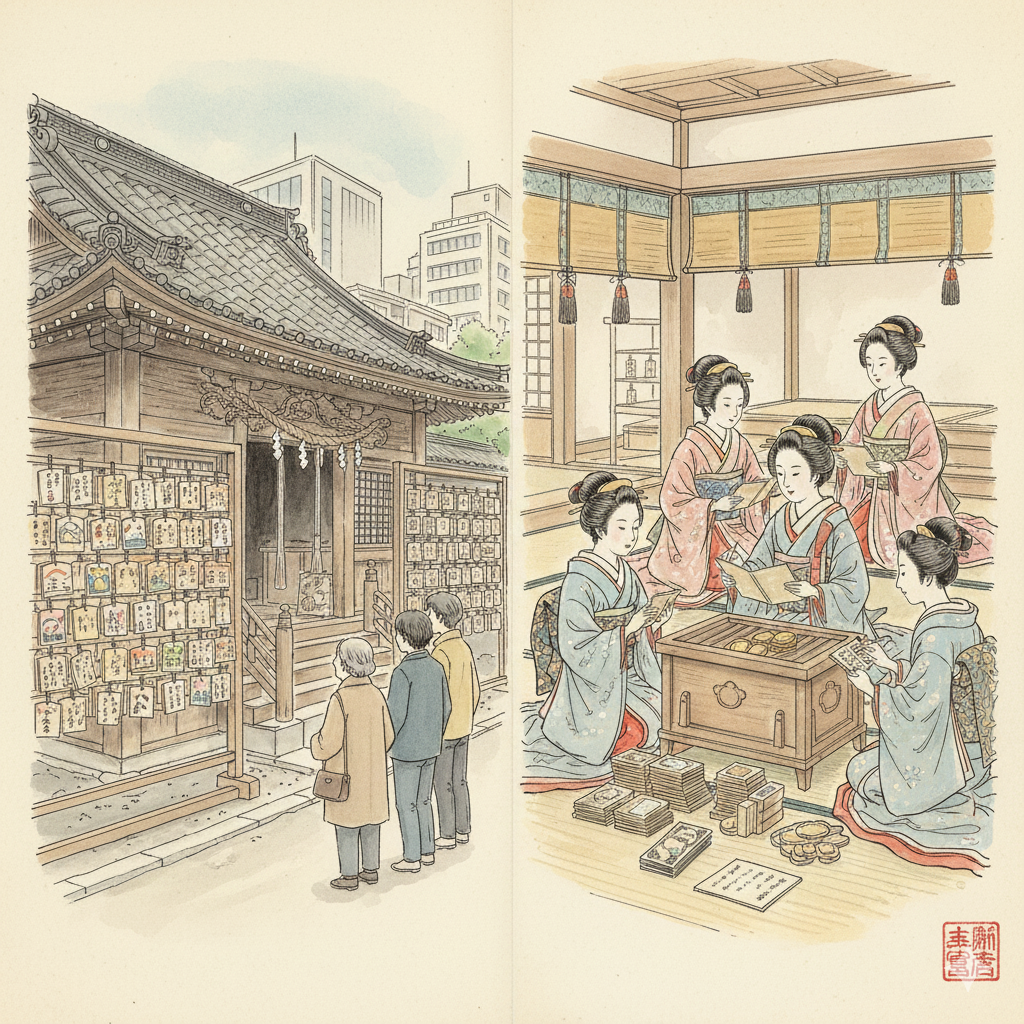
In 1814, Hataoka Hachiman Shrine underwent a major renovation. The source of the funding is astonishing: a collective donation from the 大奧女中 (women of the O-oku), the elite and wealthy ladies-in-waiting who served in the shogun's inner palace at Edo Castle. This patronage is remarkable. It proves that the shrine's reputation for divine favor transcended its geographical marginalization, reaching deep into the most private and influential chambers of the Tokugawa regime.
The physical link to this secret act of faith still exists today. The shrine’s Ema-den (繪馬殿, or Votive Tablet Hall) is a surviving structure from that 1814 renovation and is now designated as a National Tangible Cultural Property. This elegant wooden hall is more than just a beautiful building; it is a direct connection to the private piety of the shogun's court, a testament to how spiritual power can erase physical distance and bring the heart of the empire to a quiet neighborhood shrine.
The Deepest History is Found in the Quietest Corner
A city’s history is not solely defined by powerful shoguns, samurai clans, and grand temples. It is also written in the quiet, resilient faith of ordinary people, preserved for generations in the hidden corners of their neighborhoods.
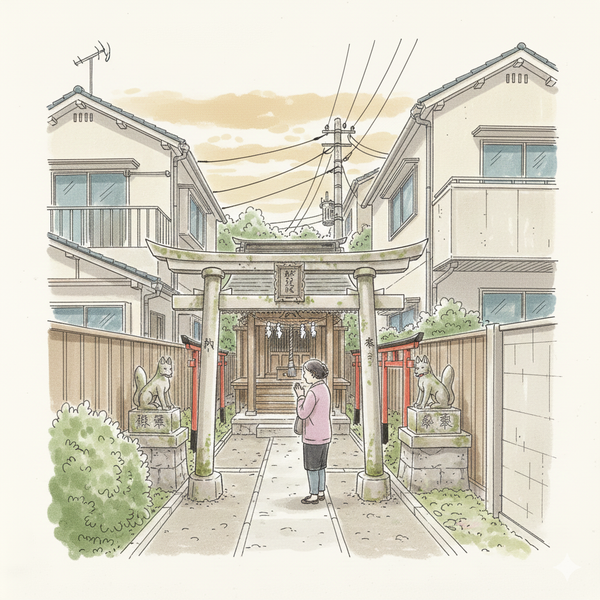
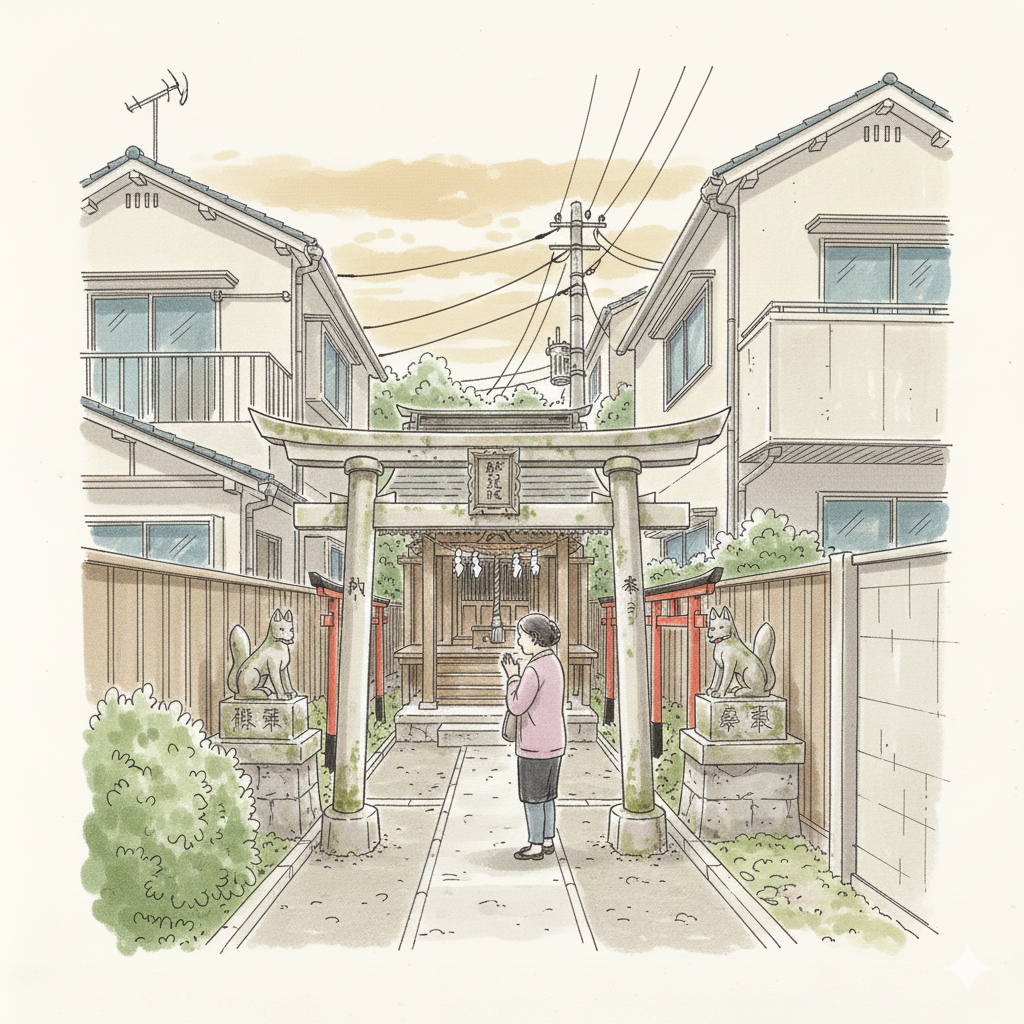
Deep within Ebara's residential labyrinth, near the Shinagawa Ward Ebara Dai-Ichi Junior High School, lies the Kokuzo Gochuu Inari Daimyojin (國藏五柱稲荷大明神). The founding date of this tiny "pocket shrine" is unknown. It has no official website, no grand entrance, and no mention in official histories. It is a true urban treasure hunt to find, sustained only by the devotion of the local community who see it as their guardian deity.
The shrine's elusive nature stands in stark contrast to the well-documented history of its larger neighbors. Its importance lies not in recorded events but in its very survival. For the urban explorer, the hidden gem is not just the shrine itself, but the act of finding it. To locate this sacred space is to receive an insider's tip, discovering a testament to a community's enduring connection to its past and proving that the most profound history is sometimes found in the city’s quietest corners.
The Soul of a City Is in Its Layers
The story of Ebara is a microcosm of Tokyo itself. This single patch of land was first valued for the oil from its soil, then for the strategic height of its plateau, then for the spiritual authority of its lords, then for the distant prayers of a shogun's court, and finally, for the quiet devotion of its modern residents. Ebara's journey—from an ancient administrative center named for a humble crop to a modern neighborhood where the deepest history is protected in the quietest of laneways—is a reminder that the seemingly ordinary ground beneath our feet is a library of forgotten stories. These layers of ancient economics, medieval warfare, shogunal secrets, and enduring local faith are what give a megacity its soul.
The next time you walk through a quiet neighborhood in your city, what forgotten histories might you be standing on?