(ENG) Beyond the Billion-Dollar View: 5 Hidden Histories of Hong Kong's Victoria Peak
Victoria Peak offers more than just a spectacular view; it is a historical landscape that tells the story of Hong Kong's complex identity. The engineering ambition of Lugard Road, the class divisions of Old Peak Road, the racial segregation codified by the Peak Ordinance, and the scars of war...

Listen to the beautiful historical stories
More Than a Postcard View
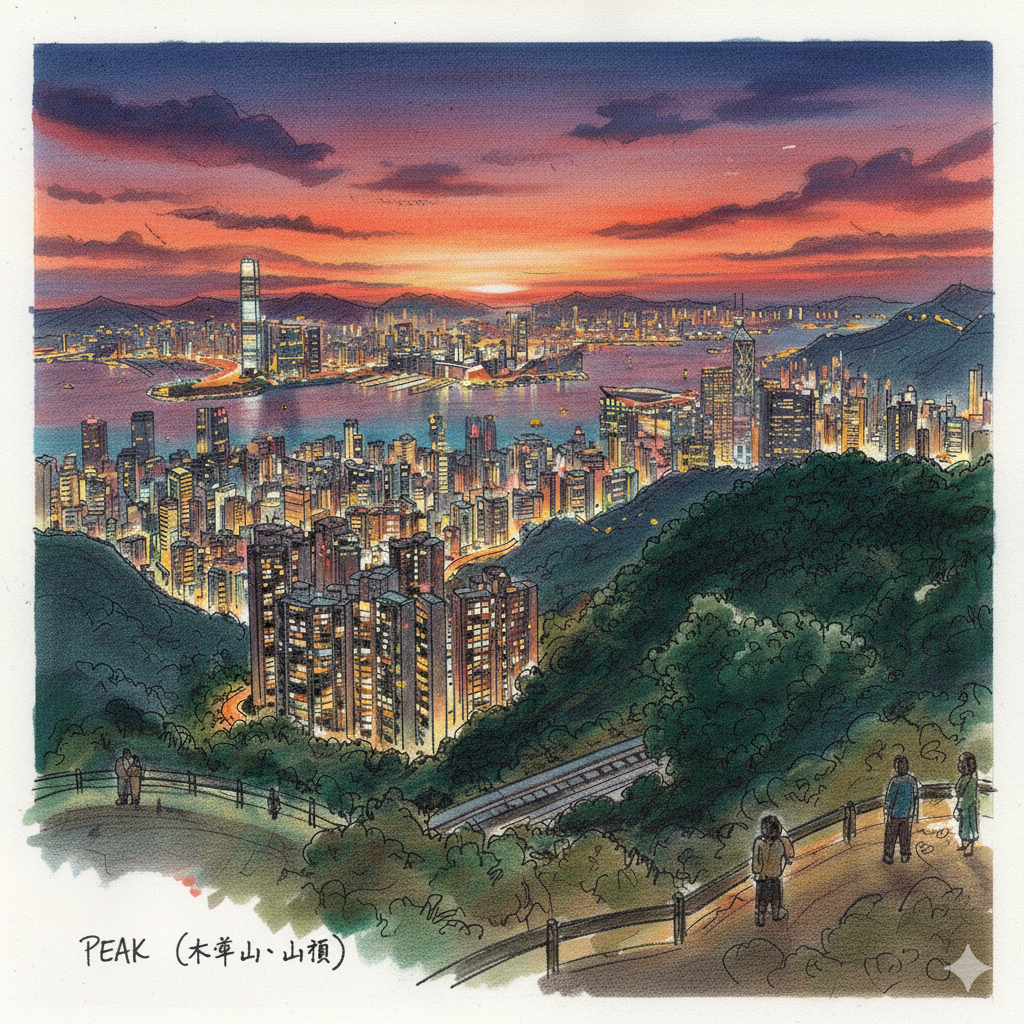
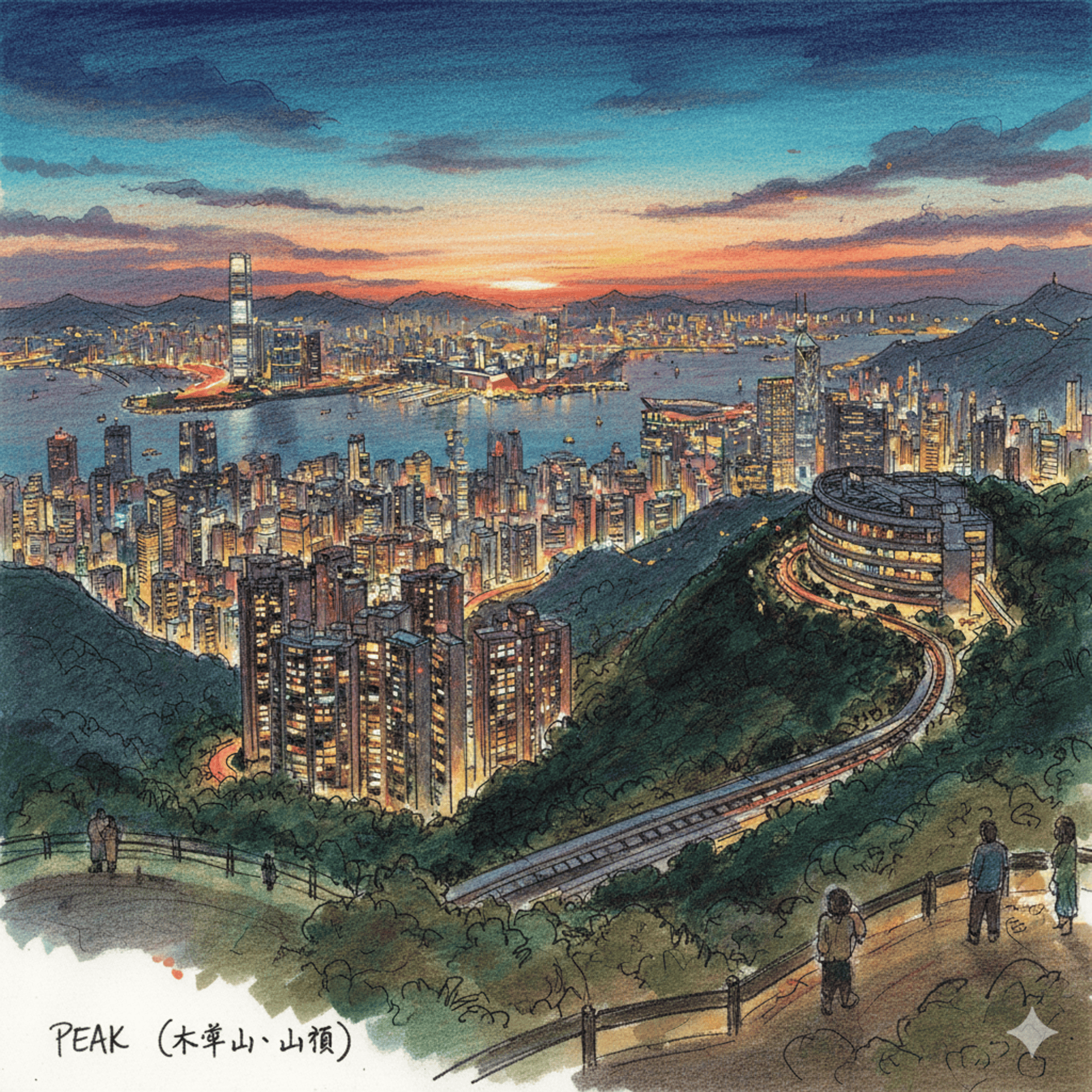
Every day, thousands of people ascend to Hong Kong's Victoria Peak to witness one of the most famous urban vistas on Earth. The glittering forest of skyscrapers, framed by the deep blue of Victoria Harbour, is a picture of staggering success and modernity. It’s a perfect, uncomplicated view, captured on countless postcards and Instagram feeds.
But what if that perfect view is hiding something? Beneath the polished surface of this global landmark lies a much deeper, more complex, and often darker history. The very ground on which visitors stand is a landscape shaped by colonial ambition, racial segregation, the brutalities of war, and the forgotten struggles of the people who built this city. This is not just a viewpoint; it's a historical text waiting to be read.
This article uncovers five surprising stories hidden in plain sight on Victoria Peak. Each is tied to a physical place you can still visit today—a hidden gem that tells a tale of conflict, irony, and resilience, revealing the true story of Hong Kong.
The Cliffside Path Built by the Banned
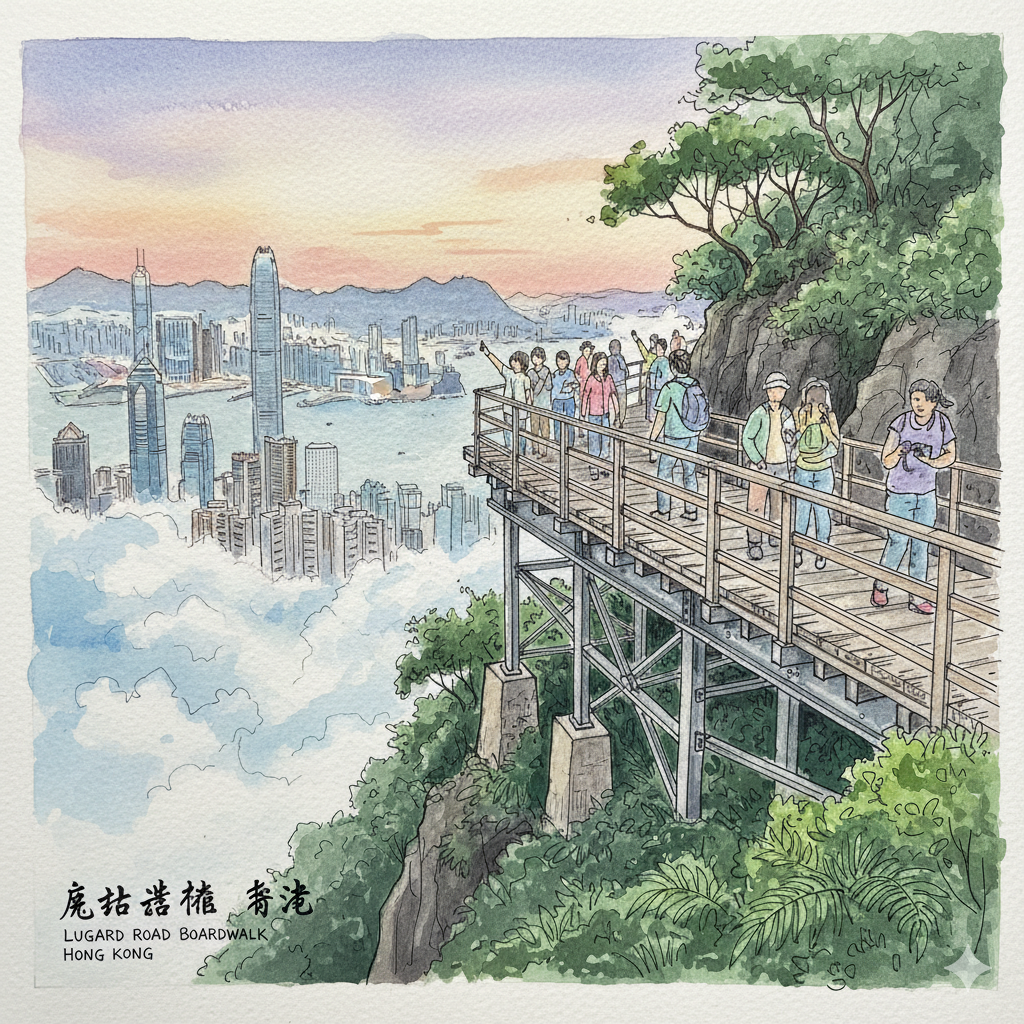
Lugard Road is one of Hong Kong's most famous and scenic walking trails, a gentle path that wraps around the Peak, offering breathtaking panoramic views of the city below. When this engineering marvel was completed between 1913 and 1922, it was hailed as a monumental colonial achievement. A contemporary source praised it as:
"the greatest work of man's conquest over nature"
The difficulty of its construction cannot be overstated. Royal Engineers had to blast through solid rock and build retaining walls over unstable ground. The road's most incredible feature is a 1,448-foot trestle path—a skywalk built directly into a sheer cliff face using eighty-seven reinforced concrete piles.
Here lies a deep historical irony. This exclusive sanctuary for colonial elites was built by the hands of Chinese laborers. Skilled stonecutters, many from Chaozhou, performed the dangerous work, which came at a high human cost. Industrial casualties were common and the value of human life was clearly underestimated, with known incidents including the fall of a 45-ton rock. Yet, these very workers were legally barred from living on the Peak due to the 1904 Peak Reservation Ordinance, a racially motivated segregation law that lasted until 1947.
This reveals a paradox of colonial spatial power: the ruling class depended entirely on the skill and sweat of the very people they excluded to construct their privileged enclave. The beautiful path is a monument not just to engineering, but to a system of profound inequality.
Hidden Gem: The Lugard Road Trestle Structure. As you walk along this incredible skywalk, look down at the concrete piles drilled into the cliff and remember the forgotten laborers who built it.
The Ghost of Power: A Guardhouse That Outlived Its Mansion
In the tranquil Peak Garden, visitors can enjoy manicured lawns and Victorian-style gazebos. It’s hard to imagine that this peaceful spot was once the site of the Governor's Mountain Lodge, the grand summer villa for the highest colonial authority in Hong Kong. Built between 1900 and 1902 in the style of a Scottish lodge, it was a towering symbol of British power.
But the villa’s reign was short-lived. It was expensive to maintain and rarely used. After suffering significant damage during the Second World War, the magnificent structure was deemed too costly to repair and was unceremoniously demolished in 1946.
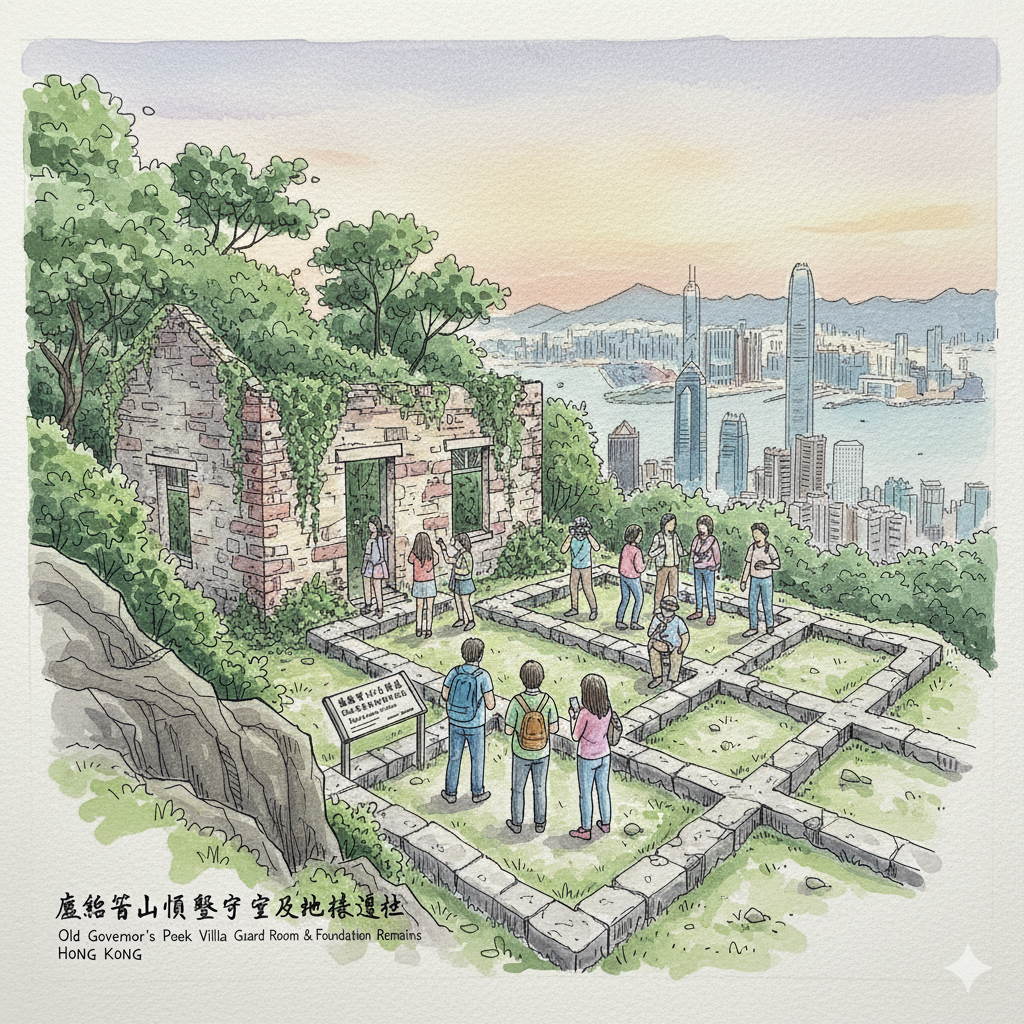
In a strange twist of history, while the grand villa vanished, its humble stone guardhouse survived. This small, sturdy building, which once controlled access to the symbol of ultimate power, is today a declared monument. The symbolism is potent: the seat of power itself proved ephemeral, but the mechanism of its control and exclusion endures. Scattered around the park, visitors can still find the original granite foundation stones and boundary markers of the long-gone mansion.
The serene beauty of today’s park presents its own paradox. This manicured landscape risks creating an "illusion of peace" that obscures the painful history of segregation and colonial power the site represents, allowing a collective forgetting of the very forces that shaped it.
Hidden Gem: The Old Governor's Mountain Lodge Guardhouse and Foundation Remains. Compare the surviving guardhouse to the empty space where the mansion once stood to contemplate the fleeting nature of power versus the lasting legacy of its control systems.
The High Ground's Fatal Flaw
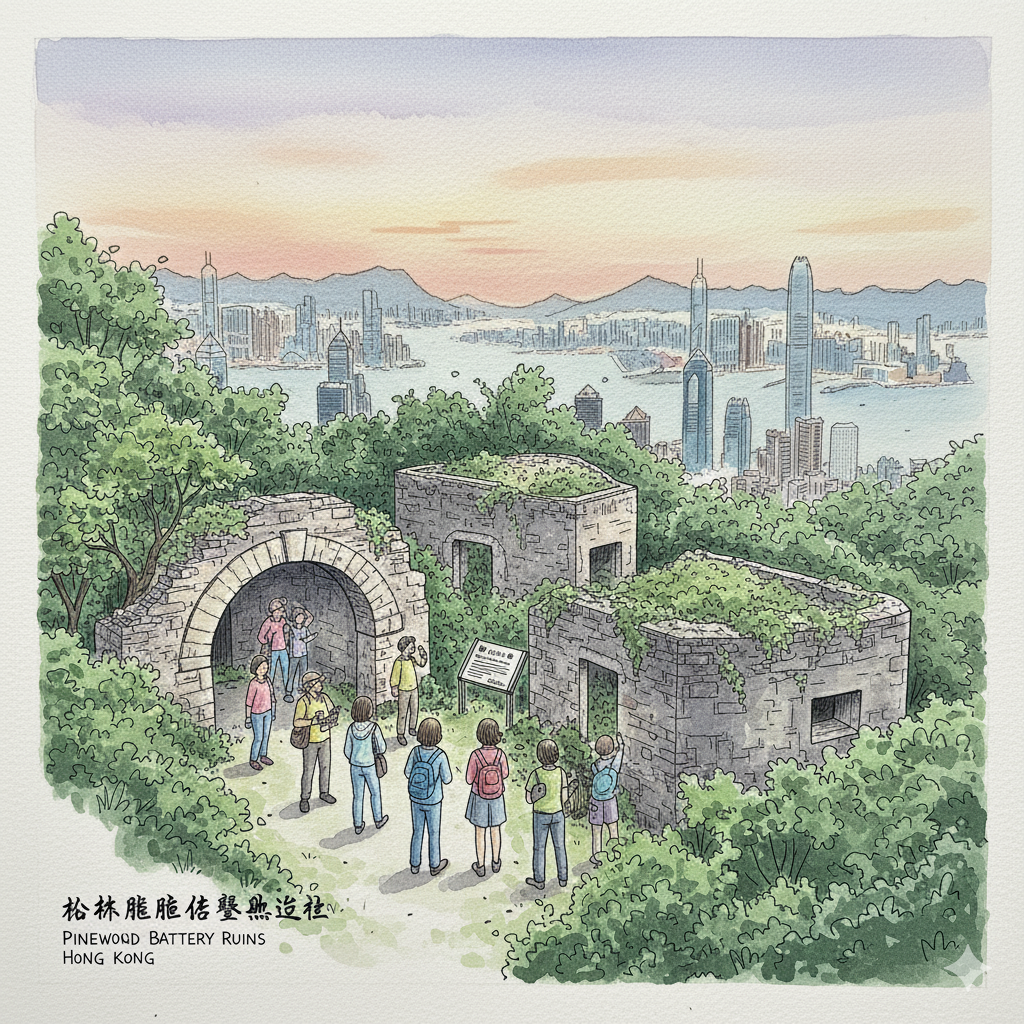
Tucked away in the Lung Fu Shan Country Park are the ruins of Pinewood Battery, a relic of the Second World War. Built between 1903 and 1905, it was the highest coastal battery in Hong Kong, perched at an altitude of 307 meters to defend the western approach to the harbor. In the 1920s, recognizing the growing threat of air power, the military converted it for anti-aircraft defense. Its high ground was considered a key strategic advantage.
That advantage became a fatal flaw. During the Battle of Hong Kong in December 1941, the battery's high, exposed position made it an obvious and easy target for Japanese air raids. What was designed as a fortress in the sky was instantly rendered obsolete by modern warfare.
The battery was so vulnerable that it was heavily bombed and abandoned by British forces in the opening stages of the battle, its strategic purpose instantly nullified. Today, the concrete gun emplacements and shelters sit silently in the forest. Where soldiers once scanned the skies for enemy planes, locals now gather in the morning to practice Tai Chi, transforming a place of war into a space of quiet contemplation.
Hidden Gem: The Pinewood Battery Ruins. Explore the well-preserved gun emplacements and command post to witness how a key strategic asset became a deadly liability in the face of new technology.
A Military Secret Hidden in a Name
For many, the name "Magazine Gap" (馬己仙峽) seems odd or even nonsensical. But this is no random name; it's a piece of declassified history hidden in plain sight. In military terminology, a "magazine" is an ammunition depot or arsenal. The name is a literal description of the area's secret function.
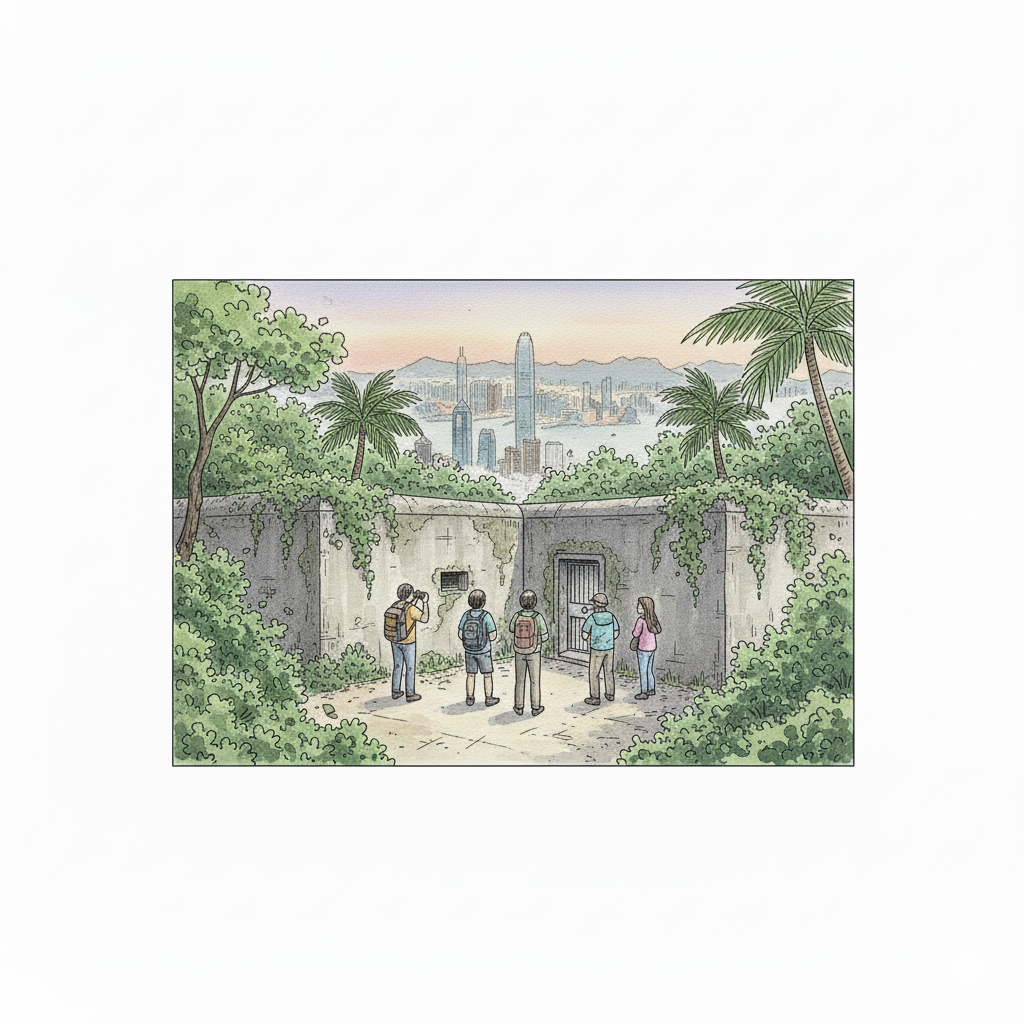
The name points directly to the nearby Shouson Hill Magazine, a highly secretive pre-war military installation. This was not a single building but a complex of 12 massive underground bunkers. Their location in a deep valley was a deliberate strategic choice, intended to minimize potential blast damage and conceal the arsenal from sea and air attack. Buried 20 meters deep and protected by concrete walls a meter thick, they were designed to be invisible and indestructible.
In a fascinating modern transformation, these top-secret military structures have found a new purpose. Their bomb-proof, secure, and naturally temperature-stable design makes them perfect for storing something else of value: fine wine. Today, some of the bunkers have been converted into exclusive private wine cellars and clubhouses. A simple street sign has become a "historical fossil," preserving the memory of a secret military past that has been repurposed for modern luxury.
Hidden Gem: The Magazine Gap Road Sign and the exterior of Shouson Hill Magazine. Start by looking at the road sign and understanding its true meaning, then visit the area of the former bunkers to see how top-secret military architecture has been repurposed for a new era.
The Path of Servitude and Segregation
Before the famous Peak Tram began its ascent in 1888, the only way to the top was Old Peak Road, a steep and arduous climb. In the colonial era, this road served a very specific purpose: it was the route used by Chinese sedan chair bearers to physically carry European elites up the mountain. The road is a stark embodiment of the colonial class structure, where the privilege of the Western ruling class was literally carried on the shoulders of the Chinese underclass.
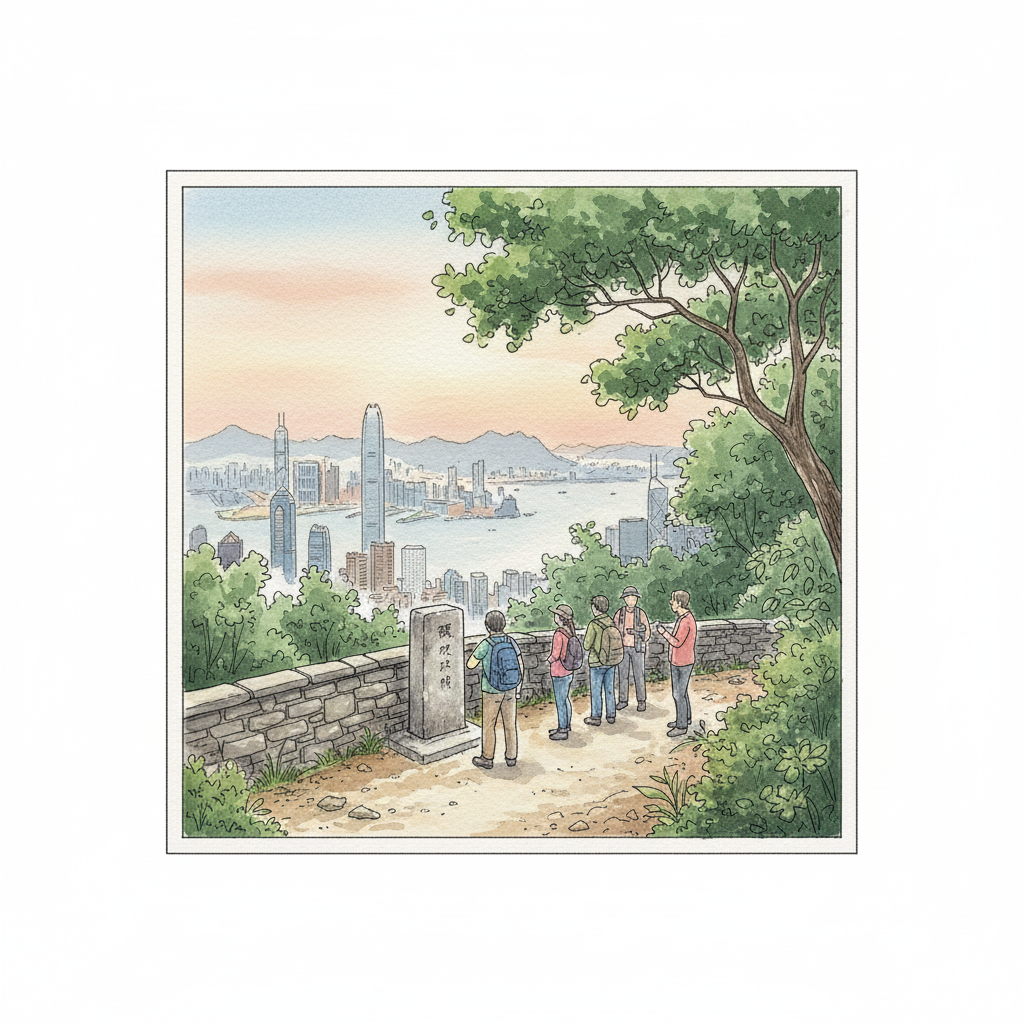
But there is another layer of history here. Embedded along its path is a rare, granite boundary stone, one of only six remaining that mark the official boundary of "Victoria City," the core administrative area of the British colony. This physical line reinforced the social segregation established by the Peak Reservation Ordinance, creating a "city within a city" for the privileged.
To walk up Old Peak Road, then, was to physically cross two distinct yet overlapping colonial boundaries. It was a journey over the administrative line of Victoria City, marked by the stone, and the unwritten social line separating the rulers from the ruled, embodied by the very act of being carried up the mountain.
Hidden Gem: The Victoria City Boundary Stone on Old Peak Road. Find this stone to see the physical evidence of colonial segregation and reflect on a path that tells a dual story of servitude and division.
A View with a Memory
Victoria Peak offers more than just a spectacular view; it is a historical landscape that tells the story of Hong Kong's complex identity. The engineering ambition of Lugard Road, the class divisions of Old Peak Road, the racial segregation codified by the Peak Ordinance, and the scars of war at Pinewood Battery are all woven into the fabric of the mountain.
These stories crystallize a profound irony. The Chinese name for the peak is "Tai Ping Shan" (太平山), meaning "Mountain of Great Peace." Yet this peace was built on a foundation of conflict, exclusion, and forgotten labor. The next time you stand at the top, looking out at the glittering skyline, ask yourself what you truly see. Is it just a beautiful city, or is it the ghosts of the people and the events that forged it?
Work cited:
太平山說:忘記歷史就沒有未來 - 文匯報- 香港文匯網, 檢索日期:10月 20, 2025
避開人潮!太平山隱藏路線攻略 - 點新聞, 檢索日期:10月 20, 2025
【在盧吉道散步】考據盧吉道是如何建成的? -社會- 明周文化, 檢索日期:10月 20, 2025
前總督山頂別墅遺址和周邊地區文物詮釋研究, 檢索日期:10月 20, 2025
舊總督山頂別墅守衛室 - 古物古蹟辦事處,檢索日期:10月 20, 2025
前總督山頂別墅考古工作報告Working Report of the Archaeological Works at Former Mountain Lodge, 檢索日期:10月 20, 2025
古物古蹟辦事處- 中西區文物徑(553), 檢索日期:10月 20, 2025
原來我們還在玩「天下太平」:「環」「環」相扣的文學散步3 - 端傳媒, 檢索日期:10月 20, 2025
龍虎山郊野公園登上炮台之王 - 文匯報- 香港文匯網, 檢索日期:10月 20, 2025
馬己仙峽同雜誌無關? - 史檔, 檢索日期:10月 20, 2025
壽臣山軍火庫 - FMD, 檢索日期:10月 20, 2025
有片| 「我身邊的新安文化記憶」:太平山 - 香港商報, 檢索日期:10月 20, 2025
Listen to the beautiful historical stories
b