(ENG) Beyond the Neon: Five Hidden Stories That Reveal the True Soul of Osaka's Chuo Ward
The true character of Osaka is not found in a single landmark, but in the interplay between its dynamic public face and its resilient, hidden history. From a banker's humble grave to a buried castle wall, these stories reveal a city that has mastered both Historical Resilience and the Art...

Listen carefully to the story told in detail
The City Beneath the Surface
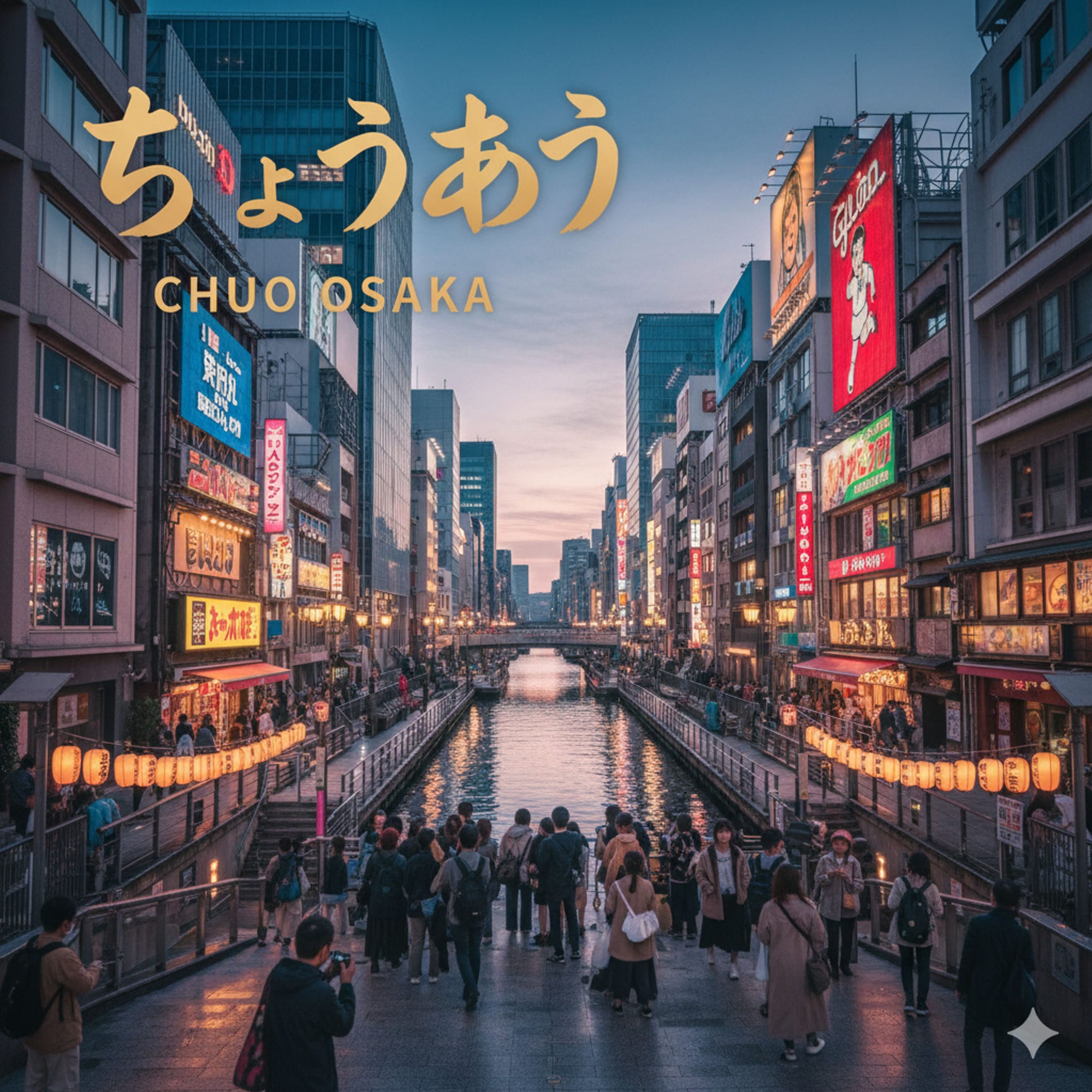
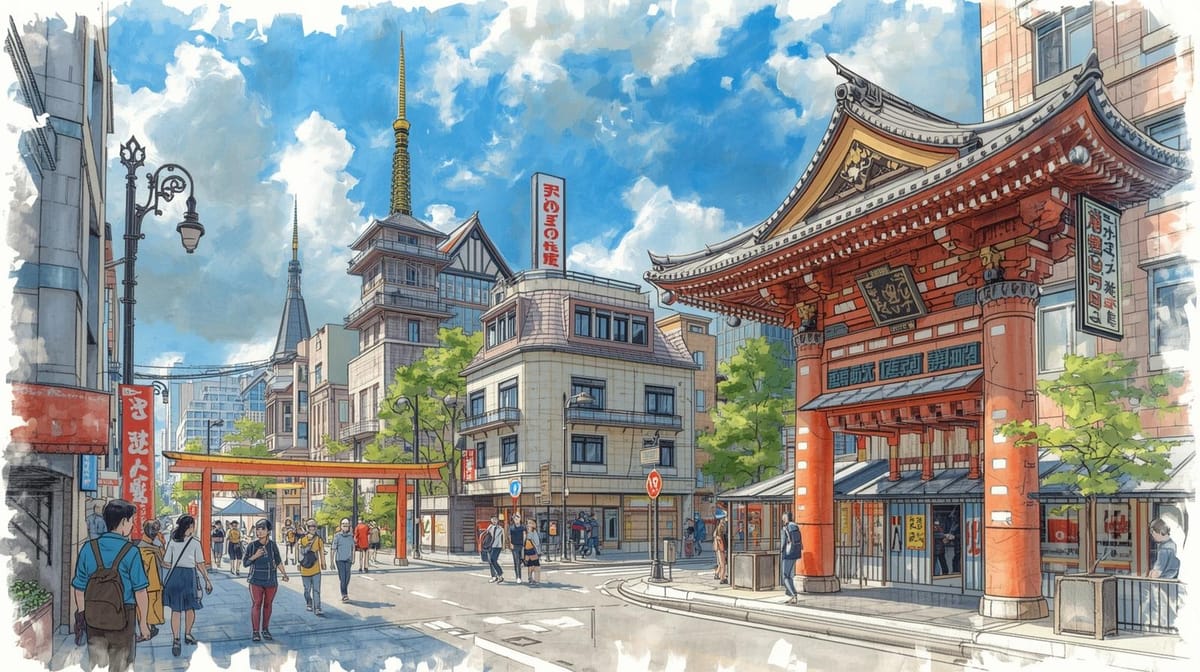
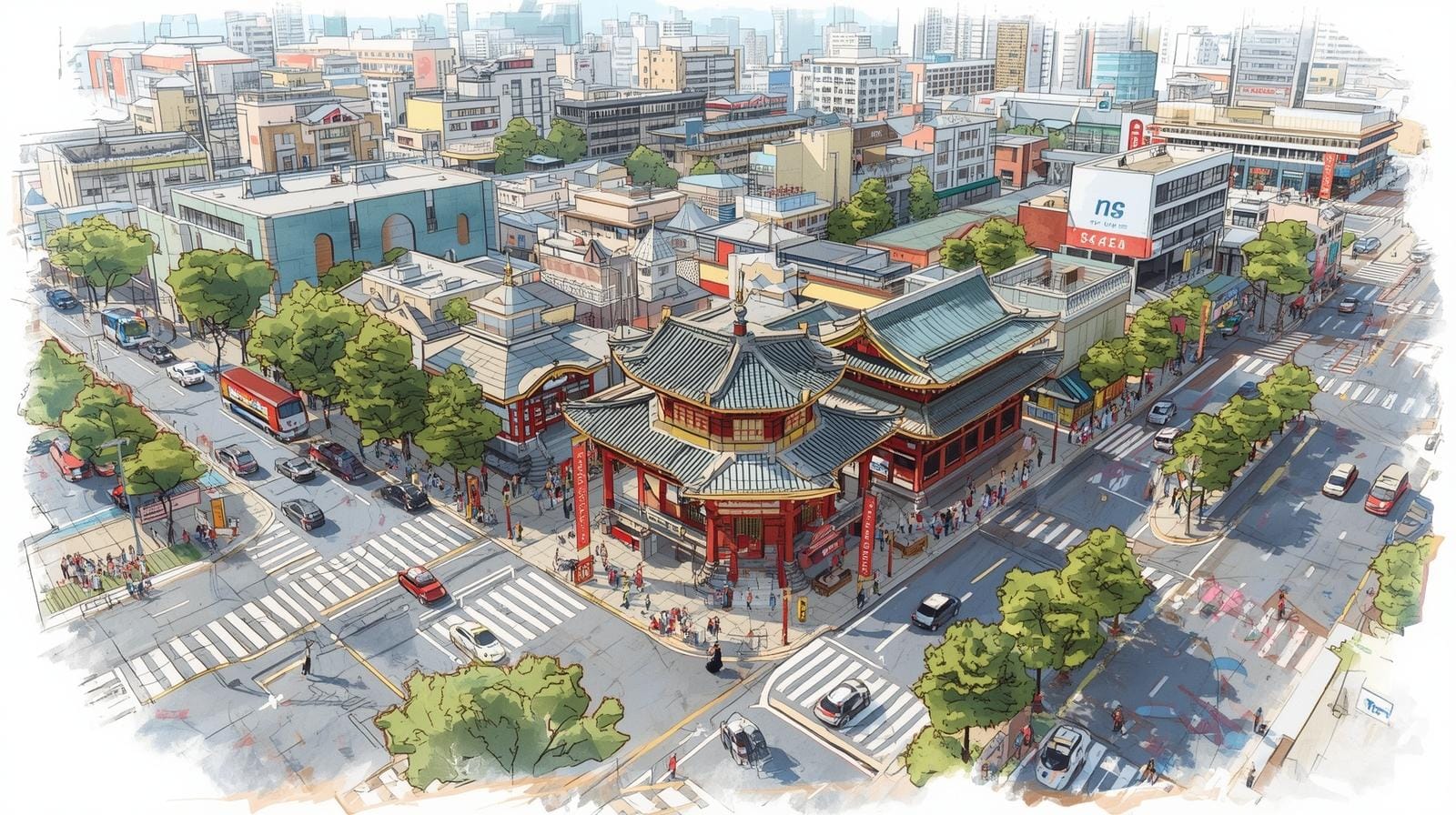
Osaka greets the world with a dazzling roar. Known for centuries as the "Nation's Kitchen," its modern identity is forged in the kinetic glow of Dotonbori, the sizzle of takoyaki, and the ceaseless energy of its crowds. It’s a metropolis that offers its vibrant commercial heart without reservation, a city of overwhelming sensation.
But what lies beneath this brilliant, energetic surface? Beyond the main thoroughfares, a more profound Osaka awaits—a treasure trove of history preserved not in grand monuments, but in the quiet alleys, buried foundations, and forgotten corners where its true soul resides. This is where the city’s unique character is revealed: a spirit of resilience, hard-nosed pragmatism, and a delicate, masterfully struck balance between commerce and soul.
Consider this your guide to a treasure hunt. We will venture beyond the guidebooks to uncover five hidden stories. Each is anchored to a specific place, a tangible piece of the past that reveals an essential truth about how this great metropolis was forged, and how it continues to thrive by holding its history close, even when it’s out of sight.
The Banker's Humble Grave: A Financial Empire's Quiet Beginning
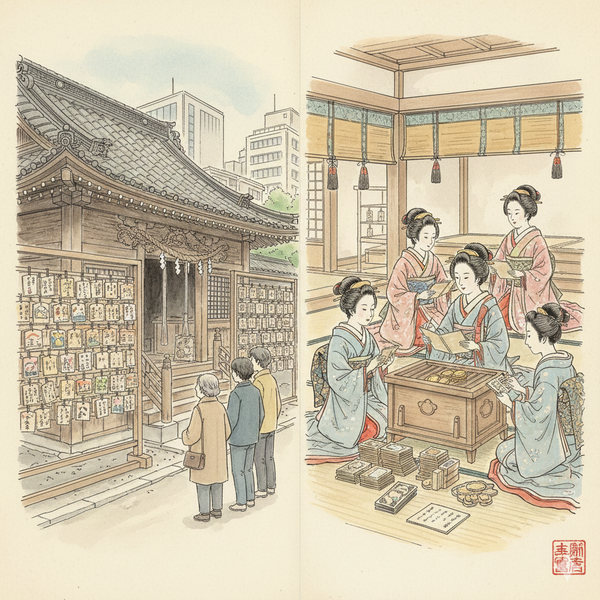
In the 17th century, the Konoike family, originally sake brewers, made a pivotal shift into finance. They became instrumental in transforming Osaka from a mere logistics hub into a sophisticated financial center, essentially inventing the modern Japanese banking system. Their empire grew to rival that of feudal lords, shaping the economic destiny of the nation.
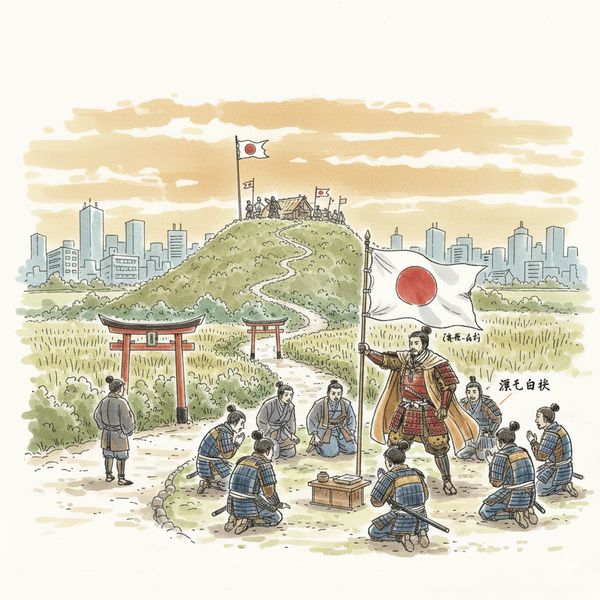
Given such immense power, one might expect a grand mausoleum for its founder, Konoike Zen'emon. Yet, the physical marker of this dynasty is profoundly counter-intuitive. Tucked away in the quiet Chutera district is Kenkō-an Temple (顯孝庵), where Zen'emon rests in an unassuming tomb of solemn gorintō and hōkyōintō style. This silent monument to a 400-year financial revolution offers a startling contrast to the bustling, modern financial streets of nearby Kitahama. To truly feel this, take a walk from this quiet cemetery to the modern districts of Imabashi and Kitahama. It is a "capital dialogue" that spans 400 years, a physical journey from the seed of an idea to its towering, modern manifestation, and the first clue to Osaka's defining balance between boundless ambition and deep personal humility.
The Bridge That Lived Three Times: A Lesson in Modern Pragmatism
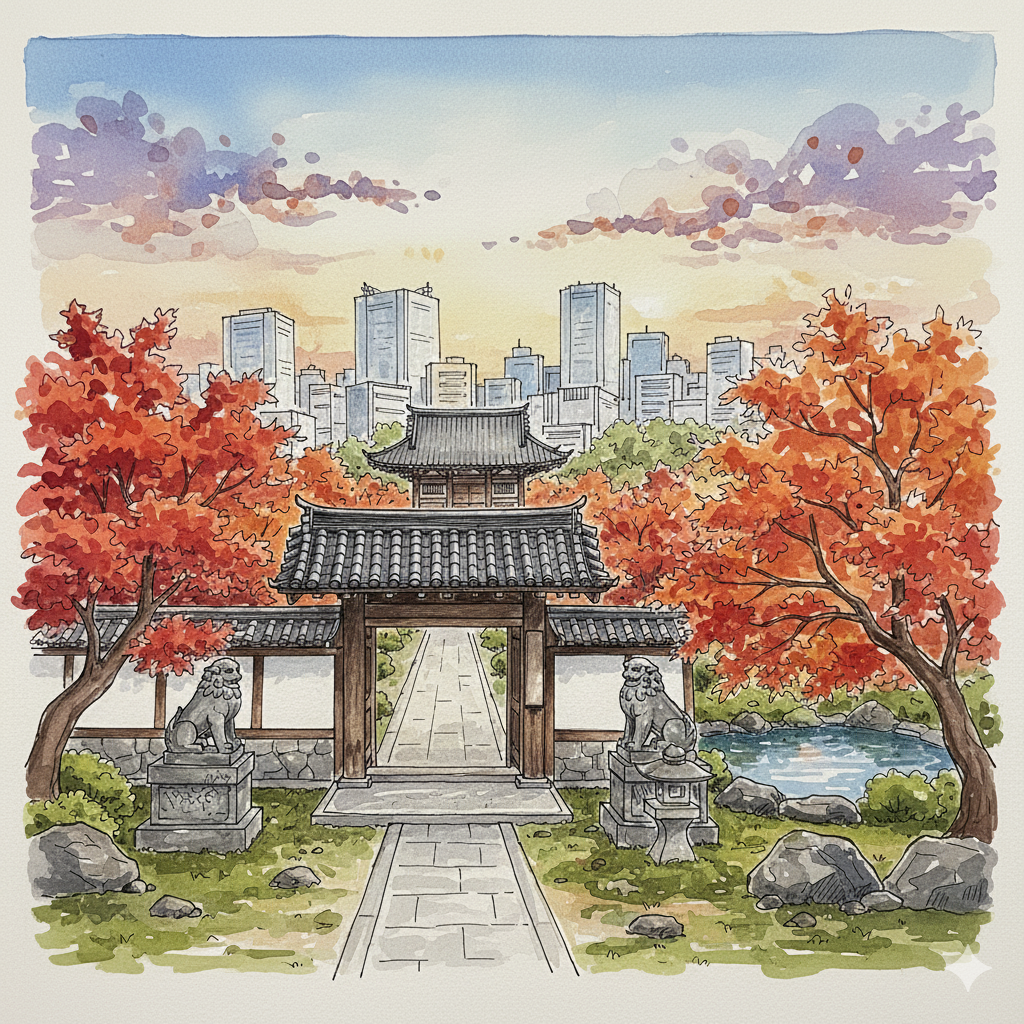
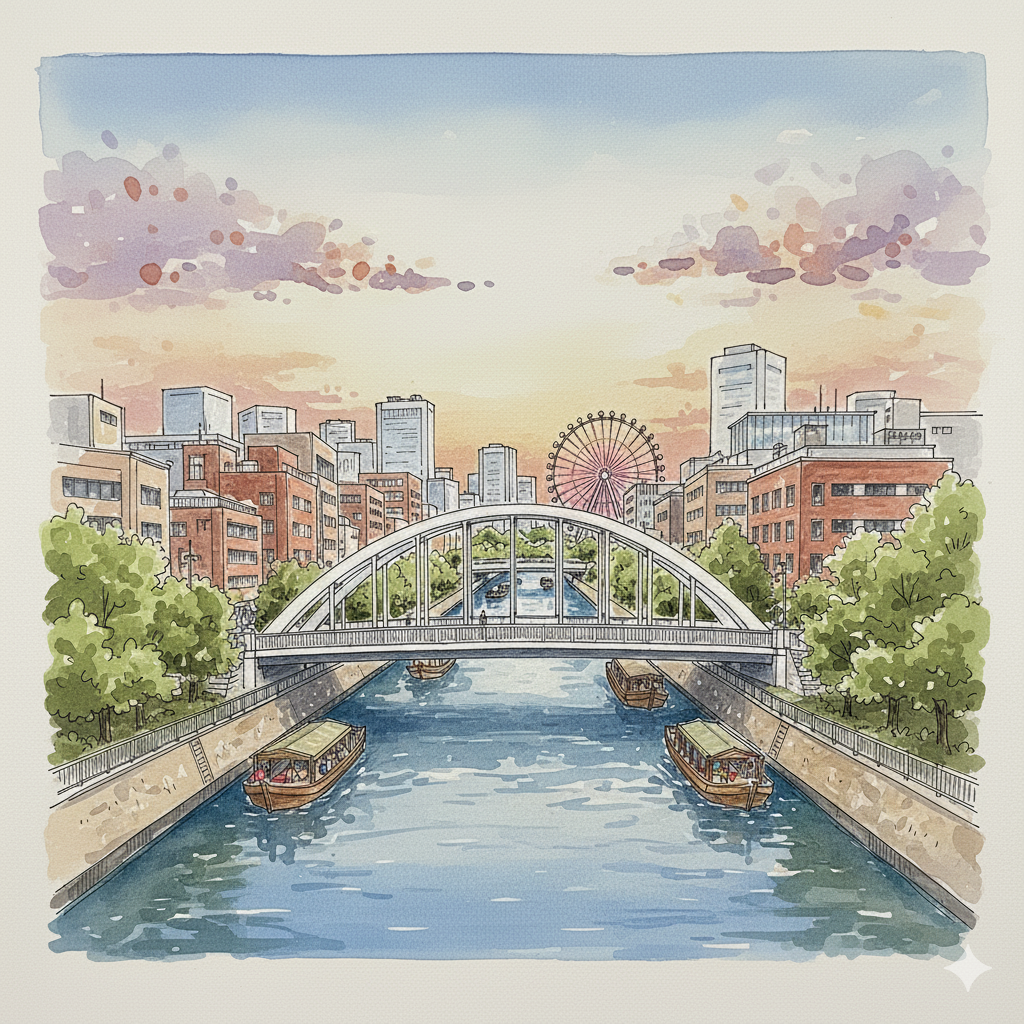
The story of the Shinsaibashi bridge is a masterclass in Osaka’s practical wisdom. Originally a wooden structure, it was replaced in 1873 by a magnificent German-imported iron bridge, a proud symbol of Japan's rapid modernization. As the city expanded, this icon was itself replaced in 1909 by a grand stone bridge, affectionately nicknamed the "Spectacles Bridge" for its dual arches.
But what became of the original German iron bridge? In an act that defies the disposable culture of rapid development, it was not scrapped. Instead, it was given a second life as the Sakaigawa Bridge. Decades later, it was moved again in 1928 to the Nishiyodogawa district, serving as the Shin-Chifune Bridge. The hidden gem, then, is not a single location but a conceptual journey: a trail tracing the bridge's "three lives," with its final remnants now preserved in Tsurumi Ryokuchi Park. This remarkable history reveals a core aspect of Osaka's character—a profound functionalism and resourcefulness that sees value and purpose where others might only see the obsolete.
The Secret Alley to Another World: A Time Capsule in Dotonbori
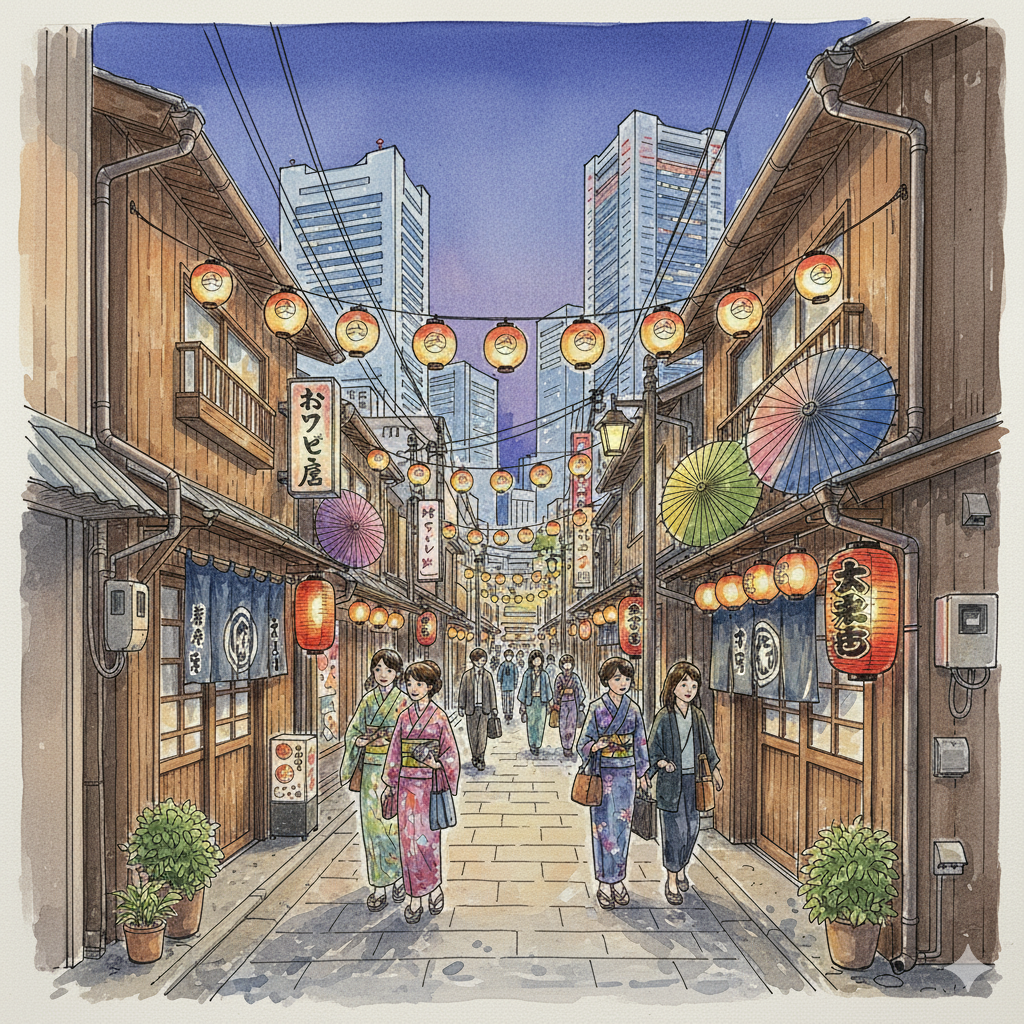
The sensory overload of Dotonbori is legendary. Yet, hidden in plain sight, lies an escape from the chaos so complete it feels like a tear in the fabric of reality. Tucked away next to the famous udon shop "Imai," you'll find the entrance to Ukiyokoji Street (浮世小路), an impossibly narrow alley, just 1.2 meters wide, that serves as an "entrance to another world." It is a time capsule meticulously designed to recreate the atmosphere of the Taisho Roman (1912-1926) and early Showa eras.
The walls are covered in detailed reliefs and historical maps depicting the daily life of a bygone Dotonbori. The alley also houses a miniature shrine to Issun-boshi (一寸法師大明神), the "One-Inch Boy" of folklore who, legend says, sailed down the Dotonbori river in a rice bowl to seek his fortune. His tale of achieving greatness from the humblest of beginnings is the perfect embodiment of Osaka’s unique spirit of "Konjo"—a gritty tenacity that celebrates success against all odds. It forms a perfect echo of the Konoike family's founding spirit, where a financial empire grew from the simple business of brewing sake.
The Buried Castle: A Rival's Power Play Set in Stone
The magnificent Osaka Castle that dominates the city skyline today is, for the most part, a reconstruction built by the victorious Tokugawa clan. After defeating the castle's original master, Toyotomi Hideyoshi, in 1615, they set about remaking the fortress in their own image. But their method was not simple demolition.
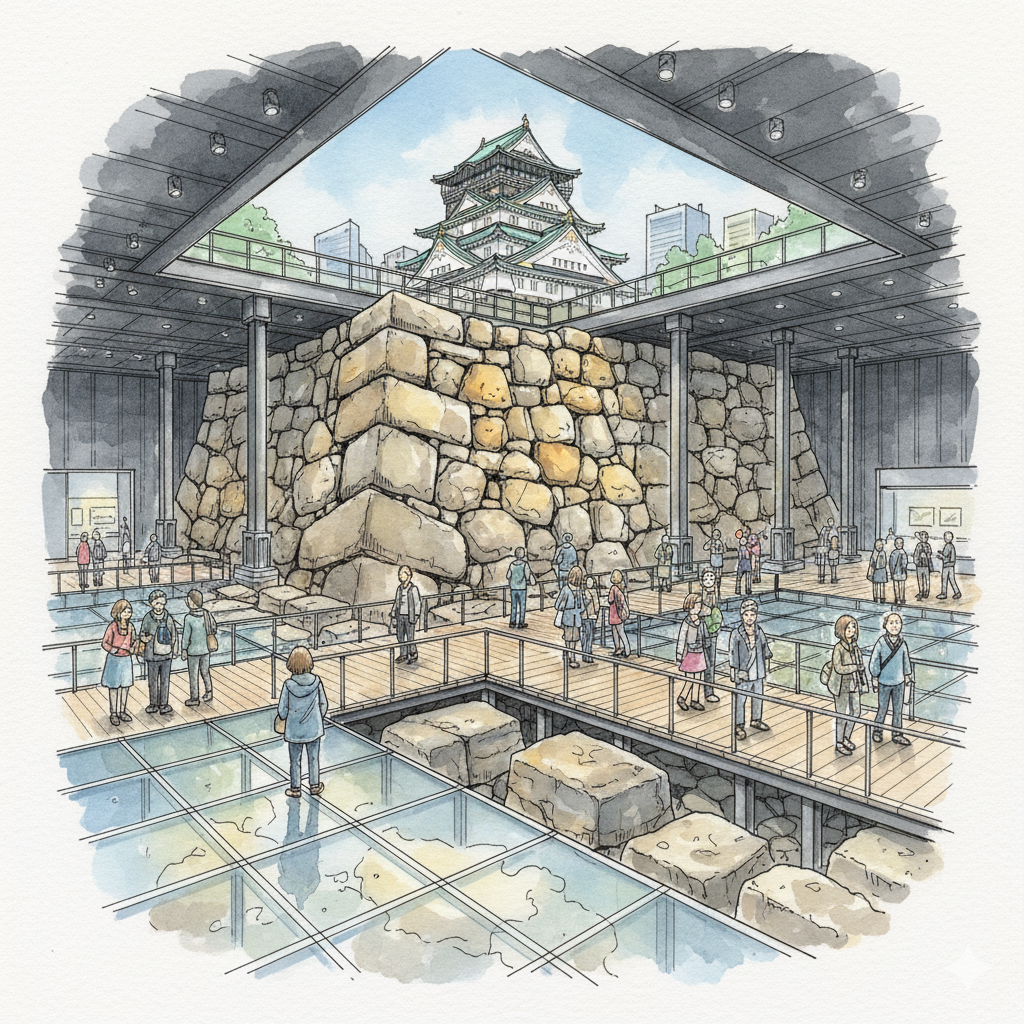
In a breathtaking act of political erasure, the Tokugawa forces buried the massive stone walls of Toyotomi's original castle completely, then built their new, larger fortress directly on top. This buried history is the castle's deepest secret, revealed at the Toyotomi Ishigaki-kan (豐臣石垣館). Here, you can descend underground and stand before the original Toyotomi stone walls, a massive and silent testament to a vanquished power. To grasp the sheer scale of this buried history, take the "Golden Gozabune" boat tour on the moat, which offers a stunning, close-up perspective of the massive walls. The experience is a profound physical metaphor for how history is written—and rewritten—by the victors.
The Statue That Wears a Coat of Moss: Faith Made Visible
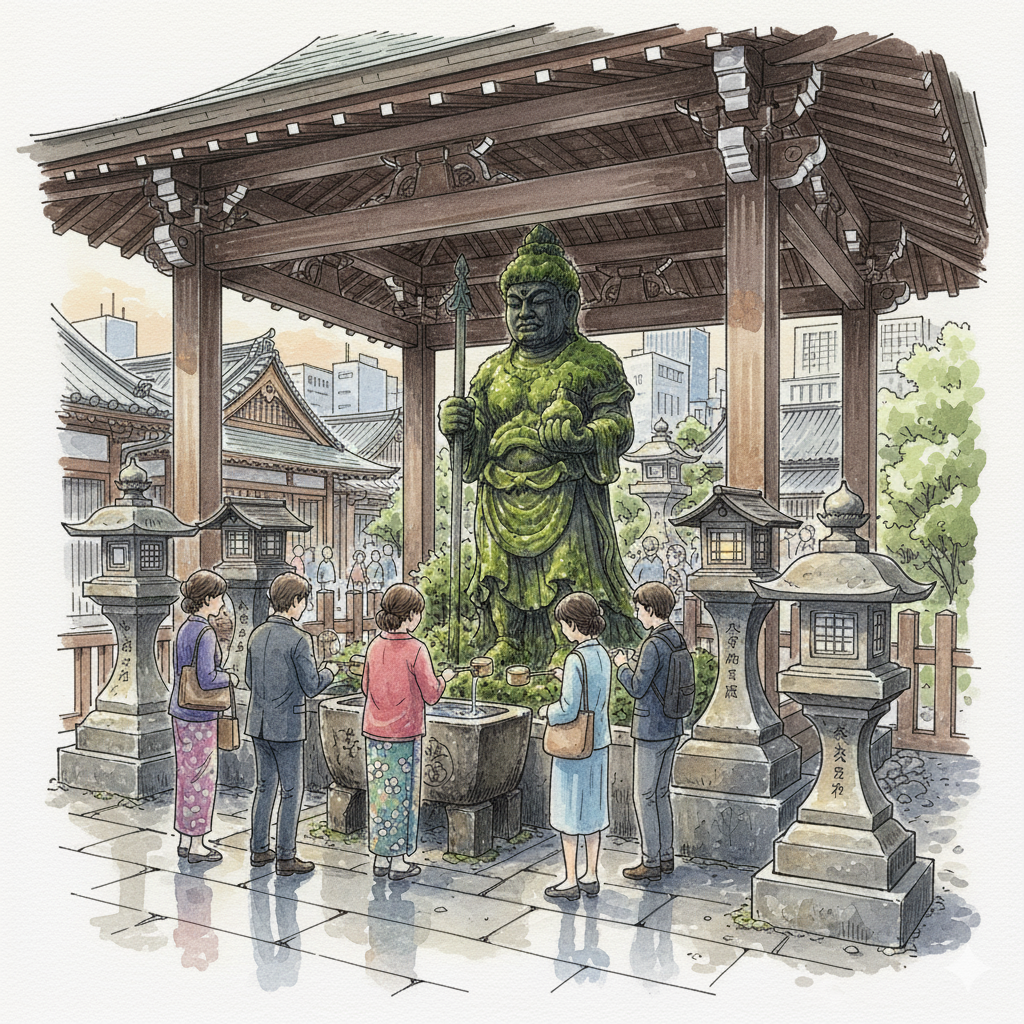
Steps from the neon-soaked streets of Dotonbori lies Hozenji Yokocho, a lantern-lit alley that feels like a quiet refuge. At its heart is a Buddhist statue that has become a spiritual anchor for the people of Osaka. The practice here is unique: believers pour water over the statue as they offer their prayers for health, success, and fortune.
Over decades and centuries, this constant ritual of devotion has produced something extraordinary. The hidden gem is the Mizukake Fudo Son (水掛不動尊), a statue whose most striking feature is not its carved stone, but the thick, vibrant coat of living moss that completely envelops it. This verdant layer is the beautiful, tangible result of accumulated time and countless prayers. In a city defined by commerce, this icon stands as a powerful symbol of enduring faith.
This living monument offers a powerful contrast to the buried walls of Osaka Castle. Where the Toyotomi walls are a historical relic frozen by political force, the Mizukake Fudo Son is a symbol full of vitality, continuously nourished by time and the faith of a community. One is a history suppressed; the other is a faith made visible.
Finding the Soul in the Seams
The true character of Osaka is not found in a single landmark, but in the interplay between its dynamic public face and its resilient, hidden history. From a banker's humble grave to a buried castle wall, these stories reveal a city that has mastered both Historical Resilience and the Art of Balancing Commerce and Spirit.
These five treasures are more than just historical footnotes; they are the seams that hold the city’s complex identity together. They prove that the most profound discoveries are often made by looking just past the obvious, into the quiet spaces where a city’s memory is kept alive. As you explore, perhaps you'll be inspired to ask a new question: what quiet rituals and buried foundations hold the true story of the places we call home, if only we know where to look?
Work cited:
Chuo | Top Five Japan, 檢索日期:10月 11, 2025
浮世小路:大阪道頓堀中的一處寧靜傳統小巷 - JapanTravelNote.com, 檢索日期:10月 11, 2025
共同研究の目的と概要 - 大阪歴史博物館, 檢索日期:10月 11, 2025
初代鴻池善右衛門とその一族 - 著名人のお墓, 檢索日期:10月 11, 2025
顯孝庵 - 曹洞禅ナビー寺院検索― 曹洞宗公式 寺院ポータルサイト, 檢索日期:10月 11, 2025
顯孝庵 - 曹洞禅ナビー寺院検索― 曹洞宗公式 寺院ポータルサイト, 檢索日期:10月 11, 2025
第一代心斋桥·新千舟桥遗迹 - 大阪市西淀川区, 檢索日期:10月 11, 2025
浮世小路Ukiyokoji Street | 日本‧大阪‧景點| 旅行野wildwildtravel.com, 檢索日期:10月 11, 2025
大阪城探秘:豐臣秀吉的霸業與戰國遺跡 - 比爾的世界迷路指南, 檢索日期:10月 11, 2025
大阪城豐臣石垣館| 體驗、活動與景點, 檢索日期:10月 11, 2025
大阪城豐臣石垣館| 體驗、活動與景點, 檢索日期:10月 11, 2025
[聖地之夏] #水的過渡:大阪法善寺的水掛不動尊/ 李長潔- YouTube, 檢索日期:10月 11, 2025