(ENG) Beyond the Skyscrapers: 5 Hidden Stories That Redefine Hong Kong's Central District
Central’s history is "non-linear." The past is not a separate country here; it is an active participant in the present. A 19th-century revolutionary plot, a forgotten story of female survival, and an ancient spiritual belief exist simultaneously within...

Listen to the historical stories
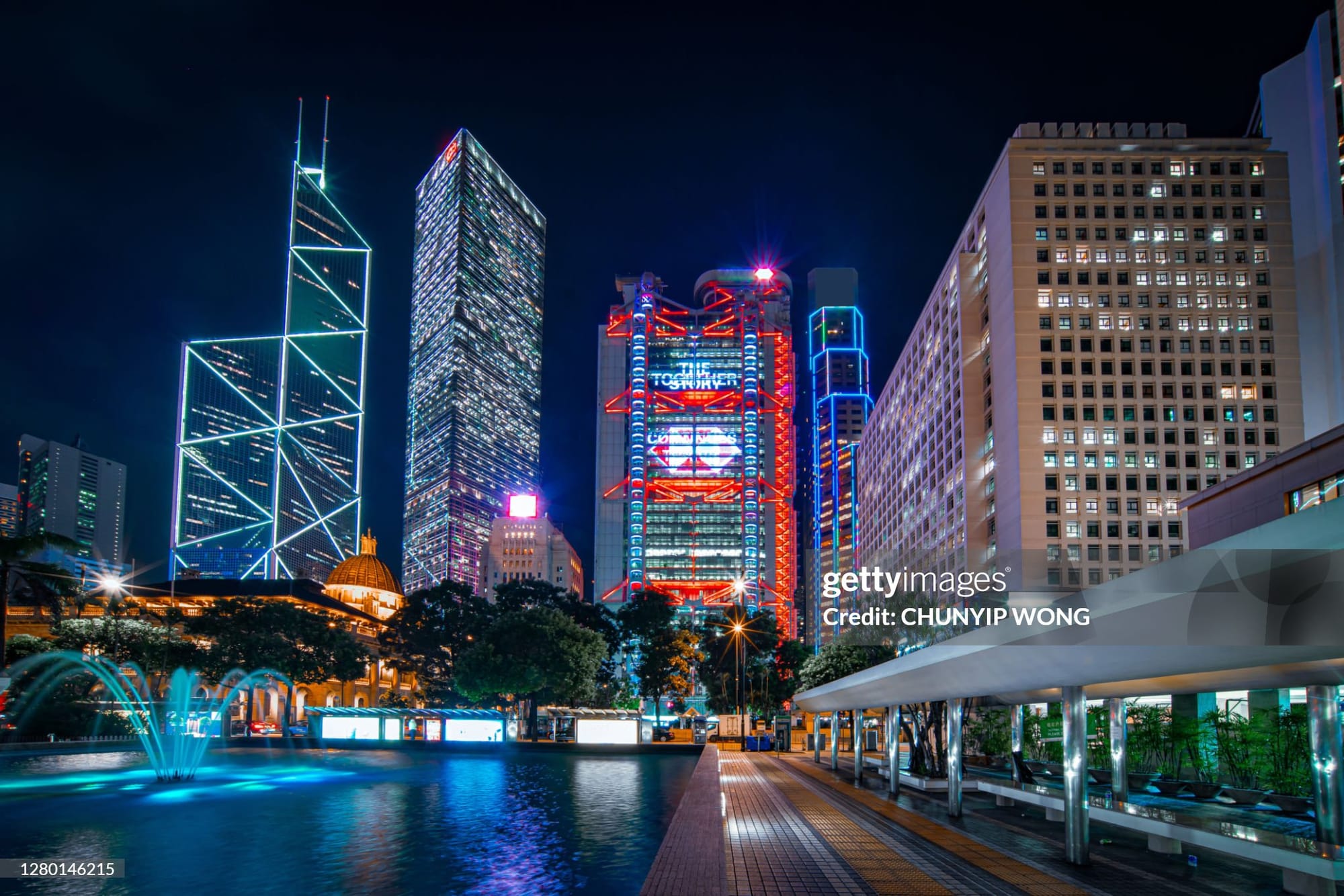
Most people know Hong Kong's Central district as a glittering forest of skyscrapers, the relentless, beating heart of international finance. It’s a place of sharp suits and the ceaseless hum of global capital. But this image, while accurate, is a shimmering facade. This land was once the administrative heart of the colonial territory known as "Victoria City," a landscape defined from its very beginning by a stark vertical hierarchy: Westerners lived on the cool, elevated slopes of the Peak, while the Chinese population was largely confined to the flatlands below. The story of Central is a constant contention for space, a battle fought between colonial power and local life, between relentless development and the fight for preservation.
Beneath the glass and steel, the past is not just buried; it coexists with the present in a constant, dynamic dialogue. This article uncovers five stories hidden in plain sight, each linked to a modern "hidden gem." These narratives will take you beyond the familiar landmarks and into the soul of the district, revealing a history that will fundamentally change the way you see the city you think you know.
The Phantom Coastline: A Lost Pier and the Birth of a New Consciousness
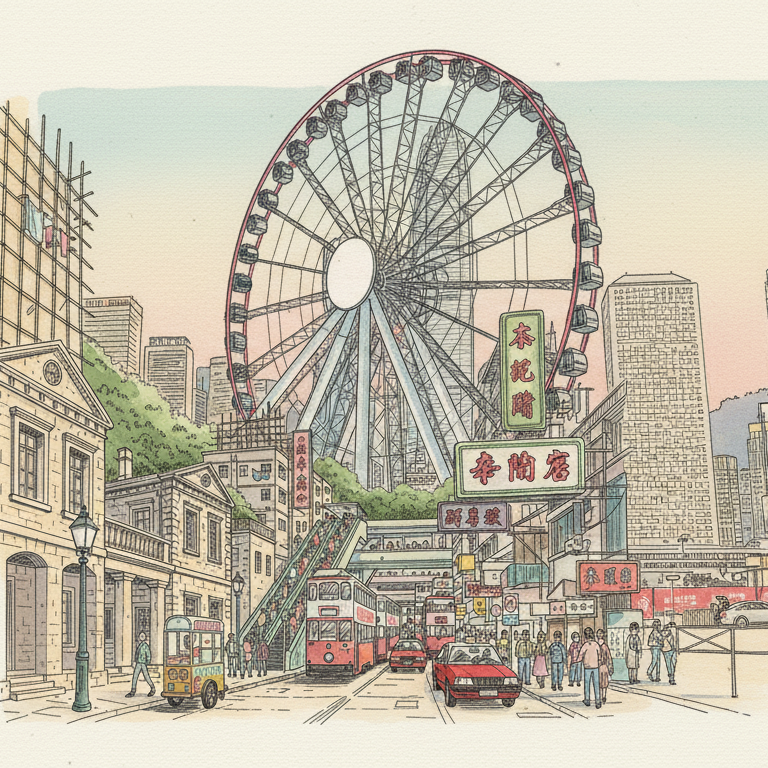
Much of modern Central is an illusion, built on land that didn't exist a century ago. It is a testament to over 170 years of "moving mountains and filling the sea," a relentless campaign driven by an insatiable hunger for economic efficiency. This was accelerated in the 1990s by massive government initiatives like the "Rose Garden Project," which reclaimed vast tracts of Victoria Harbour to build the new airport infrastructure. This artificial landscape became the stage for one of the most significant turning points in Hong Kong's cultural history: the demolition of the old Star Ferry Pier and its iconic clock tower in 2006.
The government's decision to remove this beloved landmark triggered a powerful public backlash. Citizens organized sit-ins and protests, fighting to save a piece of their collective memory. Though the pier ultimately fell, the event forced a city-wide reckoning with its long-held philosophy of prioritizing development above all else. Its impact was lasting, influencing subsequent public discussions about preserving other landmarks like the Tsim Sha Tsui Clock Tower.
The fall of the Star Ferry Pier became a powerful catalyst, marking the moment Hong Kongers transformed from mere economic animals into citizens with a cultural self-awareness.
Today, the Hong Kong Observation Wheel stands on this very reclaimed land. This modern attraction offers a stunning view, but it represents a profound relationship of "sacrifice and reinvention." Visitors enjoying the panoramic vista are standing on a purely "non-historical landscape." When you ride the wheel, see it as a memory-driven experience. Look down and envision the century of changes to the coastline beneath you—a magnificent view purchased with the city's collective past.
The Urban Time Tunnel: Riding the Social Ladder of Hong Kong
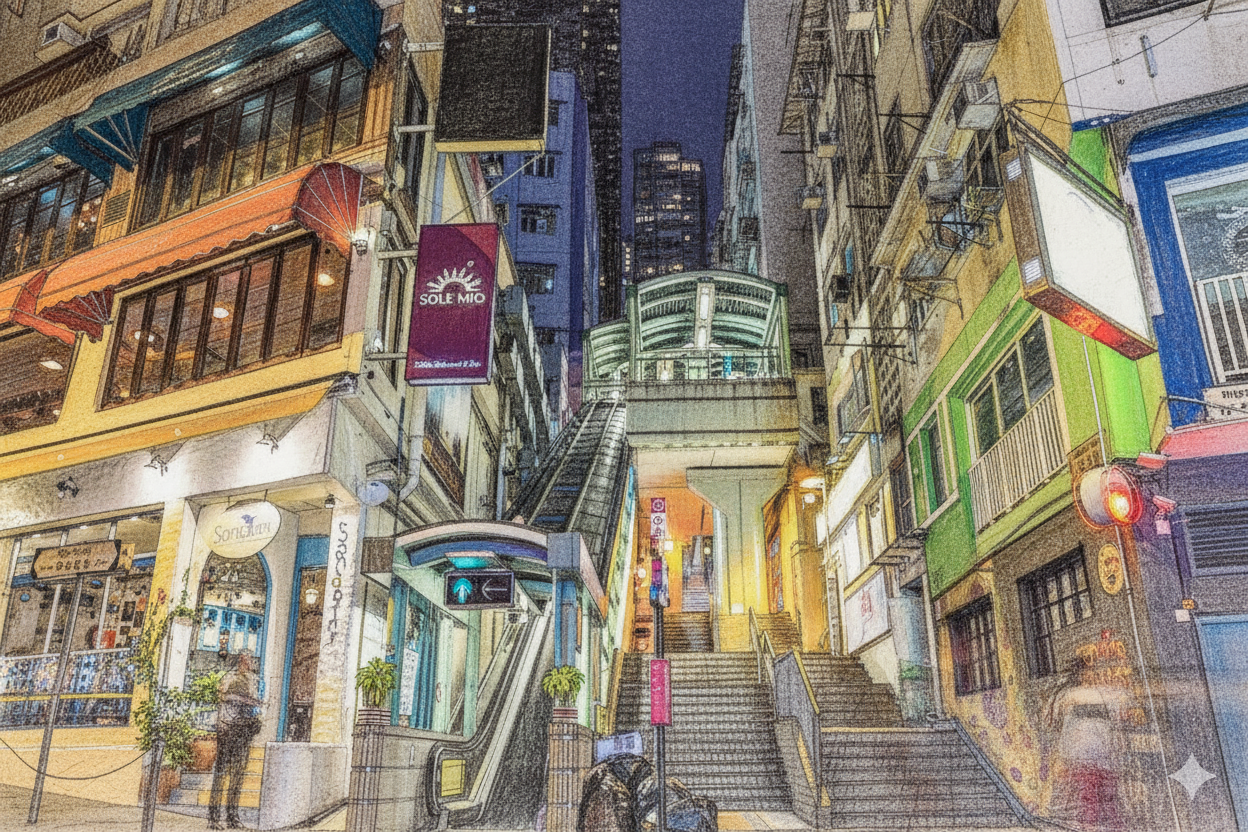
Stretching over 800 meters long and climbing a vertical rise of 135 meters, the Mid-Levels Escalator is far more than a convenient mode of transport. As the longest outdoor covered escalator system in Asia, it is a physical manifestation of Central's vertical social hierarchy. It was built as a pragmatic solution to conquer the steep terrain, but it became an unintended cultural artery.
Its iconic status was cemented by the film Chungking Express, where it was transformed into a symbol of time, observation, and urban alienation. Riding the escalator is like journeying through a "moving urban museum." More than just a passive observer, this mechanical river actively shaped the landscape around it, fostering the flourishing of the bars, restaurants, and art spaces of cultural hubs like the SoHo district. The escalator didn't just connect places; it made them.
It is the perfect symbol of "Hong Kong-ness" in urban planning. It is an innovative, pragmatic solution to an extreme geographical challenge that, in solving a problem, accidentally created one of the city's most vibrant cultural corridors, stitching together disparate worlds into a single, flowing experience.
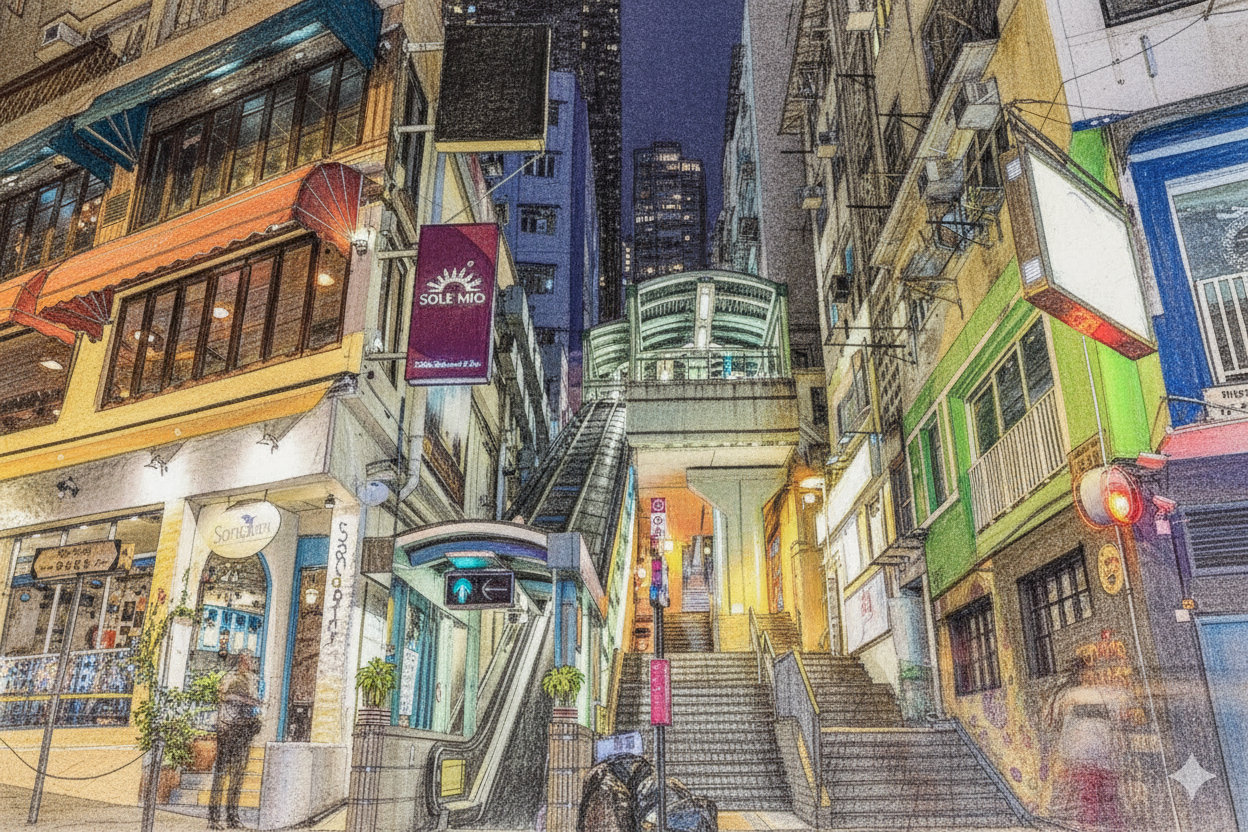
The Fading Boundary: A 19th-Century Story of Survival in the Margins
The area around Cochrane and Graham Streets was once a critical boundary zone, a 19th-century microcosm where "Chinese and Westerners lived together." This was a place of true cultural fusion, a fact evidenced by the very streetscape: shop signs here were often bilingual, a stark contrast to the monolingual English of the colonial core or the Chinese of Sheung Wan. It is here that archaeologists uncovered the ruins of the oldest known Chinese tenements in Hong Kong, dating back to 1879-1880.
These ruins tell a story often ignored by mainstream history, like that of Ng Ak-kiu, a "protected woman"—the local term for a Chinese partner of a Western man. When her partner married an English lady, he used the colonial legal system to transfer property to Ng Ak-kiu in a trust, ensuring she and her children had a foothold in society. Her story reveals the incredible resilience and self-preservation instincts of marginalized groups, who skillfully navigated a system not built for them in order to survive.
Today, this historic area is home to the vibrant Graham Street mural. While you admire the colorful street art, look for the surviving old buildings and street textures nearby. This modern art covers a deep history of social struggle and cultural negotiation. For a continued dialogue between old spaces and new creativity, visit the nearby PMQ, a former police married quarters transformed into a design hub.
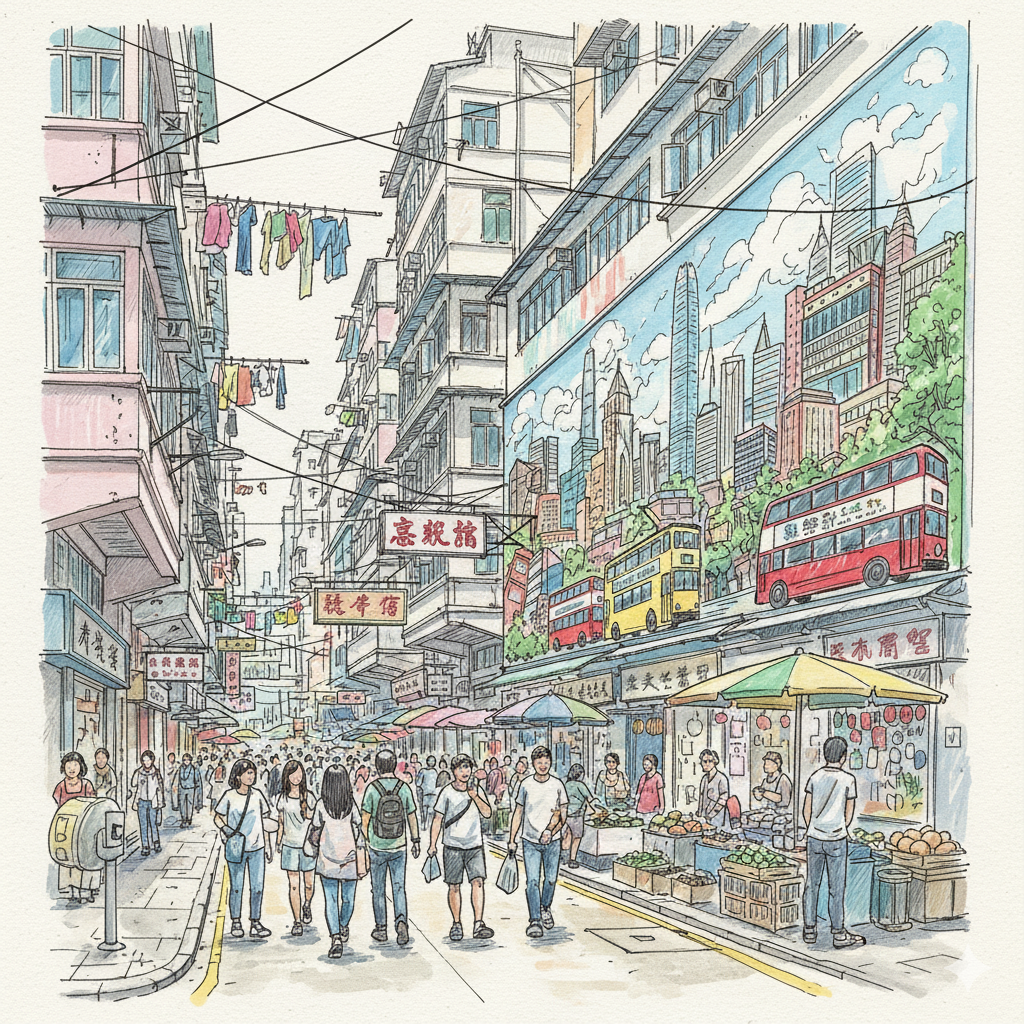
Milk Tea and Gunpowder: The Revolution Brewing in Central's Back Alleys
During the turbulent final years of the Qing Dynasty, Hong Kong's position under British rule made it a relatively safe haven for revolutionaries. Central and Sheung Wan became a crucial base of operations for figures like Sun Yat-sen. To avoid the eyes of Qing agents, they used unassuming shops as fronts for their meetings, like the revolutionary hub disguised as a shop named "Yeung Yiu Kee" on Gough Street.
But the illusion of safety was shattered on Gage Street. This bustling market street, now sliced through by the very Mid-Levels Escalator we rode in our second story, was where revolutionary leader Yeung Ku-wan was assassinated by Qing agents. His death sent a shockwave through the community, proving that Hong Kong was not an impenetrable sanctuary. As a symbol of his silent sacrifice, his grave was left unmarked for years.
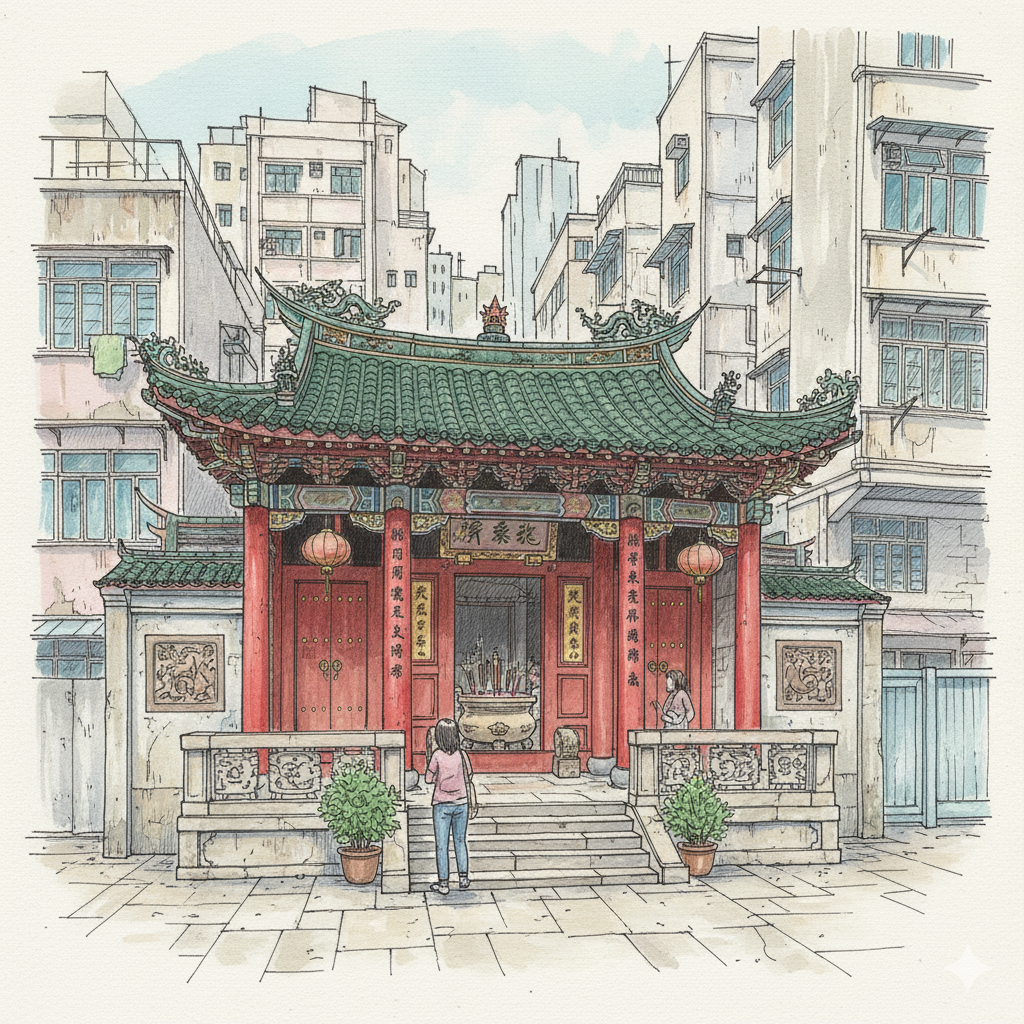
At the corner of this very street now stands Lan Fong Yuen, a legendary tea house and the celebrated inventor of "silk-stocking" milk tea. This creates a powerful and jarring juxtaposition of "food and bloodshed." As visitors sip the city's most iconic drink, they stand on a corner steeped in political conspiracy and revolutionary sacrifice. To further explore this era, visit the nearby Kwong Fook I Tsz (Pak Shing Temple) on Tai Ping Shan Street, a place that provided crucial support to the grassroots Chinese community.
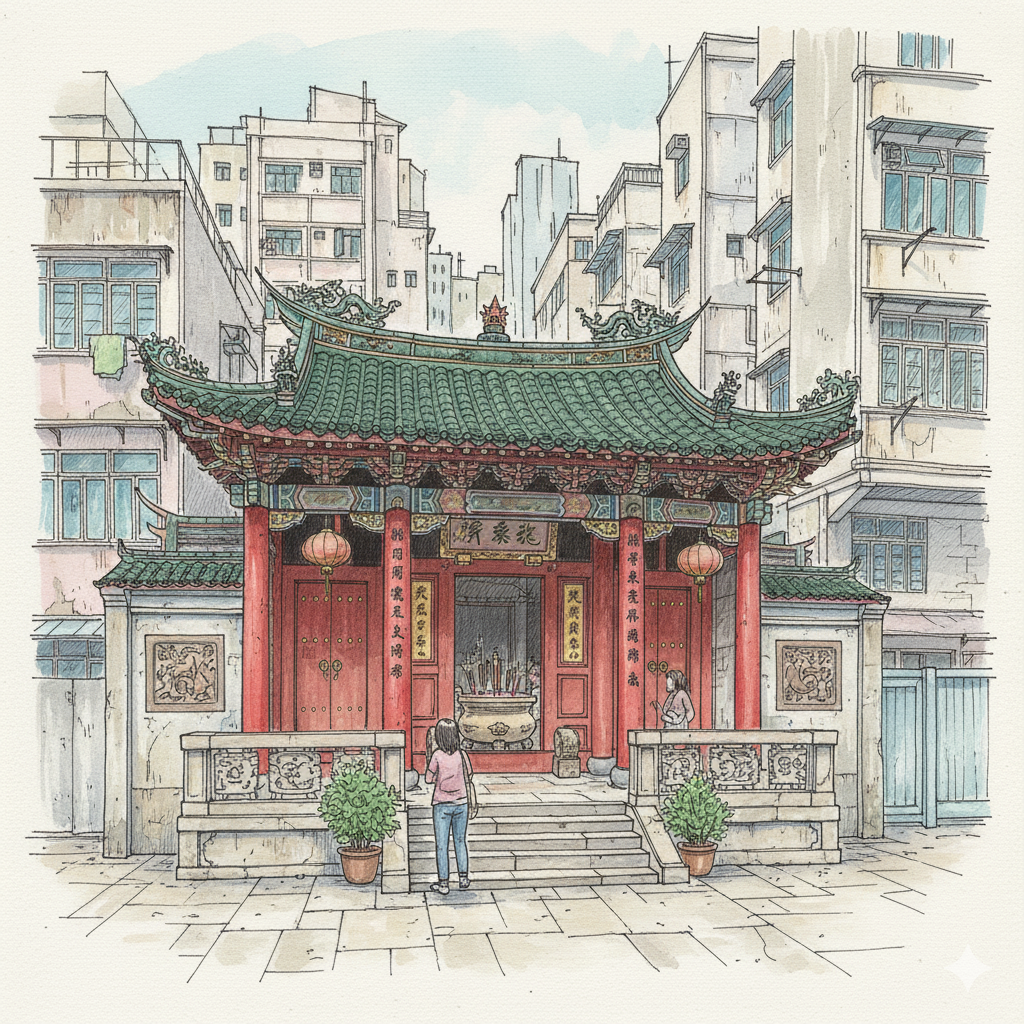
Stubborn Stones and Hidden Gods: The Soul of the City That Refuses to Move
Known colloquially as Stone Slabs Street, Pottinger Street is a living fossil of 19th-century urban design. Its uneven, granite-paved steps were a pragmatic solution to the steep terrain, designed not only to provide grip for pedestrians but also to channel rainwater down the steep incline. Today, lined with the iconic green tin stalls of the Pottinger Street market, the street preserves the city's historical "touch" and stands as a symbol of the resilience of its "small-citizen economy," a stubborn, street-level tenacity that contrasts sharply with the towering monuments to global capitalism that surround it.
This same spirit of endurance is found in Central's spiritual life. Amidst the relentless modernity, traditional beliefs persist. While the grand Man Mo Temple on Hollywood Road is a well-known spiritual center, smaller shrines survive in the most unexpected places. Look closely and you will find tiny sanctuaries like the Central Pak Kung Temple, tucked away in the cracks between skyscrapers—symbols of a faith that refuses to be displaced.
This journey—from the worldly commerce of the stone street to the quiet sanctuary of a hidden temple—perfectly embodies Central's unique character. It is a district that masterfully balances immense material ambition with the quiet, stubborn preservation of its soul.
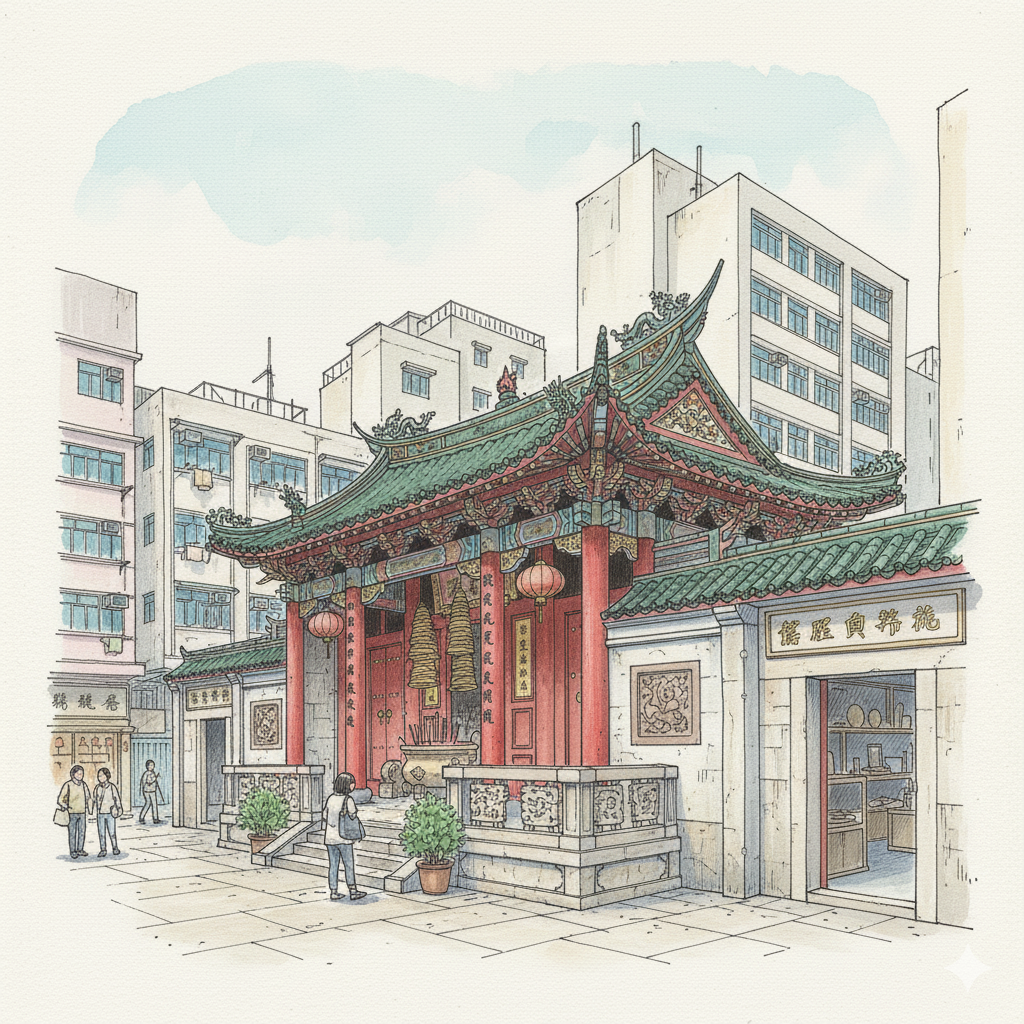
A City of Contradictions
Central’s history is "non-linear." The past is not a separate country here; it is an active participant in the present. A 19th-century revolutionary plot, a forgotten story of female survival, and an ancient spiritual belief exist simultaneously within the same spaces occupied by global finance and contemporary art. The district's true character lies not in its polish, but in its stark, unresolved contradictions: old and new, rich and poor, East and West.
This identity was forged through loss. The destruction of a beloved pier awakened a new civic consciousness. The faint, sweet aroma of milk tea masks a history of bloodshed. The hidden gems of Central are not just places to see, but stories to understand—narratives of how a city defines itself through memory, struggle, and fusion.
As we walk these streets, we are witnessing a story of how the memory of the land is transformed into the cultural assets of the future—but what memories will we choose to preserve next?
Work cited:
中區填海 - 香港記憶, 檢索日期:10月 20, 2025
保留舊中環天星碼頭事件- 維基百科, 檢索日期:10月 20, 2025
中環好去處|逾13中環打卡/美食/文青景點推介不止大館/PMQ/中環街市 - 港生活, 檢索日期:10月 20, 2025
中環景點推薦》來場香港中環一日遊!11大必去中環景點整理, 檢索日期:10月 20, 2025
【香港中環一日遊】老香港文青行程、IG 熱門中環景點、美食、逛街、伴手禮攻略 - Huan的旅行, 檢索日期:10月 20, 2025
【中環130年古蹟】高添強促保留「為將來香港人講香港香港故事 ..., 檢索日期:10月 20, 2025,
《街角人情》回望香江歲月\本報記者\鍾麗明 - 大公文匯, 檢索日期:10月 20, 2025
【2025中環景點推薦】香港中環一日遊必去11大景點&美食全攻略|半山手扶梯、壁畫街、蘭桂坊行程安排 - BringYou, 檢索日期:10月 20, 2025