(ENG) Beyond the Skyscrapers: 5 Hidden Stories That Reveal the True Soul of Osaka
Taken together, these five stories reveal a city defined by a constant dialogue between its past and its present. From a lover's promise immortalized in literature to a neighborhood that survived the flames of war, from an untamable river brought to heel by human ingenuity...

Listen attentively to the historical stories told in detail
Uncovering the City's Hidden Layers
At first glance, Osaka’s Kita Ward is a dazzling testament to modern Japan. It’s a landscape defined by the soaring skyscrapers of Umeda, the ceaseless flow of commuters through one of the world's busiest transport hubs, and a neon-soaked consumer culture where rivers of people flow through underground malls and grand department stores. This is the face of contemporary Osaka—a city of steel, glass, and relentless forward momentum. But beneath this polished surface, what deeper history lies hidden? A city's true character, after all, is found not just in the sights it displays, but in the stories it holds.
This journey goes beyond the obvious, revealing five profound historical stories from the Kita Ward, each tied to a "hidden gem" that offers a glimpse into the city's remarkable resilience and enduring memory. These are not the crowded landmarks of a typical itinerary, but quiet corners where the past continues to shape the present, offering a far richer understanding of what makes Osaka truly unique.
The Tragic Lovers' Pact: A Story Etched in Literature
A powerful story can transform an ordinary place into a sacred landmark, making personal tragedy immortal through art. In Osaka's Kita Ward, a small shrine stands as a testament to this very idea, its modern purpose shaped entirely by a centuries-old tale of forbidden love and literary genius.
In 1703, in what was then known as the "Tenjin no Mori" (Forest of the Gods), a courtesan named Ohatsu and a soy sauce merchant named Tokubei made a final, desperate choice. Trapped by inescapable debt and the rigid social pressures of the Edo period, they took their own lives in a love-suicide pact. Their local tragedy, however, was not destined for obscurity. The renowned playwright Chikamatsu Monzaemon, hearing of their fate, was so moved that within a month he had written the puppet-theater play Sonezaki Shinju. The play was a sensation, elevating the lovers' personal suffering into a timeless work of Japanese art.
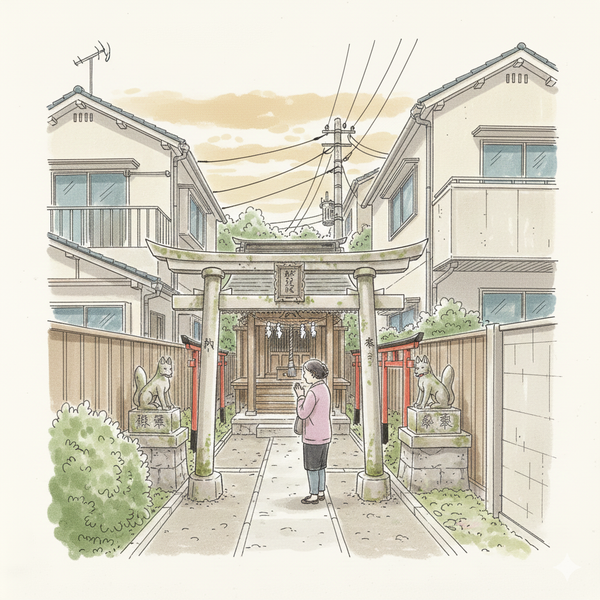
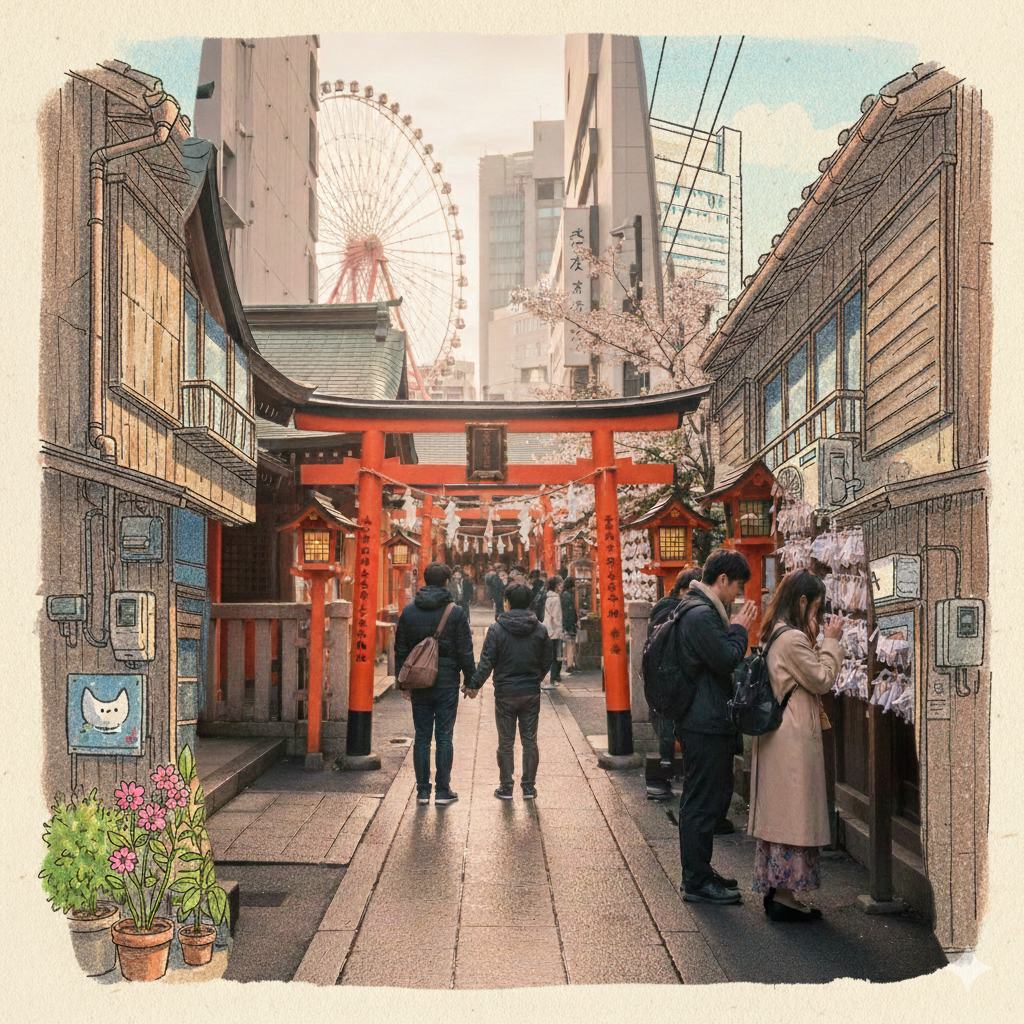
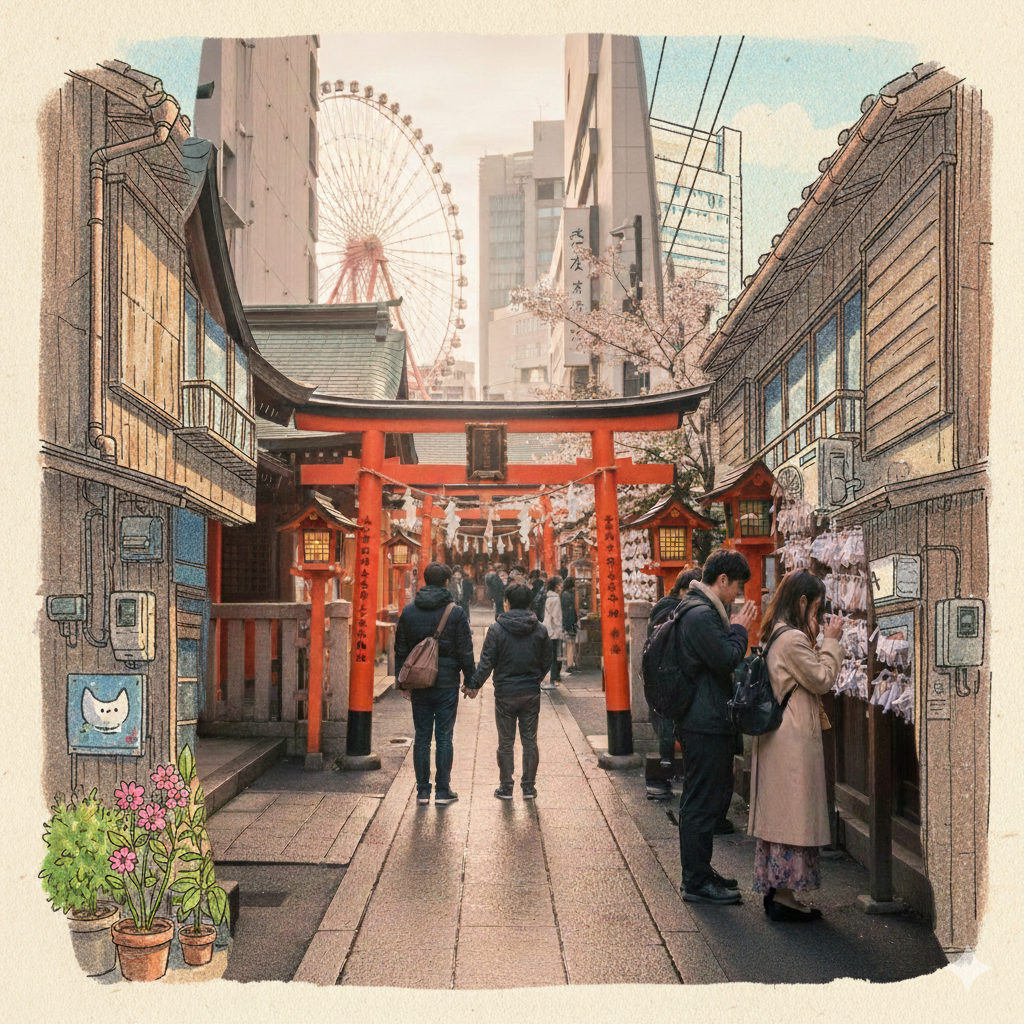
The site of their tragic end is now home to the Ohatsu Tenjin Shrine. What makes this place so profound is its jarring physical contrast with its surroundings. You can spend the day shopping in the gleaming, futuristic consumer hub of Umeda, and then, just a five-minute walk away, slip into a quiet, lantern-lit alley that feels like a portal to another time. Suddenly, you are standing in a place frozen by a 300-year-old story. While the shrine itself was founded around 700 AD, its modern fame is built on this beautiful irony: a place defined by a tragic ending, fueled by social oppression, has become one of Osaka's most popular sanctuaries for couples praying for success in love. This transformation reveals the power of narrative to reshape a place's meaning, turning a site of despair into a beacon of hope.
The Time Capsule Neighborhood: Resilience in the Face of Fire
War has a way of erasing a city's physical past, making the few areas that survive incredibly precious windows into a lost world. While the 1945 air raids leveled most of Osaka, a tiny district in the Kita Ward—just 500 square meters in total—miraculously survived, preserving a vision of Japan that has vanished almost everywhere else.
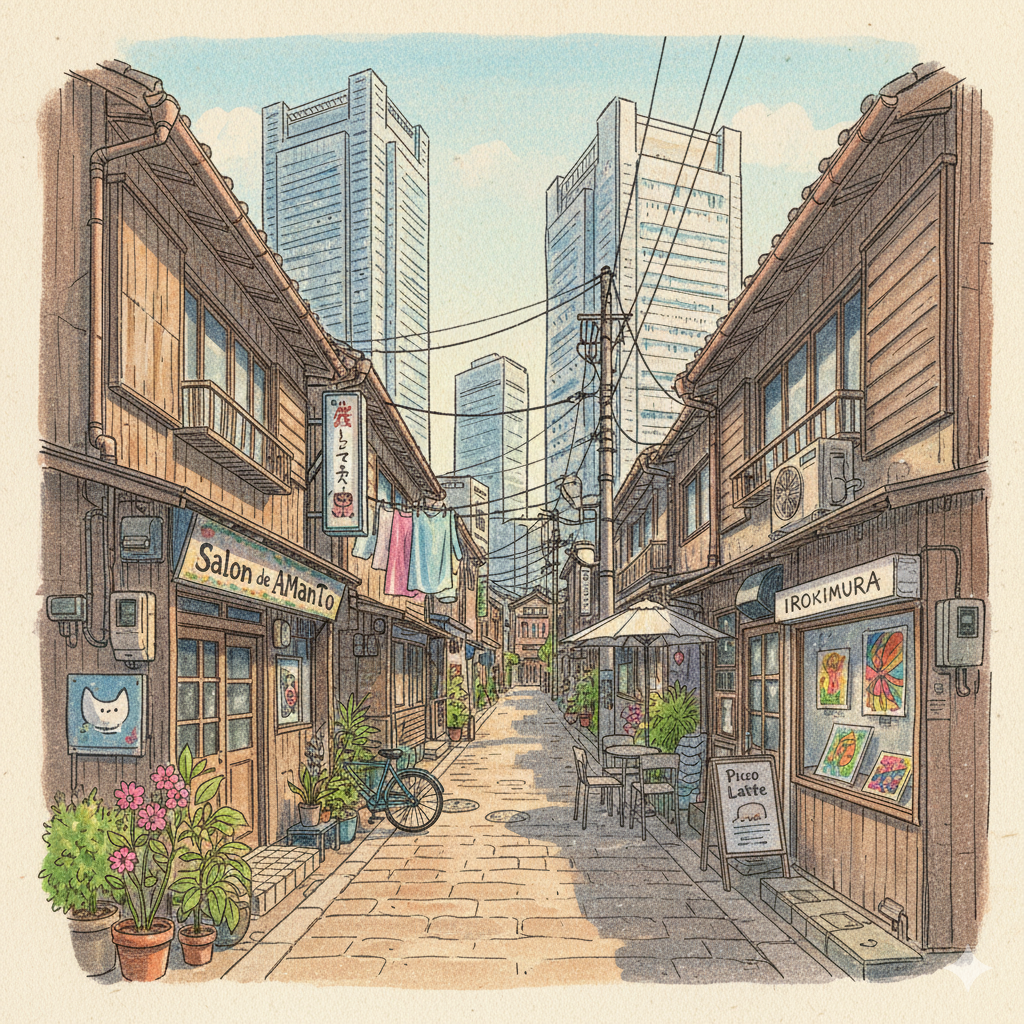
This district is Nakazakicho, a true "time capsule" from the pre-war Showa era. Its narrow, winding alleys are lined with nagaya (longhouses) that stand in defiance of Umeda's modern skyscrapers. For decades, this was a quiet area inhabited mostly by elderly residents. But over time, a new generation discovered its unique charm, breathing life back into its historic structures.
Today, Nakazakicho is a bohemian cultural hub. The old homes have been carefully restored and transformed into a maze of independent cafes, vintage shops, and intimate art galleries. Establishments like Salon de AManTo, one of the first cafes to open in a renovated house in 2001, and the Irorimura art gallery now anchor a thriving creative community. What makes Nakazakicho so compelling is its human-scale, non-standardized atmosphere—laundry still hangs out to dry in the alleys, and potted plants line the doorways. This authentic, lived-in feeling provides a stunning contrast to the polished gleam of the surrounding city, reminding us that sometimes the most beautiful acts of resilience are quiet, unassuming, and built to human scale.
The River That Was Tamed: An Epic of Engineering and Survival
Osaka has long been known as Japan's "water capital," its prosperity built on the network of rivers that flow through it. But for centuries, the city's main artery, the Yodo River, was both a source of life and a relentless, devastating threat. Historical records show it unleashed at least 239 floods, repeatedly crippling the region.
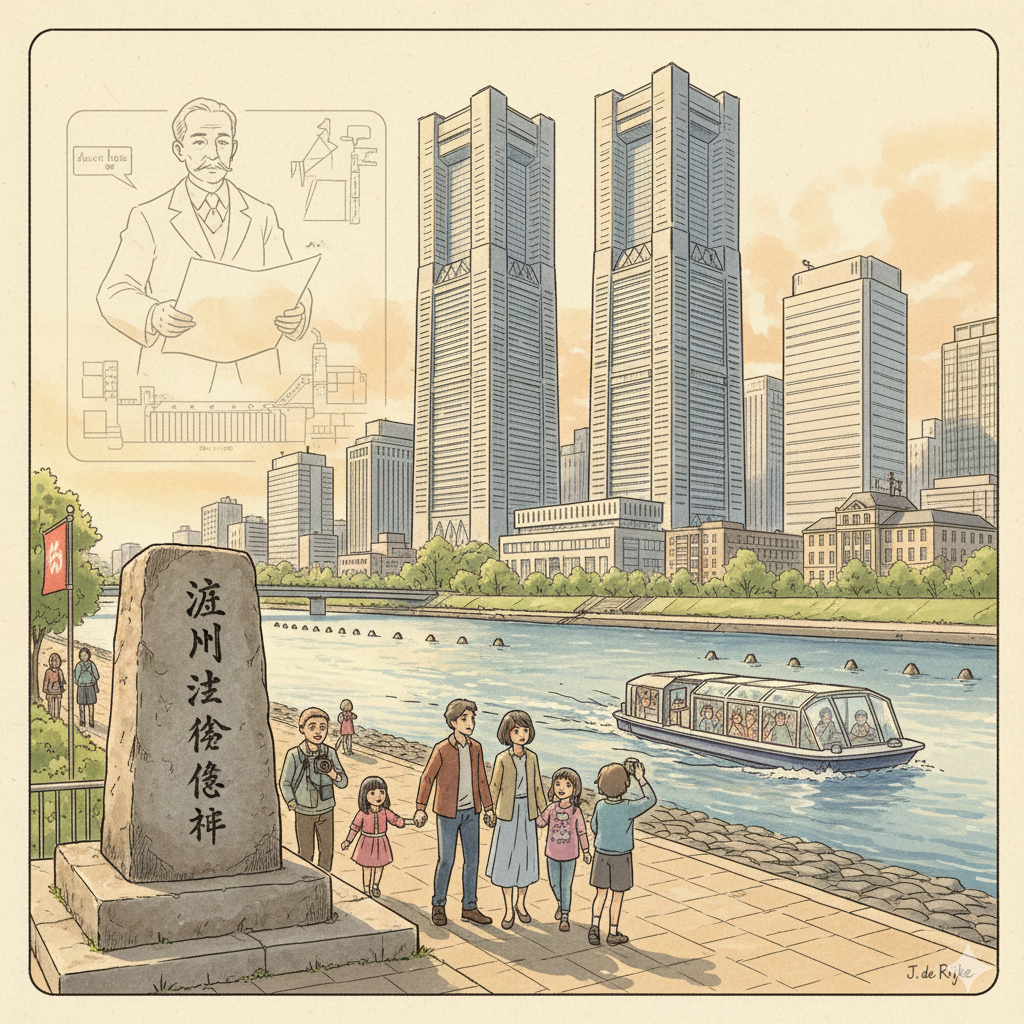
The conflict between the city and the river came to a head with the 1885 Meiji Great Flood, a disaster of such magnitude that it forced the government into monumental action. What followed was a massive, multi-decade water management project, a testament to human determination. To reshape Osaka's geography, Japan sought out international expertise, bringing in the Dutch engineer J. de Rijke. His implementation of groyne work and other advanced techniques successfully tamed the river, deepening shipping channels and, most importantly, protecting the city from the floods that had plagued its history.
Today, the physical evidence of this triumph can be found in the historical monuments and stone markers along the Yodogawa riverbank. These quiet relics tell the story of the project that saved Osaka. For a unique perspective, a Yodogawa River Cruise offers a water-level view of the massive scale of these protective works. Without this ambitious project, the modern commercial and administrative centers of Kita Ward, including the island of Nakanoshima, simply could not exist. This engineering feat is the invisible foundation upon which modern Osaka's prosperity was built.
The Laborer's Lullaby: Echoes of a Bustling Waterfront
The grand history of a city is built on epic engineering and immortal art. But what about the people whose names never made it into the history books? If you listen closely in the old Tenma district, you can still hear their echoes.
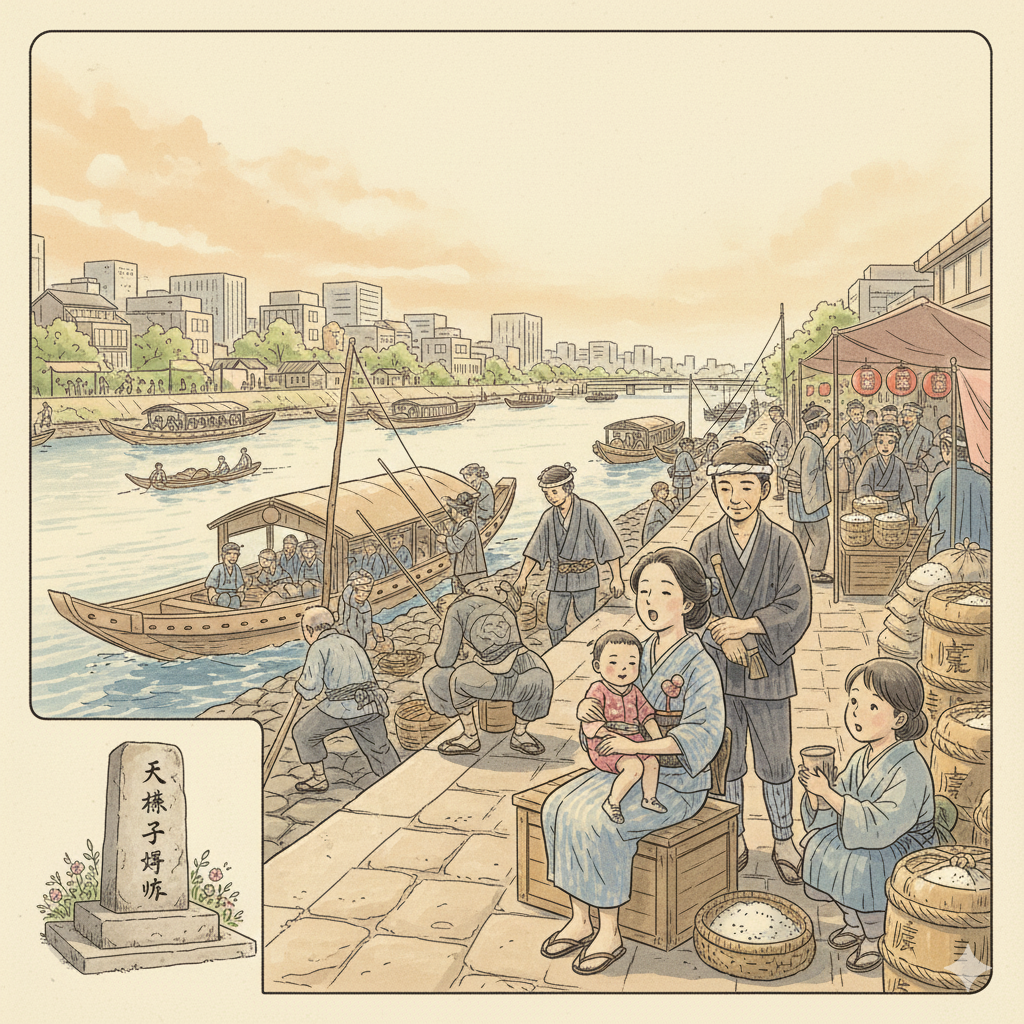
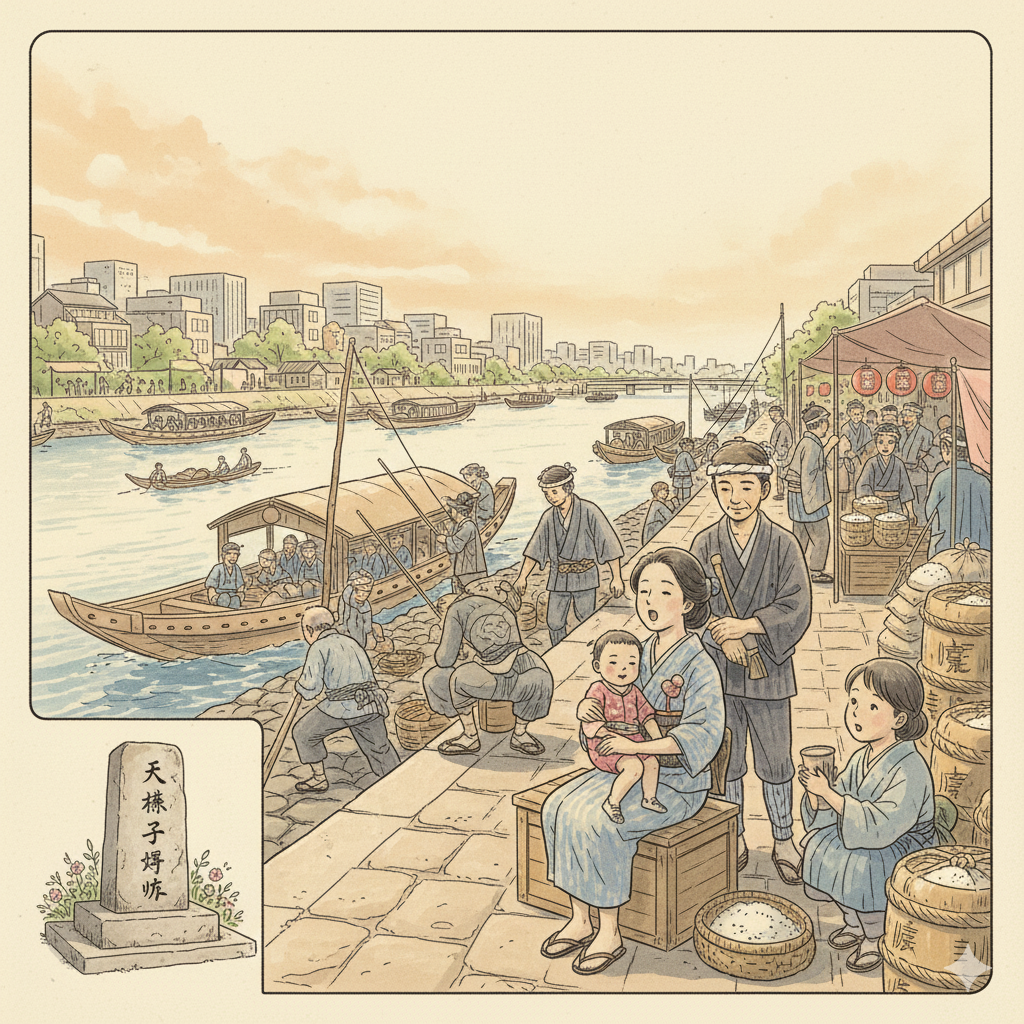
During the Edo and Meiji periods, the waterfront areas of Hachikenyahama and Tenma were the vibrant, chaotic heart of Osaka. Imagine the scene: the shouts of merchants, the rumble of wooden carts over packed earth, the smell of river water and market goods mingling in the air. As the final stop for water transport from Kyoto, these districts were bustling hubs of commerce, filled with the constant energy of the shomin (common folk). The intense labor of the dock workers and vendors gave rise to a rich folk culture, including work songs like the poignant Tenma Lullaby, which captured their daily hardships and hopes.
Today, the noisy waterfront of that era is gone, but its spirit endures. A quiet tribute stands in the form of the Temma Lullaby Memorial Stone, a monument not to a general or an emperor, but to the anonymous laborers whose sweat and songs built the city's wealth. The area's past can also be felt in the very structure of places like the long, narrow Nakatsu Shopping Street, a physical remnant of the market corridors that once defined the district. Visiting these sites allows a traveler to connect with the authentic, everyday pulse of old Osaka—a city not of monuments, but of people.
The Island of Art and Order: An Oasis Between Two Rivers
As great cities mature, they create distinct zones not just for commerce, but for governance, culture, and quiet contemplation. In Osaka, this evolution found its most elegant expression on Nakanoshima, a natural sandbar strategically located between the Dojima and Tosahori rivers, an island destined to become the city's refined and orderly center.
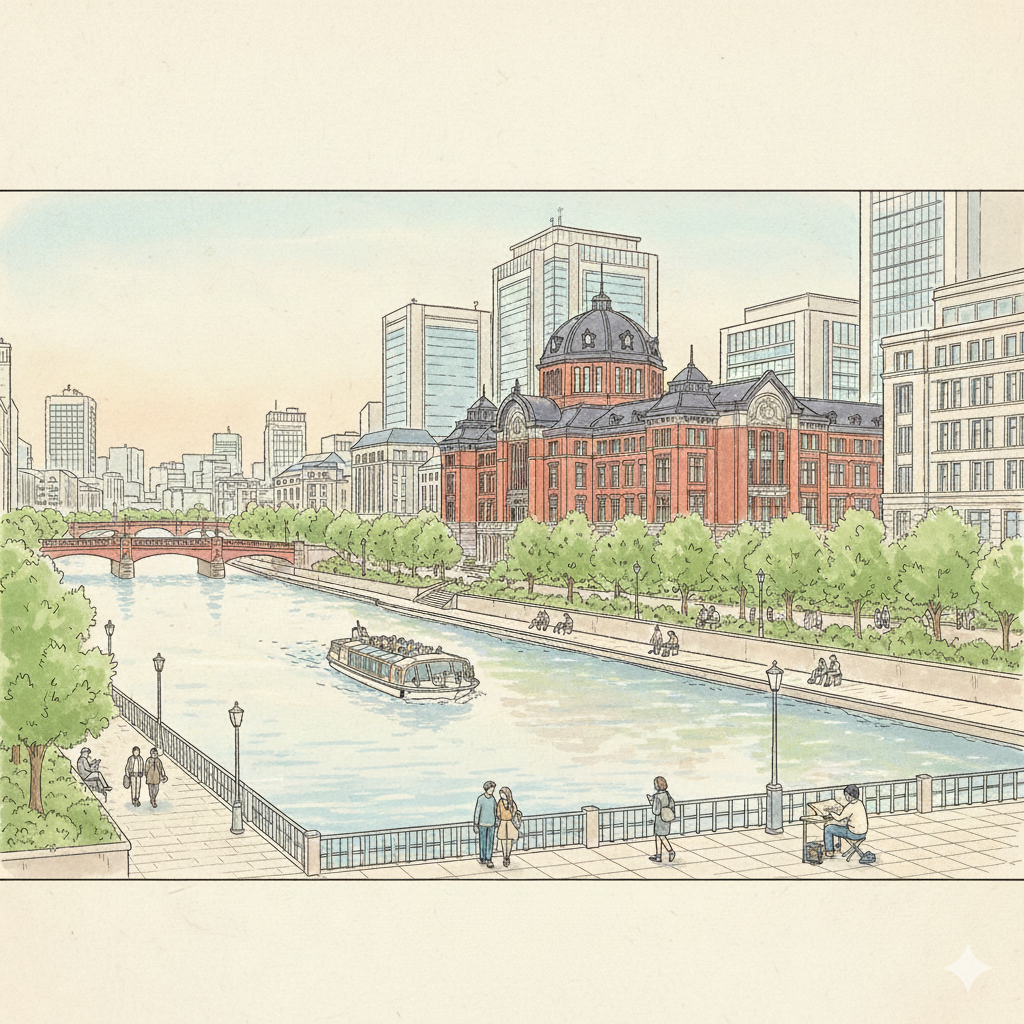
During the Meiji and Taisho eras, this island was intentionally developed into Osaka's administrative, financial, and cultural hub. Embracing Western architectural styles like Neoclassicism, the city built grand, stately structures like the Osaka City Central Public Hall, creating a district that looked and felt entirely different from the rest of the city. Over time, this identity has evolved. While still an important administrative center, Nakanoshima has blossomed into a premier destination for art and leisure.
The island's hidden gem is Nakanoshima Park, a lush "urban oasis" that houses a stunning cluster of museums and cultural institutions. It serves as the perfect counterbalance to the commercial intensity of Umeda, offering tranquility just a short walk away. The two rivers that flank the island, once purely functional transport channels, now act as essential design elements, creating a sense of separation, scenic beauty, and serenity. Nakanoshima is where Osaka’s past and present, its ambition and its need for peace, converge in a beautifully planned harmony.
Reading the Scars of a City
Taken together, these five stories reveal a city defined by a constant dialogue between its past and its present. From a lover's promise immortalized in literature to a neighborhood that survived the flames of war, from an untamable river brought to heel by human ingenuity to the lullaby of a forgotten dock worker, each story contributes to a richer, deeper understanding of Osaka.
These hidden gems show that the city's history is not confined to museums; it is a living force that continues to shape its modern identity—influencing the layout of its parks, the atmosphere of its backstreets, and the very ground on which its skyscrapers stand. They are the scars and memories that give the city its soul. As you walk through the polished streets of any modern metropolis, it's worth asking: what hidden stories and layers of resilience might be waiting, just beneath the surface, to be discovered in your own city?
Work cited:
- Underrated Osaka: Hidden Gems Beyond Dotonbori and Universal Studios - Japanspecialist, 檢索日期:10月 11, 2025
- 琵琶湖,淀川,檢索日期:10月 11, 2025
- Transformation of Yodo River Lake of Dynasties, 檢索日期:10月 11, 2025
- Area F - Banks of the Yodogawa River, the Face of Kita-ku | Famous Places Guide, 檢索日期:10月 11, 2025
- 【大阪私房景點】探索13 個大阪冷門景點好去處!朝聖《今際之國的有栖》取景地! - 四圍旅行, 檢索日期:10月 11, 2025
- Tsuyuten shrine (Ohatsu-Tenjin)|Osaka-Osaka City Kita Area ..., 檢索日期:10月 11, 2025
- Nakazakicho, a Bohemian Neighborhood in Osaka - VOYAPON, 檢索日期:10月 11, 2025
- Revive! Yodo River Boat Transport | Tourist Attractions & Experiences | OSAKA-INFO, 檢索日期:10月 11, 2025