(ENG) Beyond Udon Noodles: 5 Hidden Legends That Reveal the True Soul of Takamatsu
These five stories—of a water dragon in a bottomless well, a demon's lair transformed by art, a wise tanuki guiding a lost monk, a castle breathing with the tides, and a comical parade of gratitude—are not isolated tales. They are threads in a single, magnificent tapestry, woven together..

Listen attentively to the historical stories told in detail
The Whispers of the Seto Inland Sea
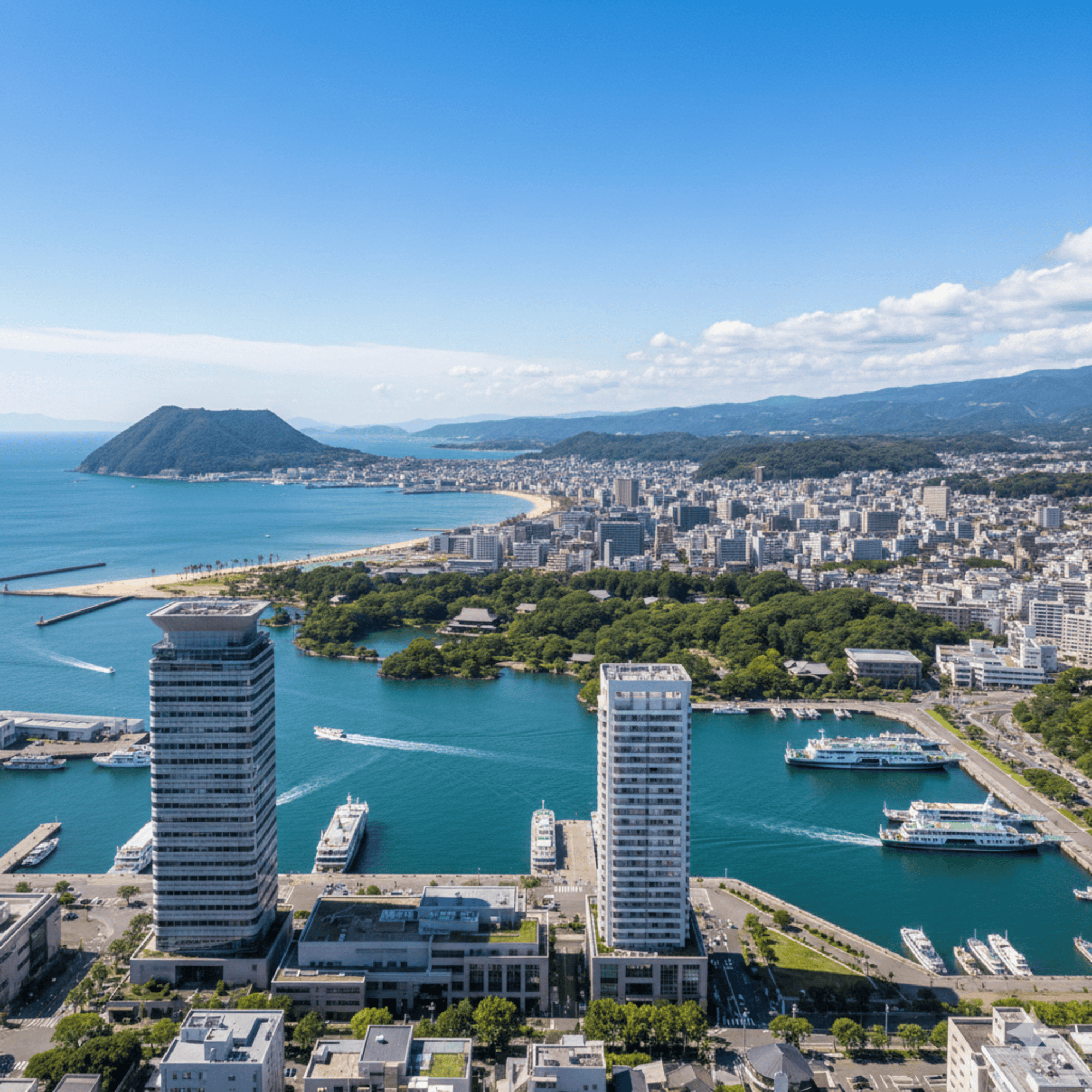
Takamatsu is most widely known as the capital of the "Udon Kingdom" and the bustling gateway to the contemporary art islands of the Setouchi Triennale. But just beneath the surface of bubbling noodle pots and modern installations lies a deeper, more ancient story. It is a narrative whispered by the tides of the Seto Inland Sea, woven from a historical struggle for water, a profound reverence for powerful deities, and a quiet, unyielding cultural resilience. To truly understand this port city, one must look past the familiar and seek out its narrative gateways—five hidden treasures that are not merely places, but living legends that unlock the true, mythic heart of Takamatsu.
The Dragon in the Well: Wealth and Water at Tamura Shrine
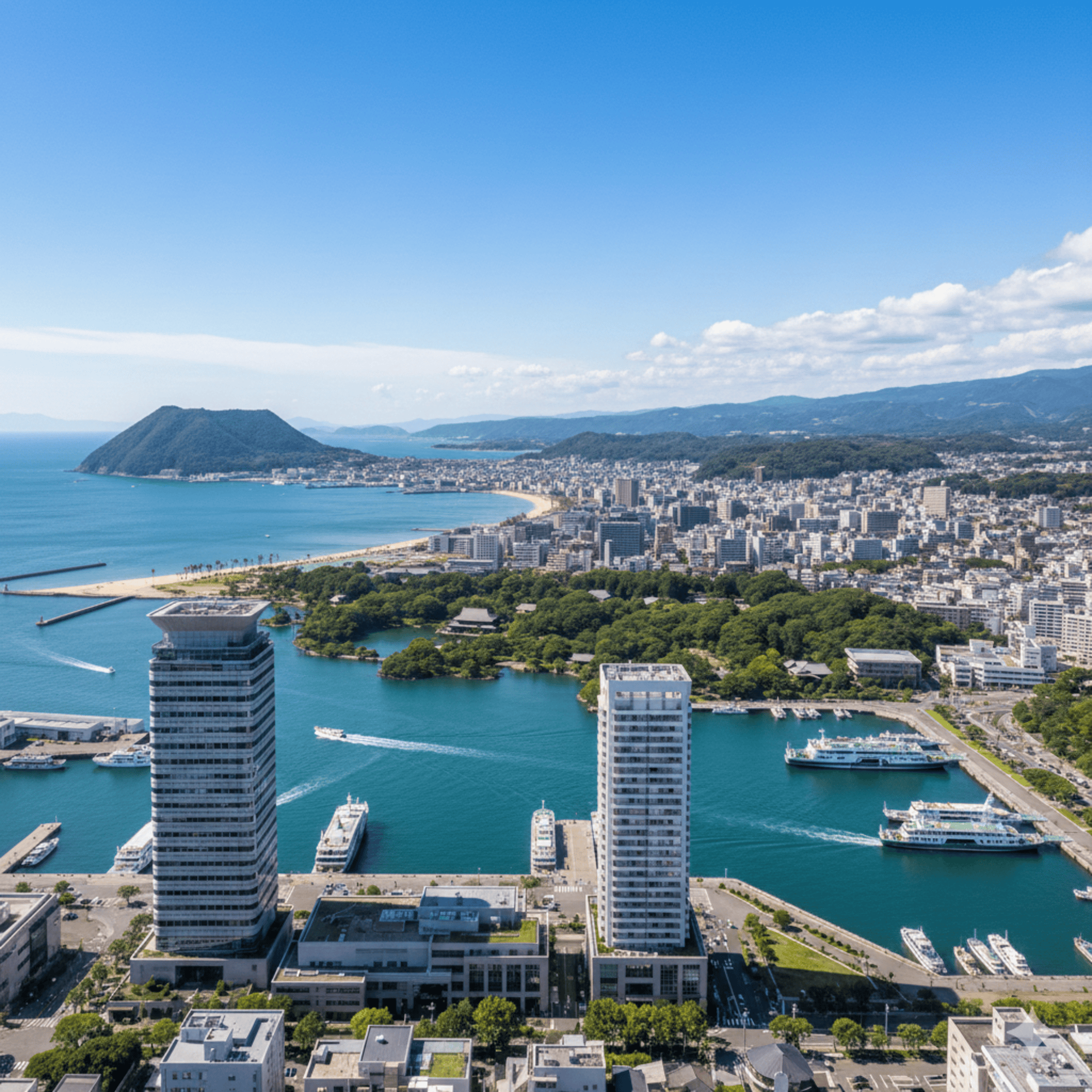
Tamura Shrine stands as the spiritual anchor of the region, holding the prestigious title of Ichinomiya, the highest-ranking Shinto shrine in the former Sanuki Province. Its significance, however, runs deeper than rank, flowing from a mysterious source at its very core.
The core legend of the shrine revolves around the "Sadamizu no I," a well believed to be a bottomless abyss inhabited by a powerful dragon god. For centuries, this well has been an object of both reverence and fear, a sacred place that embodies the region's historical anxiety over water scarcity. In a land historically challenged by a lack of large rivers, control over water was control over life itself. This ancient belief in the dragon as a "master of water's virtue" has since evolved. Today, that reverence for life-giving water has transformed into a modern prayer for wealth and prosperity, symbolized by a magnificent golden dragon statue on the shrine grounds.
It is said that the shrine's most sacred place is a deep abyss known as "Sadamizu no I," the home of the dragon god. Local belief holds that anyone who dares to look into its depths will lose their life, a testament to the profound respect for the life-giving power of water.
Surprisingly, the shrine also offers a direct link to one of Japan's most famous folk heroes. Its main deity is not a single god, but a pantheon known as "Tamura Ōkami," composed of five distinct deities. The inclusion of figures like Kibi-tsu-hiko-no-mikoto—the very hero who serves as the prototype for Momotarō, the Peach Boy—within this group reinforces the shrine's central role in weaving together the region's agricultural anxieties, martial myths, and political authority.
Hidden Gems to Discover:
- Participate in the "Jūnishi Meguri," an interactive ritual where you can find the stone statue of your zodiac animal and listen to its corresponding sound.
- For those interested in pilgrimage culture, the shrine is conveniently located next to Ichinomiya-ji, the 83rd temple on the famous Shikoku 88 Temple Pilgrimage, allowing for an easy exploration of both Shinto and Buddhist traditions.
While Tamura's dragon guards the water deep within the earth, another legend waits across the sea—a tale not of a divine protector, but of a fearsome demon.
The Demon's Lair Reborn: Art and Mythology on Megijima Island
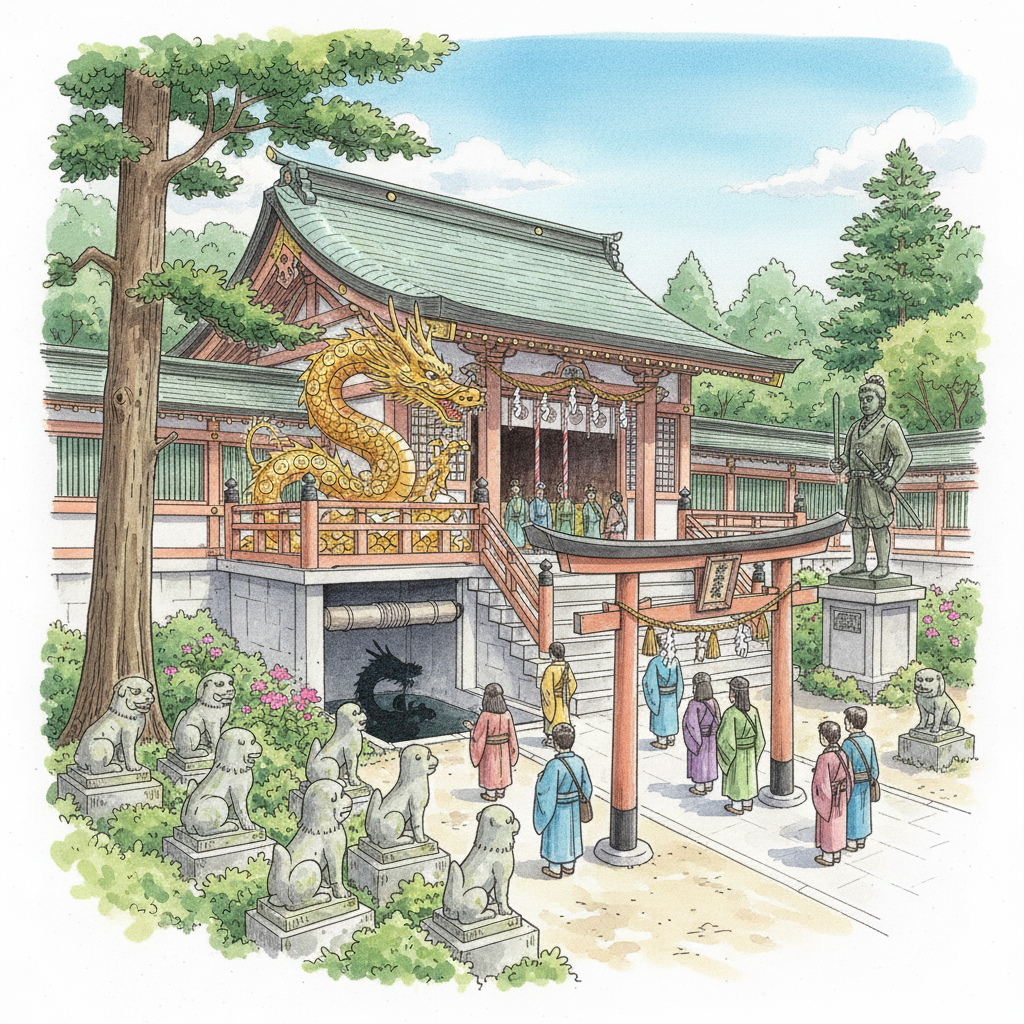
Just a short twenty-minute ferry ride from Takamatsu Port lies Megijima Island, a place with a dramatic dual identity. It is celebrated today as a venue for the Setouchi Triennale, yet it is far more famous in folklore as "Onigashima"—the legendary Demon Island from the tale of Momotarō.
The island's central attraction, the "Onigashima Great Cave," gives this abstract myth a tangible, explorable reality. Visitors can physically enter the cavern said to have been the demons' lair, feeling the weight of the ancient story in the cool, dark air. The legend, however, is not confined to the island; it is woven into the entire regional landscape. The tale’s opening scene, where Momotarō's grandmother discovers the giant peach, is set on the banks of the Hontsu River back on the Takamatsu mainland. This geographical dispersal creates a fascinating "mythological archaeology" route for the curious traveler, connecting the city to its outlying islands.
Herein lies the island's profound contrast: its ancient identity as a place of fear has been completely overlaid by its modern persona as a place of beauty, home to contemporary art installations and over 3,000 cherry trees. This remarkable transformation from a landscape of terror to one of tranquility is the island's core story.
Hidden Gems to Discover:
- Wander through the island's village and discover its unique "scale-like" structure, with narrow, sloping streets that offer an authentic glimpse into traditional island life, far from the curated art exhibits.
- Climb to the Washigamine Peak observatory for a breathtaking panoramic view of the Seto Inland Sea's "multi-island beauty." This expansive vista provides a perfect, uplifting counterpoint to the enclosed, dark history of the demon's cave below.
From Megijima's peak, the view stretches across the sea to a distinctive plateau on the mainland, a place where the clamor of ancient battle gave way to the whispers of a far gentler spirit.
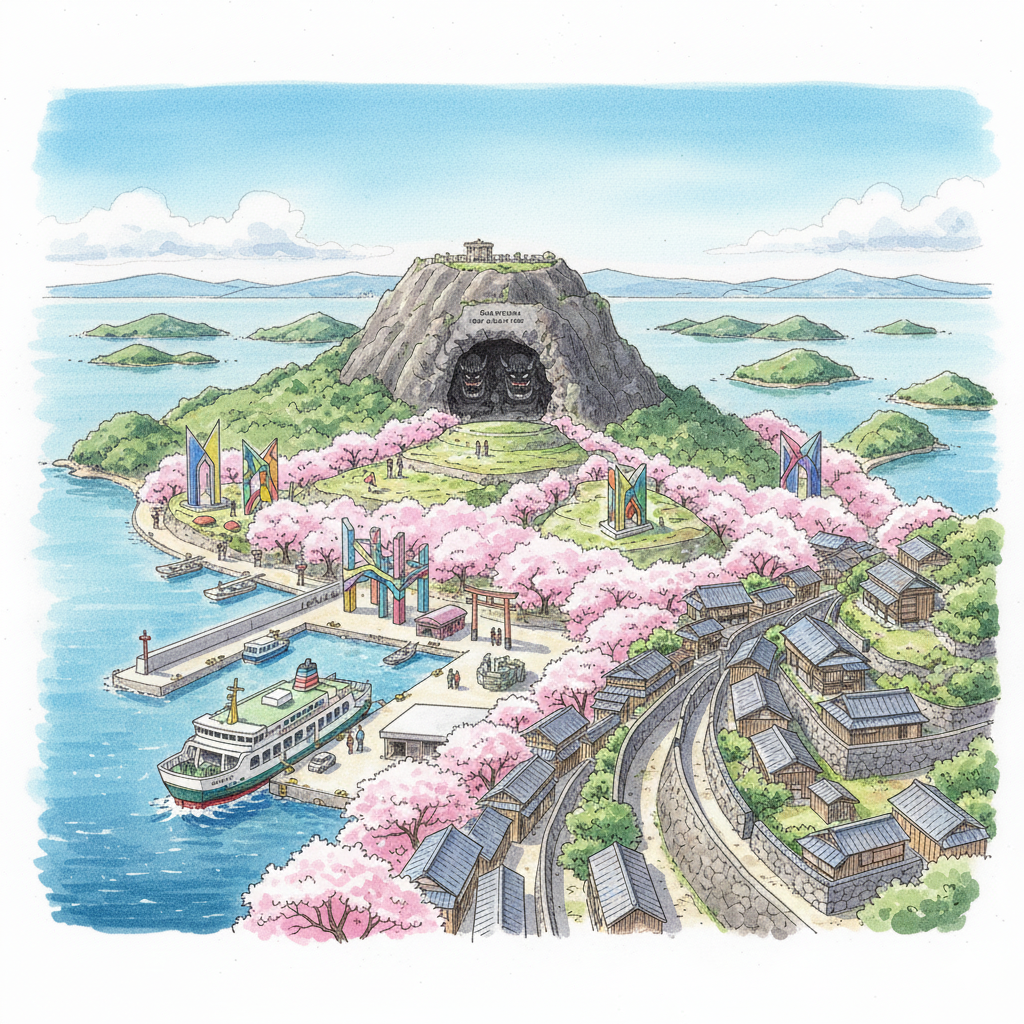
The Guiding Tanuki: A Gentle Spirit on a Bloody Battlefield
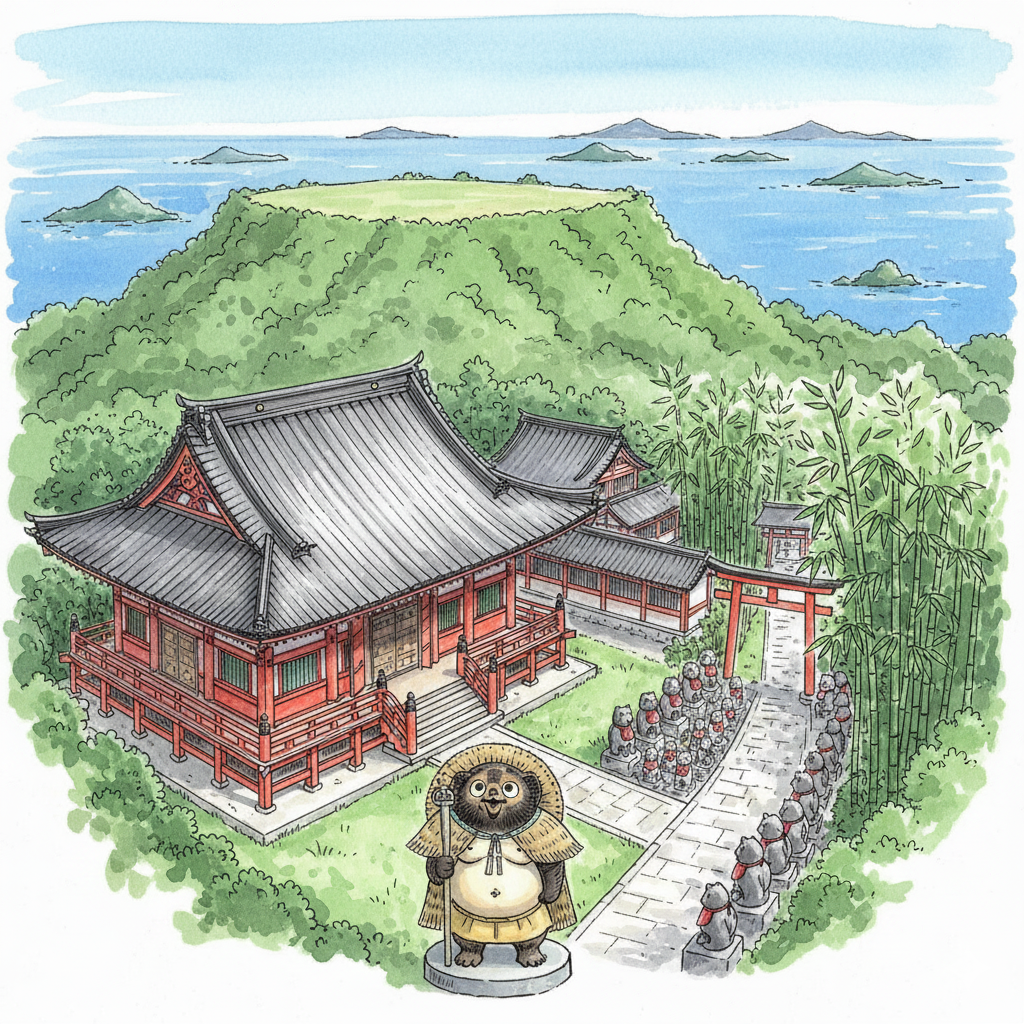
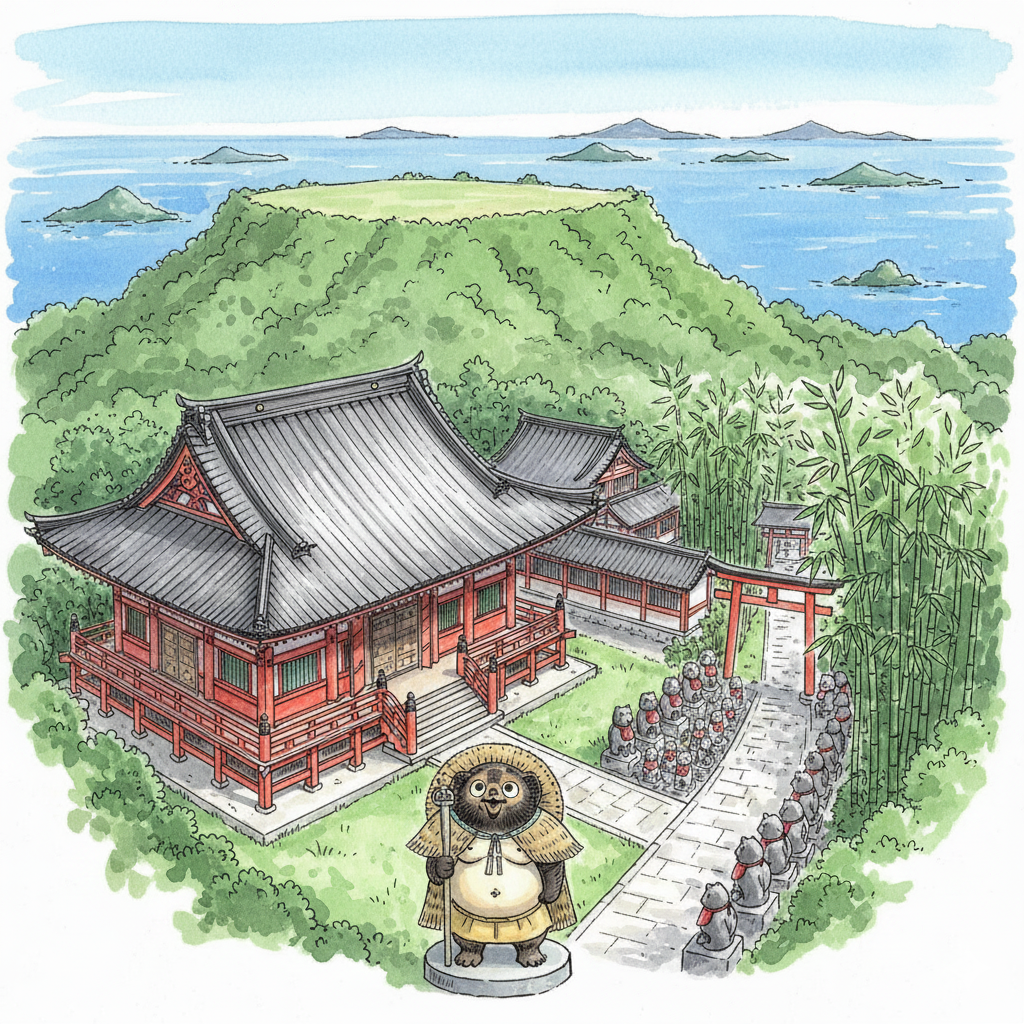
Yashima, a distinctive table-top plateau east of the city, is primarily known in history books as the site of a brutal 12th-century battle during the Genpei War. But to focus only on its military past is to miss its deeper, more peaceful identity as the home of Yashima-ji, the 84th temple on the Shikoku Pilgrimage.
Here, a gentler legend softens the island's bloody history. The story tells of the "Minoyama Daimyōjin," a wise tanuki (raccoon dog) spirit who appeared to the great monk Kūkai when he was lost in a dense fog on the mountain. The spirit, disguised as an old man in a straw cloak, guided Kūkai safely to the summit. This myth is a perfect example of Shinbutsu Shūgō, the harmonious blending of local Shinto beliefs with Buddhism. It offers a comforting narrative that counters the island's violent past with a tale of benevolence and guidance. This beloved tanuki was even referenced in the Studio Ghibli film Pom Poko, cementing its place in the wider Japanese cultural imagination.
Hidden Gems to Discover:
- Examine the temple's Main Hall closely. During a 1957 restoration, workers discovered that within its more recent structure were the original materials and construction techniques of the Kamakura period. The hall was then meticulously restored to this earlier, elegant form, offering a rare window into medieval temple architecture.
- Follow the path toward the hidden Inari shrine through a quiet bamboo forest. You will walk along a unique path lined with hundreds of donated tanuki statues, each one a personal tribute from a grateful worshipper to the beloved guiding spirit.
While the tanuki's benevolence is tied to the mists of the mountain, another guardian's power rose and fell not with the weather, but with the very tides of the Seto Inland Sea.
The Breathing Castle: Where the Ocean Fills the Moats
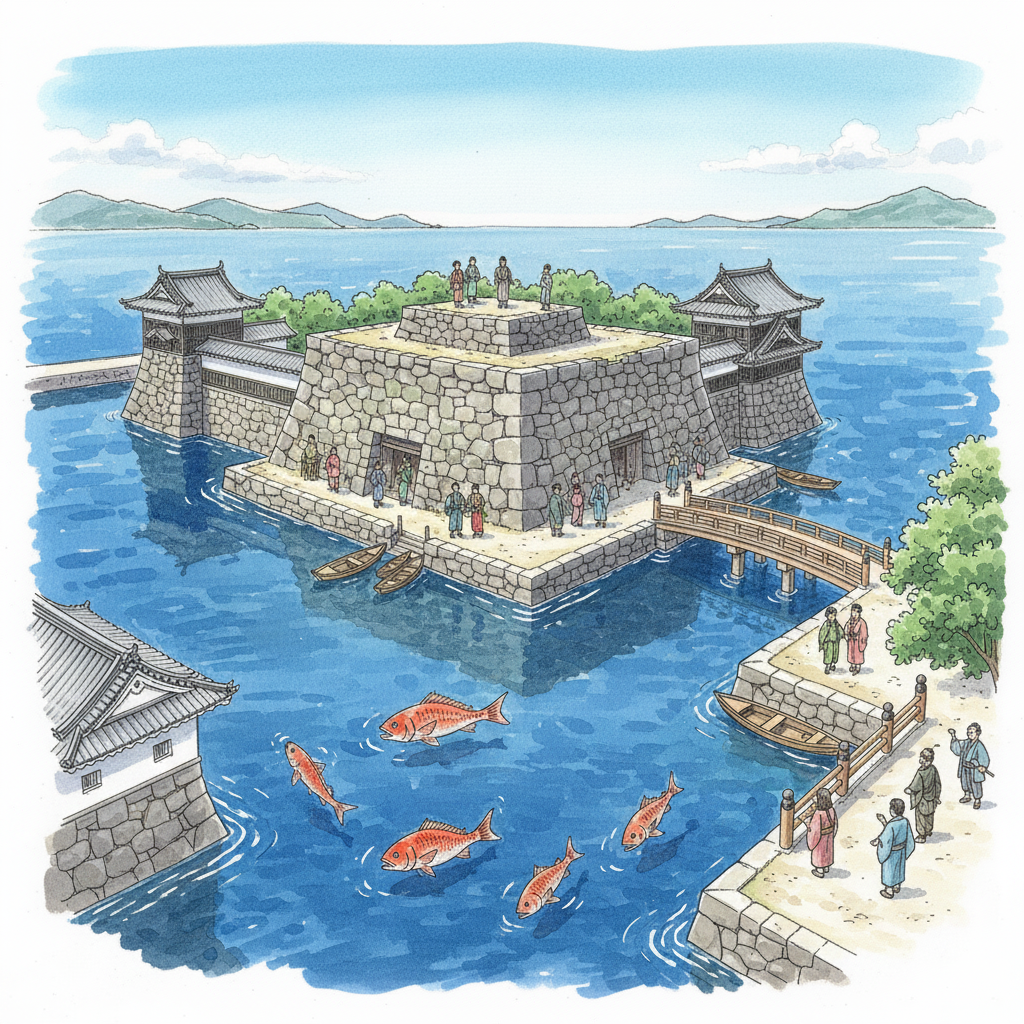
Today, the ruins of Takamatsu Castle exist as a peaceful park in the city center, but this was once more than a typical fortress. It was one of Japan's three great "water castles" (mizujiro), a stronghold whose very lifeblood was the ocean.
The castle's most remarkable and rare feature is its "shioiri-shiki" construction, a design where the moats are directly connected to the Seto Inland Sea. This brilliant piece of engineering was both a formidable defense mechanism, using the ocean's rising and falling tides to thwart invaders, and an expression of sophisticated landscape aesthetics. This connection makes the castle a living structure, its pulse forever tied to the rhythm of the sea. Though the main keep is long gone, this unique feature remains a powerful testament to Takamatsu's historical identity as a maritime power.
Takamatsu Castle's design is a marvel of engineering and aesthetics, directly channeling the salt water of the Seto Inland Sea into its moats. This "tide-influenced" system created a dynamic defense where the water levels rose and fell with the ocean, a living link between the city's power and the sea itself.
Hidden Gems to Discover:
- Look closely into the moat. It is still filled with seawater and home to ocean fish like sea bream—a living, swimming sign of its unique and continuous connection to the sea.
- Stand on the massive stone platform where the castle keep once stood. Use the historical void as a space for imagination, picturing the formidable sea fortress that once guarded the gateway to Shikoku, its walls rising and falling with the breath of the ocean.
The castle's moats harnessed the sea's power for defense, but deep in Takamatsu's inland communities, a different relationship with water unfolded—one not of control, but of comical, heartfelt gratitude for its very existence.
The Humorous Festival: Gratitude Through Laughter
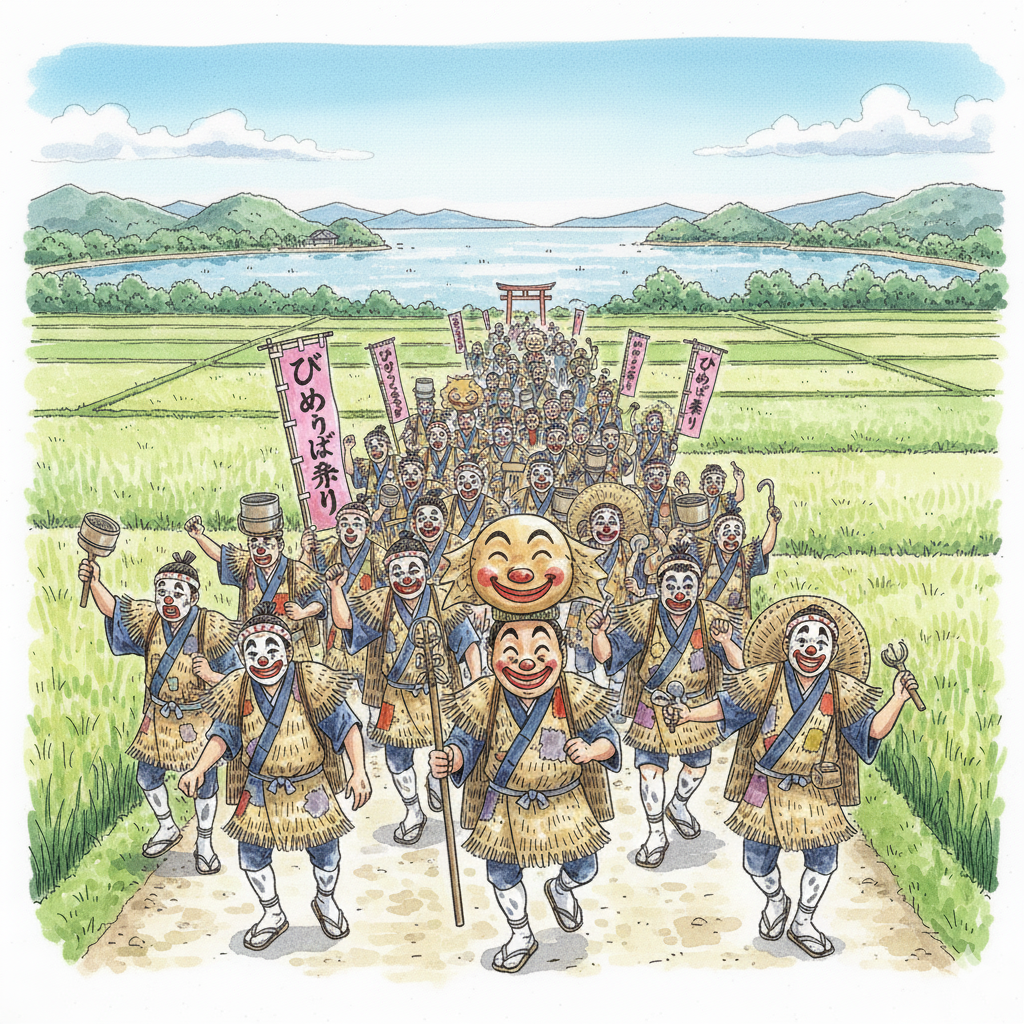
Deep in the inland communities of Takamatsu lies a hyper-local and seasonal event, a true hidden treasure that reveals the soul of the region. The "Hyōge Matsuri" is a festival born not of solemnity, but of desperation and ultimate relief.
The festival honors a local hero, Yianobe Heiroku, who engineered the construction of the Shin'ike reservoir, a feat that saved the area from the devastating water shortages that had plagued it for generations. The most crucial element to understand is the festival's name and style. "Hyōge" means "comical" or "humorous," and during the parade, participants don absurd makeup and parade in funny, often outlandish costumes. This joyful, irreverent celebration is a profound and uniquely Japanese way of expressing deep gratitude. Rather than a somber ceremony, the community chooses communal laughter to remember past hardship and give thanks for the life-saving gift of water.
Hidden Gems to Discover:
- The festival itself is the ultimate hidden gem. As a non-commercial, seasonal (typically in September) Intangible Folk Cultural Property, timing a visit to coincide with the Hyōge Matsuri offers a rare and precious opportunity to witness an authentic expression of local history and community spirit, far from the typical tourist trails.
This joyful parade, born from a desperate thirst, completes our journey into the soul of a land shaped by its relationship with water.
Reading the Landscape of Legends
These five stories—of a water dragon in a bottomless well, a demon's lair transformed by art, a wise tanuki guiding a lost monk, a castle breathing with the tides, and a comical parade of gratitude—are not isolated tales. They are threads in a single, magnificent tapestry, woven together by the central themes of water, myth, and resilience. They reveal a landscape where the sacred and the mundane are intertwined, where history is not just remembered but actively celebrated, and where the greatest hardships have given rise to the most profound expressions of culture. The next time you travel, what hidden stories might be waiting in the landscape, and how might they change the way you see a place?
Works Cited
- "【Shikoku Free Travel Guide】Tokushima X Kagawa Takamatsu Itinerary Guide|Summary of 9 Secret Attractions." Travis & Clara Travel. Accessed October 7, 2025.
- "【Japan Kagawa Attractions Guide】Understand 20 Must-Visit Attractions in Kagawa + Local Private Attractions in 1 Article." Walking into Japan. Accessed October 7, 2025.
- "Sanuki Pilgrimage Route - Mandara-ji Path, Zentsu-ji Temple Grounds, Negoro-ji Path, Ōkubo-ji Path." Takamatsu City. Accessed October 7, 2025.
- "Goshuin Pilgrimage Journey ~ 'Tamura Shrine (Kagawa Prefecture)' with the Legend of the Dragon God." Kiriko Style. Accessed October 7, 2025.
- "Megijima|Let's go on an island trip in Kagawa!|Island Trip|Kagawa Prefecture Tourism Association Official." Accessed October 7, 2025.
- "Experience Takamatsu: 【Takamatsu City Official Tourism Site】Kagawa's Tourist Spots, Experience Spots, and Gourmet." Accessed October 7, 2025.
- "Where is the birthplace of Momotarō? The Momotarō legend in Kinashi, Takamatsu City, Kagawa Prefecture, 'the town without demons'." Experience Takamatsu. Accessed October 7, 2025.
- "Yashima-ji Main Hall." Takamatsu City. Accessed October 7, 2025.
- "Minoyama Daimyōjin and Yashima Inari Shrine." City of Takamatsu / Ministry of Land, Infrastructure, Transport and Tourism. Accessed October 7, 2025.
- "Takamatsu Castle (Sanuki Province)." Wikipedia, The Free Encyclopedia. Accessed October 7, 2025.
- "Hyōge Matsuri." Takamatsu City. Accessed October 7, 2025.